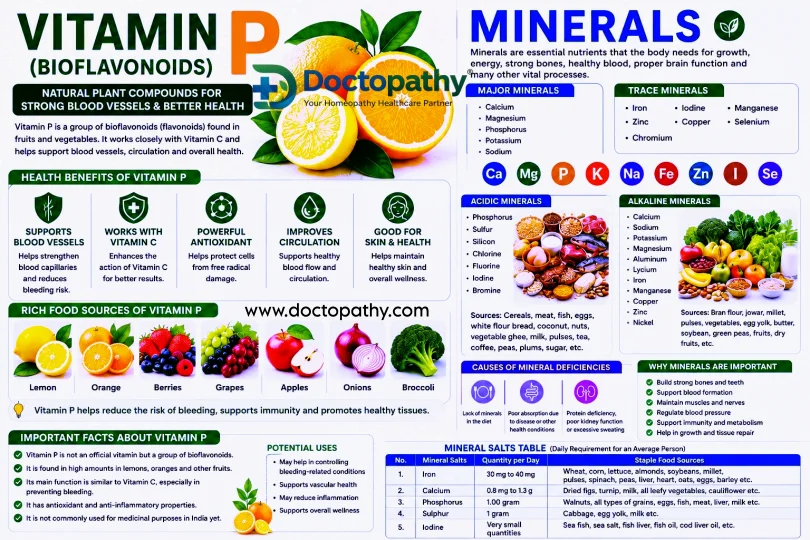
What is Vitamin P?
Vitamin P is a historical term used for a group of plant compounds known as bioflavonoids or flavonoids. These natural substances are found in many fruits, vegetables, herbs and plant-based foods.
Although Vitamin P is not officially classified as a vitamin today, bioflavonoids are known for their antioxidant properties and their ability to support overall health.
They are often found together with Vitamin C in foods such as lemons, oranges and other citrus fruits.
Also read this post :- Vitamin F (Essential Fatty Acids): Benefits, Food Sources, Deficiency Symptoms & Health Importance
Functions of Vitamin P
Bioflavonoids perform several important functions in the body:
- Support healthy blood vessels
- Help protect cells from oxidative stress
- Work together with Vitamin C
- Support normal circulation
- Help maintain healthy skin
- Contribute to overall wellness
Health Benefits of Vitamin P
1. Supports Blood Vessel Health
Bioflavonoids may help strengthen small blood vessels and support normal blood circulation.
2. Works Alongside Vitamin C
Many flavonoids are found in Vitamin C-rich foods. Together they help support healthy tissues and blood vessels.
3. Provides Antioxidant Protection
Bioflavonoids help protect cells from damage caused by free radicals.
4. Supports Immune Health
Plant compounds found in fruits and vegetables may contribute to a healthy immune system.
5. Promotes Overall Well-Being
A diet rich in flavonoid-containing foods supports general health and wellness.
Best Food Sources of Vitamin P
The following foods naturally contain bioflavonoids:
- Lemon
- Orange
- Grapefruit
- Sweet lime
- Berries
- Apples
- Grapes
- Cherries
- Green tea
- Onions
- Broccoli
- Spinach
- Bell peppers
Citrus fruits are among the richest sources of bioflavonoids.
Is Vitamin P Deficiency Common?
There is no officially recognized Vitamin P deficiency disease.
However, diets low in fruits and vegetables may reduce the intake of beneficial flavonoids and other important nutrients.
Eating a variety of colorful fruits and vegetables helps ensure adequate intake.
Minerals: Essential Nutrients for Good Health
Minerals are nutrients required by the body for growth, development and normal functioning.
Just like vitamins, minerals play a vital role in maintaining health.
Important Minerals in the Human Body
Major Minerals
- Calcium
- Magnesium
- Phosphorus
- Potassium
- Sodium
Trace Minerals
- Iron
- Zinc
- Copper
- Chromium
- Iodine
- Manganese
- Selenium
The body requires these minerals in different amounts to function properly.
Why Are Minerals Important?
Minerals help the body in many ways:
- Build strong bones and teeth
- Support blood formation
- Maintain healthy nerves and muscles
- Help regulate blood pressure
- Support immune function
- Maintain normal metabolism
Also read this post :- Vitamin K for Healthy Blood, Bones and Overall Wellness
Common Minerals and Their Food Sources
Iron
Functions:
- Helps form hemoglobin
- Carries oxygen in the blood
Sources:
- Spinach
- Lentils
- Soybeans
- Eggs
- Liver
- Whole grains
Calcium
Functions:
- Builds strong bones and teeth
- Supports muscle function
Sources:
- Milk
- Yogurt
- Cheese
- Leafy vegetables
- Cauliflower
Phosphorus
Functions:
- Supports bones and teeth
- Helps produce energy
Sources:
- Fish
- Eggs
- Meat
- Milk
- Whole grains
Iodine
Functions:
- Supports thyroid gland function
Sources:
- Sea fish
- Iodized salt
- Seafood
Magnesium
Functions:
- Supports muscles and nerves
- Helps maintain heart health
Sources:
- Nuts
- Seeds
- Whole grains
- Green vegetables
Zinc
Functions:
- Supports immunity
- Helps wound healing
Sources:
- Meat
- Seafood
- Nuts
- Seeds
- Whole grains
Causes of Mineral Deficiency
Mineral deficiencies may occur due to:
- Poor diet
- Digestive disorders
- Poor nutrient absorption
- Kidney disorders
- Excessive sweating
- Certain medical conditions
Signs of Mineral Deficiency
Symptoms may include:
- Fatigue
- Weakness
- Hair loss
- Poor appetite
- Muscle cramps
- Bone weakness
- Reduced immunity
- Poor concentration
Conclusion
Vitamin P is a historical name for bioflavonoids, natural plant compounds commonly found in citrus fruits and vegetables. While not considered an official vitamin today, these compounds support overall health and work alongside Vitamin C.
Minerals are equally important nutrients that help maintain healthy bones, blood, muscles, nerves and metabolism. A balanced diet rich in fruits, vegetables, whole grains, nuts and seeds helps provide both bioflavonoids and essential minerals for optimal health.
Also read this post :- Vitamin B Complex – Parts, Names, and Health Benefits
Vitamin P- FAQs
Vitamin P is a historical term for bioflavonoids, natural compounds found in fruits and vegetables.
No. Vitamin P is not recognized as an official vitamin today.
Lemons, oranges, berries, grapes, apples, onions and green vegetables are rich sources.
They support blood vessel health, provide antioxidant protection and work alongside Vitamin C.
Minerals help maintain healthy bones, blood, muscles, nerves and metabolism.