What is Vitamin F?
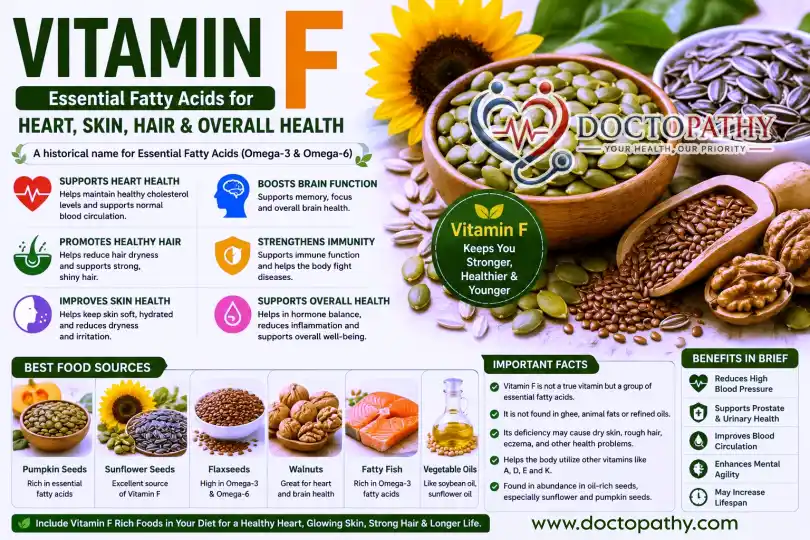
Vitamin F is a historical name given to certain essential fatty acids that the body needs for proper health. Today, Vitamin F is not classified as a true vitamin. Instead, it refers mainly to Omega-3 and Omega-6 fatty acids.
These healthy fats are important for the heart, brain, skin, hair and overall body functions. Since the human body cannot produce enough of these fatty acids on its own, they must be obtained through food.
Functions of Vitamin F
Essential fatty acids perform many important functions in the body:
- Support heart health
- Help maintain healthy skin
- Promote healthy hair growth
- Support brain function
- Help maintain normal cholesterol levels
- Support healthy blood circulation
- Aid in the absorption and use of certain nutrients
- Support overall cell function
Also read this post :- Vitamin K for Healthy Blood, Bones and Overall Wellness
Symptoms of Vitamin F Deficiency
A deficiency of essential fatty acids may lead to:
- Dry skin
- Rough or lifeless hair
- Hair loss
- Skin irritation
- Reduced mental focus
- Fatigue
- Weakness
- Poor wound healing
- Dry eyes
- Increased risk of inflammation
Severe deficiencies are uncommon but can occur in people with poor nutrition or certain digestive disorders.
Potential Health Problems Linked to Low Essential Fatty Acid Intake
Low intake of essential fatty acids may contribute to:
- Dry skin conditions
- Eczema
- Heart health concerns
- Poor circulation
- Elevated cholesterol levels
- Inflammatory conditions
- Reduced cognitive performance
However, these conditions can have many causes and should not be attributed solely to Vitamin F deficiency.
Best Food Sources of Vitamin F
Seeds
- Sunflower seeds
- Pumpkin seeds
- Flaxseeds
- Chia seeds
Nuts
- Walnuts
- Almonds
Plant Oils
- Sunflower oil
- Flaxseed oil
- Soybean oil
Fish Sources
- Salmon
- Sardines
- Mackerel
- Tuna
Other Foods
- Avocado
- Soybeans
- Green leafy vegetables
Pumpkin seeds and sunflower seeds are among the richest natural sources of essential fatty acids.
Also read this post :- Vitamin E: Benefits, Sources, Deficiency & Health Uses
Vitamin F and Hair Health
Essential fatty acids help maintain healthy hair and scalp. Adequate intake may support:
- Hair shine
- Hair strength
- Scalp hydration
- Reduced dryness
A balanced diet containing healthy fats is important for healthy hair growth.
Vitamin F and Heart Health
Healthy fatty acids may:
- Support normal cholesterol levels
- Help maintain healthy blood vessels
- Support normal blood circulation
- Contribute to overall cardiovascular wellness
Including healthy fats as part of a balanced diet may benefit long-term heart health.
Vitamin F and Skin Health
Essential fatty acids help maintain the skin’s natural protective barrier. They may help:
- Reduce skin dryness
- Support skin hydration
- Promote healthy skin appearance
- Support skin repair processes
Who May Need More Essential Fatty Acids?
People who may benefit from ensuring adequate intake include:
- Older adults
- Individuals with poor dietary habits
- People who avoid healthy fats
- Those with certain digestive disorders affecting nutrient absorption
Important Facts About Vitamin F
- Vitamin F is not considered an official vitamin today.
- It mainly refers to essential fatty acids.
- The body cannot produce sufficient amounts on its own.
- Sunflower seeds and pumpkin seeds are rich natural sources.
- Essential fatty acids support heart, brain, skin and hair health.
- A balanced diet usually provides adequate amounts for most people.
Conclusion
Vitamin F is a historical term for essential fatty acids such as Omega-3 and Omega-6. These nutrients are important for healthy skin, hair, heart and brain function. Consuming foods like pumpkin seeds, sunflower seeds, fish, nuts and healthy oils can help maintain adequate levels and support overall well-being.
Also read this post :- What is Vitamin H (Biotin)? Benefits, Sources, Deficiency Symptoms & Daily Requirement
Vitamin F- FAQs
No. Vitamin F is a historical term used for essential fatty acids such as Omega-3 and Omega-6.
Pumpkin seeds, sunflower seeds, flaxseeds, walnuts, fish and healthy vegetable oils are rich sources.
Dry skin, rough hair, fatigue, poor concentration and skin irritation may occur.
Essential fatty acids support healthy cholesterol levels and cardiovascular health.
Yes. Pumpkin seeds are rich in essential fatty acids and are considered one of the best natural sources.