
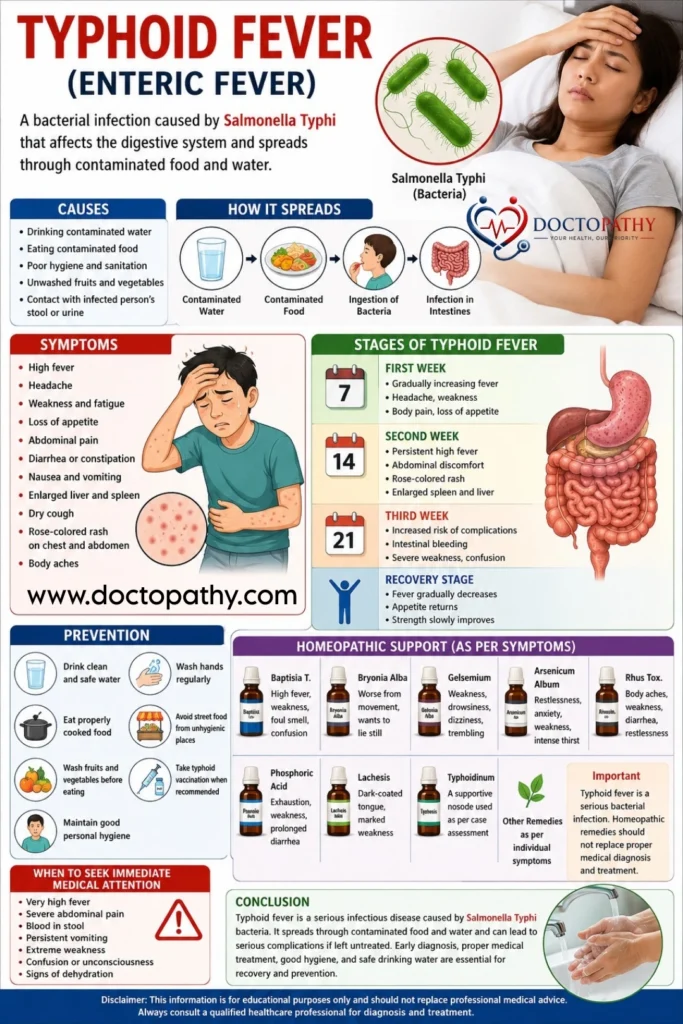
What is Typhoid Fever?
Typhoid Fever is a serious bacterial infection that affects the digestive system and the whole body. It is also known as Enteric Fever. The disease is caused by a bacterium called Salmonella Typhi.
Typhoid spreads through contaminated food and water. It is more common in areas with poor sanitation and unsafe drinking water.
Early diagnosis and proper treatment are important because untreated typhoid can lead to serious complications.
Also read this post :- Dengue Fever: Causes, Symptoms, Types, and Treatment Protocol
Causes of Typhoid Fever
Typhoid fever is caused by the bacterium Salmonella Typhi. The infection usually spreads through:
- Drinking contaminated water
- Eating contaminated food
- Poor hygiene practices
- Contact with an infected person’s stool or urine
- Unwashed fruits and vegetables
- Consuming raw or improperly cooked food
How Does Typhoid Spread?
The bacteria enter the body through the mouth and travel to the intestines. From there, they enter the bloodstream and spread throughout the body.
People living in crowded areas with poor sanitation are at higher risk of infection.
Symptoms of Typhoid Fever
Symptoms usually develop 6 to 30 days after exposure to the bacteria.
Common symptoms include:
- High fever
- Weakness and fatigue
- Headache
- Loss of appetite
- Abdominal pain
- Diarrhea or constipation
- Nausea and vomiting
- Enlarged liver and spleen
- Dry cough
- Rose-colored spots or rash on the chest and abdomen
- Body aches
In severe cases, patients may experience:
- Confusion or delirium
- Intestinal bleeding
- Severe dehydration
- Intestinal perforation (a medical emergency)
Stages of Typhoid Fever
First Week
- Gradually increasing fever
- Headache
- Weakness
- Body pain
- Loss of appetite
Second Week
- Persistent high fever
- Abdominal discomfort
- Rose-colored rash
- Enlarged spleen and liver
Third Week
- Increased risk of complications
- Intestinal bleeding
- Severe weakness
- Mental confusion
Recovery Stage
- Fever gradually decreases
- Appetite returns
- Strength slowly improves
Diagnosis of Typhoid Fever
Doctors may recommend:
- Blood tests
- Widal test
- Typhi Dot test
- Blood culture
- Stool culture
A blood culture is often considered one of the most reliable tests for confirming typhoid infection.
Also read this post :- Chickenpox (Varicella): Symptoms, Causes, Prevention & Homeopathic Treatment
Prevention of Typhoid Fever
You can reduce the risk of typhoid by:
- Drinking clean and safe water
- Washing hands regularly
- Eating properly cooked food
- Avoiding street food from unhygienic places
- Washing fruits and vegetables before eating
- Maintaining good personal hygiene
- Taking typhoid vaccination when recommended
Homeopathic Support for Typhoid Fever
Homeopathy may be used as supportive care according to individual symptoms and under the guidance of a qualified homeopathic practitioner.
Some remedies traditionally used in homeopathic practice include:
Baptisia Tinctoria
Often considered when there is high fever, weakness, foul-smelling discharges, and mental confusion.
Bryonia Alba
May be selected when the patient prefers to remain still and movement worsens symptoms.
Gelsemium
Commonly considered for weakness, drowsiness, dizziness, and trembling.
Arsenicum Album
May be used when there is restlessness, anxiety, weakness, and intense thirst.
Rhus Toxicodendron
Traditionally used when fever is accompanied by body aches, weakness, and diarrhea.
Phosphoric Acid
May be considered in cases of exhaustion, weakness, and prolonged diarrhea.
Lachesis
Sometimes selected when there is a dark-coated tongue and marked weakness.
Typhoidinum
A homeopathic nosode used by some practitioners according to individual case assessment.
Important: Typhoid fever is a potentially serious bacterial infection. Homeopathic remedies should not delay or replace appropriate medical evaluation, diagnostic testing, or treatment prescribed by a qualified healthcare professional.
When to Seek Immediate Medical Attention
Seek urgent medical care if you experience:
- Very high fever
- Severe abdominal pain
- Blood in stool
- Persistent vomiting
- Extreme weakness
- Confusion or unconsciousness
- Signs of dehydration
Also read this post :- Tetanus Infection After Injury: Symptoms and Medical Care
Conclusion
Typhoid fever is a serious infectious disease caused by Salmonella Typhi bacteria. It spreads through contaminated food and water and can lead to serious complications if left untreated. Early diagnosis, proper medical treatment, good hygiene, and safe drinking water are essential for recovery and prevention. Homeopathic remedies may be used as supportive care under professional guidance based on individual symptoms.
Typhoid fever FAQs
Typhoid fever is caused by the bacterium Salmonella Typhi, usually spread through contaminated food and water.
Early symptoms include fever, headache, weakness, loss of appetite, and abdominal discomfort.
Doctors may use blood tests, blood cultures, stool cultures, and other laboratory investigations.
Yes. Good hygiene, safe drinking water, proper food handling, and vaccination can help prevent typhoid.
Yes. If left untreated, it can cause serious complications such as intestinal bleeding, dehydration, and intestinal perforation.

Also read this post :- Jaundice: Causes, Symptoms & Homeopathic Treatment
Medical Disclaimer:
The information on Doctopathy.com is intended for educational purposes only and should not be considered medical advice. Always consult a qualified healthcare professional for diagnosis, treatment and medical guidance.