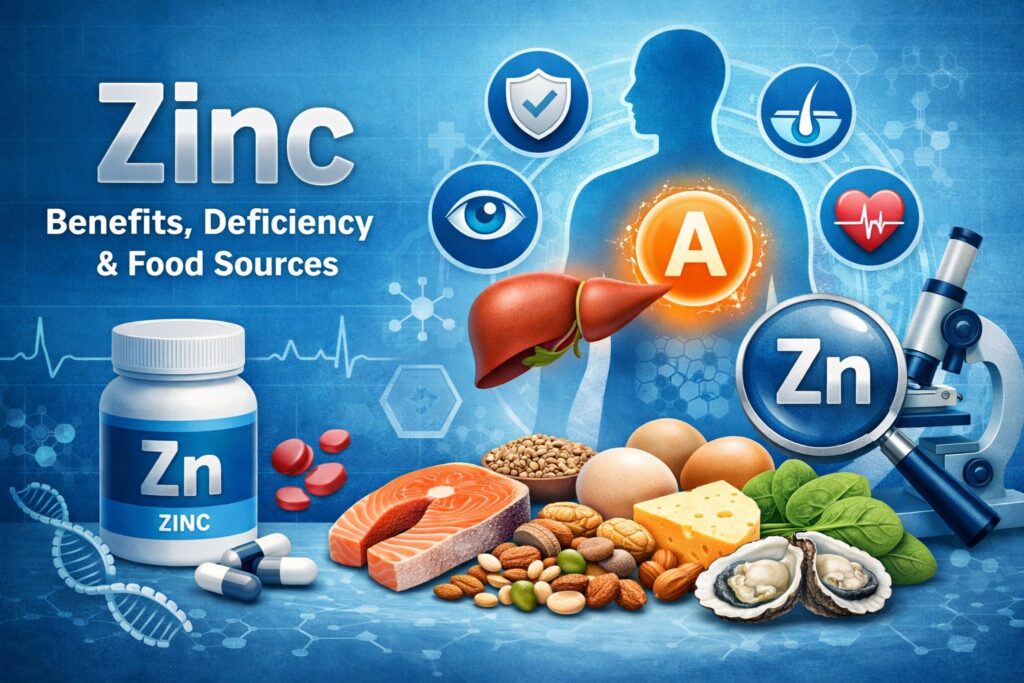
Zinc is an essential trace mineral required by the human body for numerous biological functions. Although the body requires zinc in small amounts, it plays a vital role in maintaining overall health. Zinc acts as a cofactor for several enzymes, helping them perform important chemical reactions necessary for normal body functioning.
This mineral is crucial for tissue growth, immune system strength, wound healing, and proper metabolism of proteins and carbohydrates. Without sufficient zinc intake, many body processes can slow down or become impaired.
In recent years, nutrition experts have highlighted the importance of zinc in maintaining good health, especially for immune function, growth, and reproductive health.
Also read this post :- Manganese: Benefits, Sources, Deficiency, and Health Effects
Importance of Zinc in the Human Body
Zinc is involved in more than 300 enzyme reactions in the body. These enzymes help regulate many physiological processes, including digestion, metabolism, and cellular repair.
Some key functions of zinc include:
1. Supports Immune System
Zinc plays a crucial role in strengthening the immune system. It helps the body fight infections and reduces the risk of illness. People with adequate zinc levels are generally less susceptible to bacterial and viral infections.
2. Promotes Tissue Growth and Repair
Zinc is essential for cell growth, tissue repair, and wound healing. That is why doctors often recommend zinc supplements for people recovering from injuries or surgeries.
3. Helps Metabolism of Proteins and Carbohydrates
Zinc helps the body process nutrients efficiently. It assists enzymes responsible for protein synthesis and carbohydrate metabolism, which are necessary for energy production.
4. Supports Normal Growth and Development
During childhood, adolescence, and pregnancy, zinc is essential for proper physical growth and development. A deficiency can lead to delayed growth and developmental problems.
5. Maintains Healthy Skin, Hair, and Nails
Zinc contributes to healthy skin and hair growth. Low levels of zinc can lead to hair loss, brittle nails, and skin problems.
Also read this post :- Potassium Benefits, Deficiency Symptoms and Best Food Sources
Causes of Zinc Deficiency
Zinc deficiency can occur for several reasons, including poor diet, medical conditions, and lifestyle habits.
Some common causes include:
1. Alcohol Consumption
Excessive alcohol intake can reduce zinc absorption and increase zinc loss from the body.
2. Highly Refined Diet
Dietary refinement removes many essential nutrients. Refined foods such as white flour contain significantly less zinc than whole grains.
3. Low-Protein Diet
Protein-rich foods often contain zinc. People consuming low-protein diets may develop zinc deficiency.
4. Pregnancy
Pregnant women require more zinc to support fetal growth. Without proper intake, deficiency may occur.
5. Illness and Chronic Disease
Certain diseases and infections can interfere with zinc absorption or increase the body’s need for zinc.
6. Aging
The risk of zinc deficiency tends to increase with age due to decreased absorption and dietary intake.
Also read this post :- Phosphorus: Importance, Benefits, Sources, and Deficiency
Symptoms of Zinc Deficiency
Zinc deficiency can lead to several health problems affecting various organs and body systems.
Common symptoms include:
- Loss of taste and smell
- Reduced appetite
- Slow wound healing
- Hair loss or baldness
- Delayed growth in children
- Weak immune system
- Increased infections
- Mental health disturbances
- Delayed sexual maturity
- Reproductive problems
In some regions of the world, including parts of the Middle East, severe zinc deficiency has been linked to dwarfism and delayed growth.
Effects of Zinc Deficiency on the Body
When zinc levels drop significantly, several body functions become affected.
Reduced Vitamin A Release
Zinc deficiency reduces the liver’s ability to release vitamin A, which is essential for vision, immunity, and skin health.
Blood Cell Reduction
Studies show that zinc deficiency can reduce both red and white blood cell production, which can weaken the immune system.
Decreased Taste Sensation
People with zinc deficiency often experience loss of taste, which may lead to reduced appetite and poor nutrition.
Increased Risk of Infections
Because zinc strengthens immune responses, deficiency can make individuals more prone to infections and illnesses.
Research Findings on Zinc Deficiency
A scientific study observed the effects of zinc deficiency in young men over a two-month period. The results revealed significant health changes.
Participants experienced:
- Slower hair growth
- Decrease in red and white blood cells
- Reduced sense of taste
- Increased susceptibility to infections
Another report published in the American Journal of Clinical Nutrition (February 1990) found that low zinc levels can interfere with the utilization of copper and iron and may negatively affect HDL (good) cholesterol levels.
These findings highlight the importance of maintaining adequate zinc levels for optimal health.
Also read this post :- Copper: Benefits, Deficiency Symptoms, Sources, and Importance for Health
Zinc Toxicity and Safety
Unlike some minerals, zinc is relatively non-toxic when consumed in normal dietary amounts.
The body has an efficient system that helps eliminate excess zinc through the intestines. This natural mechanism helps protect against zinc toxicity.
However, excessive zinc supplementation over long periods may lead to:
- Nausea
- Digestive problems
- Copper deficiency
- Reduced immune function
Therefore, zinc supplements should be taken only when necessary and preferably under medical guidance.
Best Natural Food Sources of Zinc
Zinc is widely available in both plant-based and animal-based foods. Including a variety of these foods in your daily diet can help maintain adequate zinc levels.
Also read this post :- Iron: Benefits, Deficiency, Symptoms, and Best Food Sources
Zinc-Rich Foods Include
- Whole grains
- Legumes
- Nuts
- Seeds
- Wheat germ
- Bran
- Unpolished rice
- Spinach
- Peas
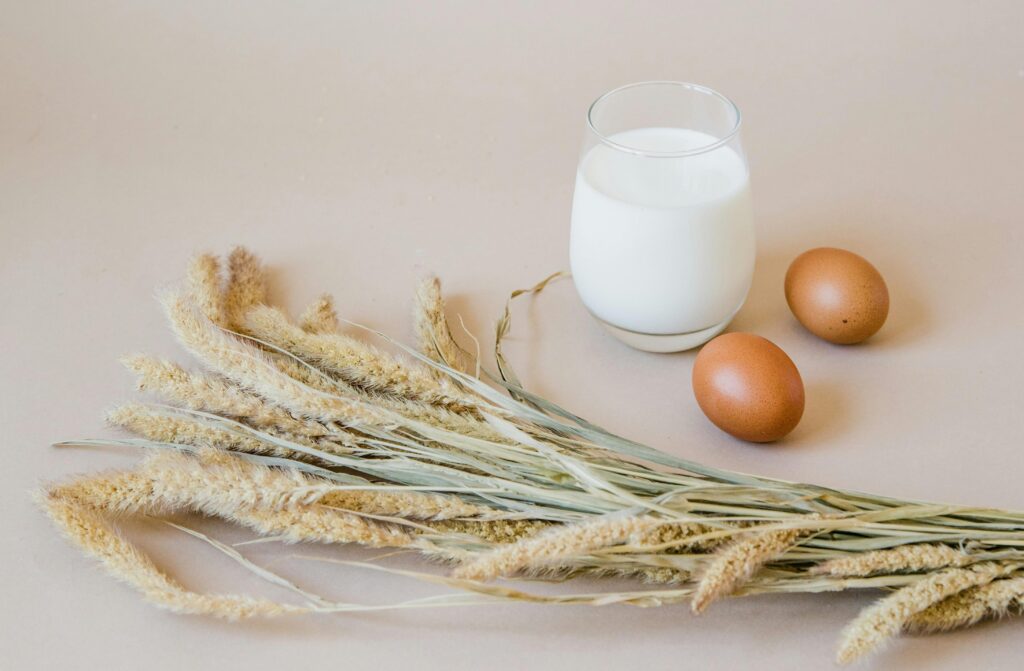
- Skim milk
- Cottage cheese
- Processed cheese
- Yeast
- Seafood
- Chicken eggs
Whole wheat flour products contain about four times more zinc than refined white flour, making whole grain foods a healthier option.
Seafood, especially shellfish, is also considered one of the richest natural sources of zinc.
Daily Zinc Requirement
The recommended daily intake of zinc varies according to age, gender, and life stage.
General guidelines include:
- Adult men: 11 mg per day
- Adult women: 8 mg per day
- Pregnant women: 11–12 mg per day
- Children: 3–8 mg depending on age
Maintaining these levels through a balanced diet helps support overall health and prevent deficiency.
Also read this post :- Magnesium: Benefits, Deficiency Symptoms, Food Sources, and Importance for Health
How to Prevent Zinc Deficiency
Preventing zinc deficiency is relatively simple if you maintain a nutritious and balanced diet.
Helpful tips include:
- Eat whole grains instead of refined grains
- Include nuts and seeds in daily meals
- Consume adequate protein from plant or animal sources
- Eat zinc-rich vegetables such as spinach and peas
- Limit excessive alcohol consumption
A varied diet that includes grains, legumes, dairy products, and vegetables generally provides sufficient zinc for most individuals.
Conclusion
Zinc is an essential mineral that supports many important functions in the human body. It plays a crucial role in immune health, growth, wound healing, metabolism, and reproductive function. Zinc deficiency can lead to various health problems, including poor immunity, delayed growth, hair loss, and reduced appetite.
Fortunately, zinc deficiency can usually be prevented by consuming a balanced diet that includes whole grains, legumes, nuts, dairy products, and seafood. Ensuring adequate zinc intake helps maintain optimal health and supports the body’s natural defense systems.
Also read this post :- What is calcium and why does the body need it? The best food sources of calcium.
FAQs
What are the main benefits of zinc?
Zinc supports immune function, promotes wound healing, aids metabolism, and helps maintain healthy skin, hair, and reproductive health.
What are the symptoms of zinc deficiency?
Common symptoms include hair loss, loss of taste, slow wound healing, reduced appetite, weak immunity, and delayed growth.
Which foods are highest in zinc?
Seafood, whole grains, nuts, seeds, legumes, dairy products, and eggs are excellent sources of zinc.
Can zinc improve immunity?
Yes. Zinc plays an important role in immune system function and helps the body fight infections.
Is zinc supplementation necessary?
Most people get enough zinc from food, but supplements may be recommended for individuals with deficiency or increased requirements.
Medical Disclaimer
The information provided in this article is for educational purposes only and should not replace professional medical advice. Always consult a qualified healthcare provider before starting any nutritional supplement or treatment.