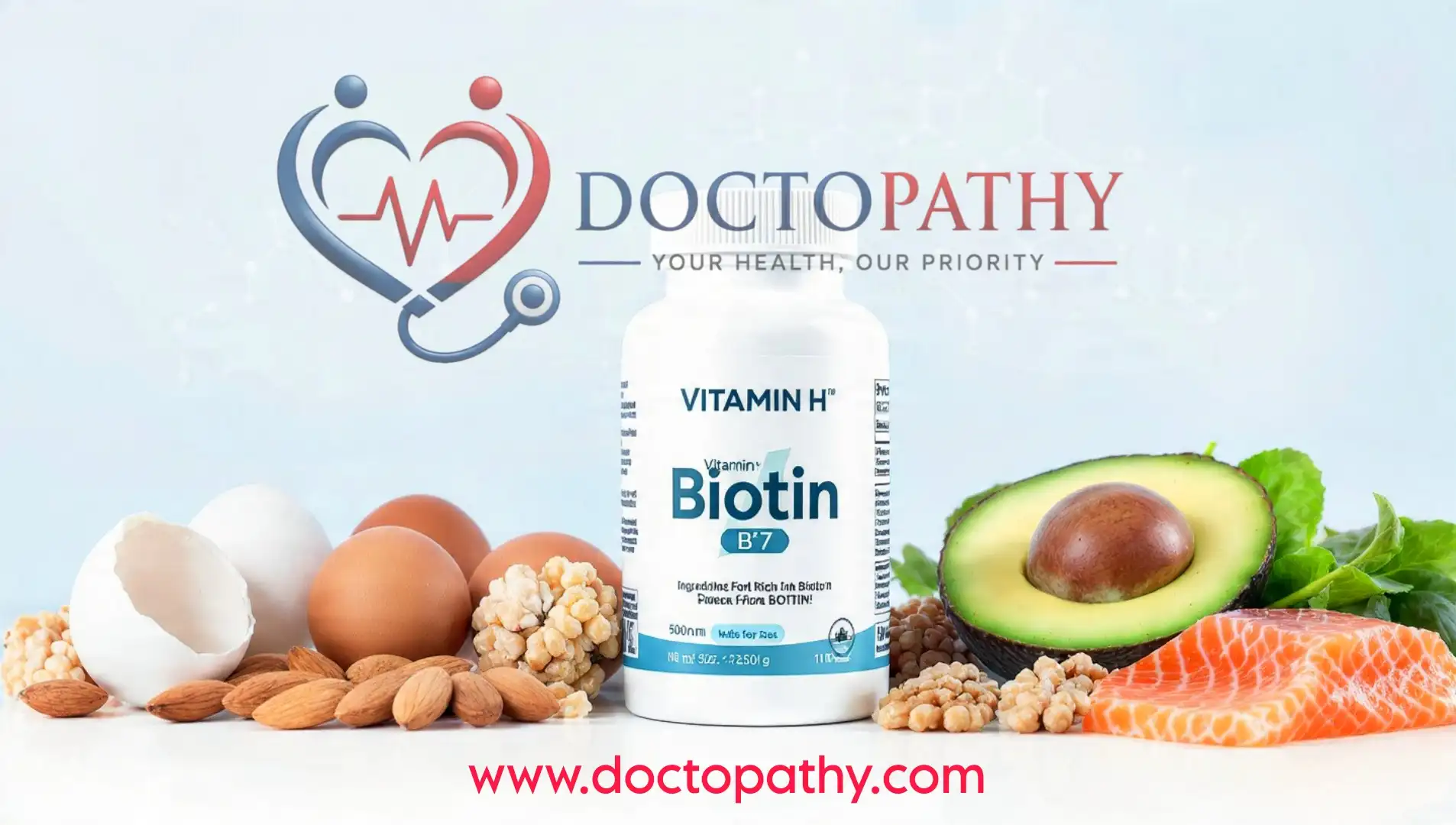
Vitamin H also called Biotin or Vitamin B7, is a water-soluble B-complex vitamin. It helps the body convert food into energy and supports healthy hair, skin, nails and metabolism.
The letter “H” comes from the German words Haar (hair) and Haut (skin). Therefore, many people also call biotin the “beauty vitamin.”
Since the body does not store biotin for long periods, people need to get it regularly through food.
Why is Vitamin H Important?
Vitamin H supports many important body functions.
Main Functions of Vitamin H
- Helps convert carbohydrates, fats and proteins into energy
- Supports healthy hair growth
- Helps maintain healthy skin
- Strengthens nails
- Supports brain and nerve function
- Helps maintain normal metabolism
In addition, biotin works with other B vitamins to support overall health.
Natural Sources of Vitamin H
Biotin is found in many healthy foods.
Animal-Based Sources
Foods Rich in Biotin
- Egg yolk
- Liver
- Kidney
- Fish such as salmon and tuna
- Chicken and beef
- Milk, yogurt and cheese
Egg yolk is one of the best natural sources of biotin.
Plant-Based Sources
Healthy Plant Foods with Biotin
- Almonds
- Peanuts
- Walnuts
- Sunflower seeds
- Oats
- Brown rice
- Soybeans
- Lentils
- Chickpeas
- Spinach
- Broccoli
- Sweet potatoes
- Bananas
- Avocados
Other Sources
Biotin is also found in:
- Mushrooms
- Brewer’s yeast
- Fortified foods
- Nutritional supplements
Health Benefits of Vitamin H
Vitamin H offers many health benefits.
1. Supports Healthy Hair
Biotin helps produce keratin, an important protein for hair health. As a result, hair may become stronger, shinier and thicker.
Some people also notice reduced hair fall after improving biotin intake.
2. Helps Maintain Healthy Skin
Vitamin H supports healthy skin by helping maintain moisture and skin texture.
Low biotin levels may lead to:
- Dry skin
- Rough skin
- Skin irritation
- Dull appearance
3. Strengthens Nails
Weak or brittle nails may improve with enough biotin intake.
Regular consumption of biotin-rich foods may help make nails stronger over time.
4. Supports Energy Production
Biotin helps the body convert food into usable energy.
Therefore, proper biotin intake may help reduce tiredness and support daily activity.
5. Supports Blood Sugar Balance
Some studies suggest that biotin may support healthy glucose metabolism. As a result, it may help people with type 2 diabetes when combined with medical treatment and a healthy lifestyle.
6. Supports Brain Function
Vitamin H helps support the nervous system and brain function.
It may also help improve:
- Memory
- Focus
- Mental performance
7. Important During Pregnancy
Biotin supports healthy fetal growth and development during pregnancy.
However, pregnant people should only take supplements under medical guidance.
8. Supports Heart Health
Biotin may help support healthy cholesterol balance and overall heart health.
In addition, a balanced diet rich in nutrients helps protect the heart.
Recommended Daily Intake of Vitamin H
The daily requirement of biotin depends on age.
| Age Group | Daily Requirement |
|---|---|
| Infants (0–12 months) | 5–6 mcg |
| Children (1–8 years) | 8–12 mcg |
| Teenagers (9–18 years) | 20–25 mcg |
| Adults | 30 mcg |
| Pregnant people | 30 mcg |
| Breastfeeding people | 35 mcg |
Symptoms of Vitamin H Deficiency
Biotin deficiency is uncommon, but it may occur in some people.
Common Symptoms
- Hair loss
- Dry or scaly skin
- Brittle nails
- Fatigue
- Weakness
- Mood changes
- Depression
- Tingling in hands and feet
If symptoms continue, medical advice is important.
Vitamin H Supplements
People who do not get enough biotin from food may use supplements.
Biotin supplements are available as:
- Tablets
- Capsules
- Gummies
- Hair and beauty products
However, it is best to take supplements only after consulting a healthcare professional.
Conclusion
Vitamin H (Biotin) is an important vitamin that supports healthy hair, skin, nails, metabolism and overall wellness. A balanced diet with biotin-rich foods usually provides enough biotin for most people.
Healthy eating, proper nutrition, and medical guidance can help maintain healthy biotin levels naturally.
Medical Disclaimer :
This article is for educational purposes only and does not replace professional medical advice. Always consult a qualified healthcare provider before starting supplements or treatment.