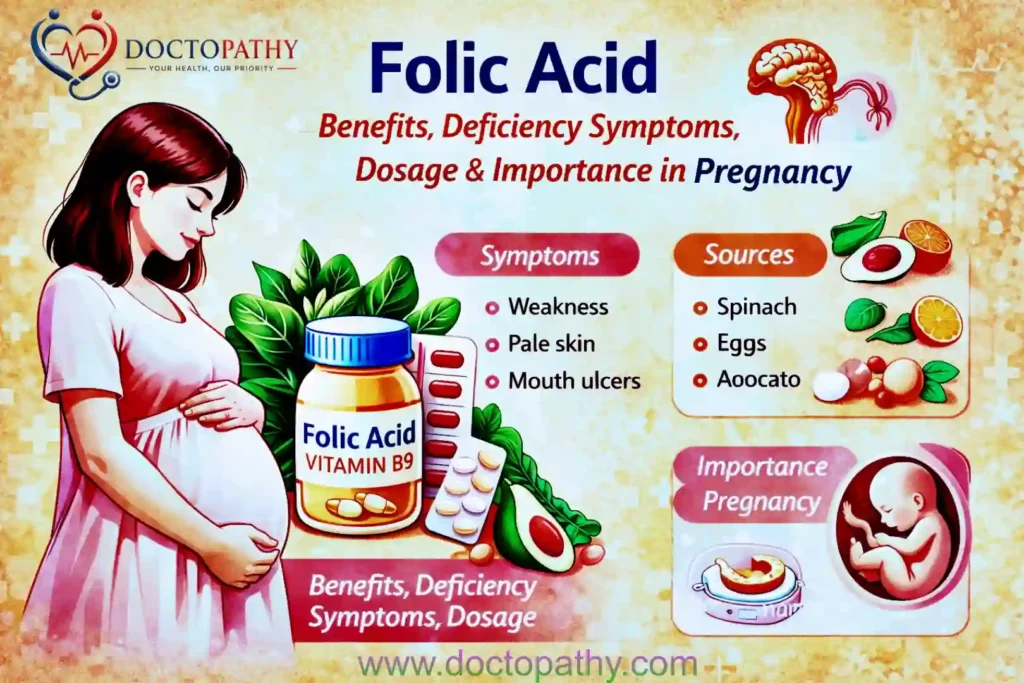
Folic acid is an important vitamin that helps the body grow and stay healthy. It is especially important during pregnancy because it supports the healthy development of the baby’s brain and spinal cord.
Many people do not get enough folic acid from their daily diet, which can lead to weakness, anemia and other health problems.
In this article, we will explain what folic acid is, its benefits, deficiency symptoms, dosage, food sources and its importance during pregnancy in simple English.
What is Folic Acid?
Folic acid is the synthetic form of Vitamin B9. The natural form found in foods is called folate.
It is needed for:
- DNA formation
- Cell growth and repair
- Healthy red blood cell production
- Brain and nervous system development
- Tissue growth
Folic acid is a water-soluble vitamin, so the body does not store large amounts. Regular daily intake is important.
Why is Folic Acid Important?
Folic acid helps the body make new healthy cells. It is especially important during periods of rapid growth such as:
- Pregnancy
- Infancy
- Teenage years
It also helps prevent certain types of anemia and supports heart and brain health.
Importance of Folic Acid During Pregnancy
Folic acid is very important before and during pregnancy because it helps in the healthy growth of the baby.
1. Helps Prevent Neural Tube Defects
Neural tube defects are serious birth defects that affect the baby’s brain and spinal cord.
Taking enough folic acid before and during early pregnancy greatly reduces this risk.
2. Supports Baby’s Growth
Folic acid helps in proper development of:
- Brain
- Spinal cord
- Nervous system
- Placenta
3. Helps Prevent Anemia
Folic acid is needed for healthy red blood cell formation. Low levels may lead to megaloblastic anemia.
4. May Reduce Risk of Early Delivery
Proper folic acid intake may help lower the risk of premature birth.
Causes of Folic Acid Deficiency
Deficiency may happen due to:
- Poor diet
- Digestive disorders affecting absorption
- Alcohol use disorder
- Certain medicines
- Increased nutritional needs during pregnancy
- Kidney problems
Nutritional deficiency is common in many developing countries.
Symptoms of Folic Acid Deficiency
Common symptoms include:
- Weakness and tiredness
- Pale skin
- Shortness of breath
- Mouth ulcers
- Swollen tongue
- Poor concentration
- Irritability
- Hair fall
Severe deficiency may lead to megaloblastic anemia.
Who is at Higher Risk?
People at higher risk include:
- Pregnant people
- People planning pregnancy
- Breastfeeding mothers
- People with poor nutrition
- People with alcohol use disorder
- Individuals with digestive disorders
People planning pregnancy should start folic acid at least one month before conception.
Recommended Daily Dosage
Adults
- 400 micrograms (mcg) daily
During Pregnancy
- 400–600 mcg daily
High-Risk Pregnancy
- Up to 5 mg daily only if prescribed by a doctor
Do not take high doses without medical advice.
Best Food Sources of Folate
Many healthy foods naturally contain folate.
Green Leafy Vegetables
- Spinach
- Fenugreek leaves
- Mustard greens
Fruits
- Oranges
- Bananas
- Papaya
- Avocado
Pulses and Legumes
- Lentils
- Chickpeas
- Kidney beans
Other Sources
- Eggs
- Liver
- Fortified cereals
- Nuts
Light cooking or steaming helps preserve folate content.
Folic Acid and Anemia
Low folic acid levels can cause megaloblastic anemia, a condition where red blood cells become large and do not function properly.
This may cause:
- Fatigue
- Weakness
- Low immunity
Doctors often recommend folic acid along with iron supplements during pregnancy.
Folic Acid and Heart Health
Folic acid may help reduce homocysteine levels in the blood. High homocysteine levels are linked with heart disease and stroke.
Adequate intake supports cardiovascular health.
Folic Acid and Brain Health
Vitamin B9 supports:
- Memory
- Focus
- Mental clarity
Deficiency may increase the risk of depression and cognitive problems.
Can Too Much Folic Acid Be Harmful?
Folic acid is usually safe when taken in recommended amounts. Excessive intake may:
- Hide Vitamin B12 deficiency
- Cause stomach discomfort
- Rarely affect sleep
Always follow medical advice regarding supplements.
Folic Acid Before Pregnancy
People planning pregnancy should begin folic acid supplementation at least one month before conception.
The baby’s neural tube develops very early in pregnancy, often before pregnancy is confirmed.
Early supplementation supports healthy fetal development.
Folic Acid During Breastfeeding
Breastfeeding mothers may need slightly higher folic acid intake to support both their own health and the baby’s growth.
Prevention Tips
- Eat a balanced diet rich in green vegetables
- Take prenatal vitamins if prescribed
- Avoid excessive alcohol consumption
- Get regular health checkups
- Treat digestive problems properly
Conclusion
Folic acid is an essential vitamin that supports cell growth, red blood cell formation, brain function and healthy fetal development.
It is especially important for people who are pregnant or planning pregnancy because it helps prevent serious birth defects and supports healthy baby growth.
A healthy diet, proper supplementation, and regular medical checkups can help maintain adequate folic acid levels and prevent deficiency.
For more health awareness and pregnancy care articles, visit Doctopathy
Frequently Asked Questions (FAQs)
It is best to start at least one month before pregnancy and continue during pregnancy.
Yes, daily intake is important for overall health and red blood cell production.
It supports reproductive health but is not a direct fertility treatment.
Yes, it is highly recommended for healthy fetal development.
Healthy foods help, but supplements are often advised during pregnancy.
Medical Disclaimer :
The information provided on this website is for educational and informational purposes only and is not intended as medical advice. Always consult a qualified healthcare professional before starting any supplement or treatment.
Medical Content Writer:- Dr. Parminder Singh (BEMS)