Introduction
Sodium is an essential mineral and electrolyte that plays a vital role in maintaining the body’s normal physiological functions. It helps regulate fluid balance, nerve function, and muscle activity. Sodium is present in almost every cell of the human body and works closely with other electrolytes such as potassium and chloride.
Although sodium is necessary for survival, both deficiency and excess can cause serious health problems. Maintaining the right balance of sodium in the body is important for overall health.
In this article, we will discuss the importance of sodium, its functions in the body, symptoms of deficiency, health risks of excess sodium, and natural dietary sources.
Also read this post :- Magnesium: Benefits, Deficiency Symptoms, Food Sources, and Importance for Health
What is Sodium?
Sodium is a mineral electrolyte that helps maintain the balance of fluids inside and outside the body’s cells. It is commonly consumed in the form of sodium chloride (table salt).
Electrolytes like sodium dissolve in body fluids and help regulate many important biological processes such as:
- Fluid balance
- Nerve signal transmission
- Muscle contraction
- Blood pressure regulation
The body requires sodium in small quantities, but it must be consumed regularly through food to maintain normal body functions.
Role of Sodium in the Human Body
Sodium performs several important functions that support overall health.
1. Maintaining Fluid Balance
One of the most important roles of sodium is regulating the water balance in the body. Sodium helps control the movement of fluids between cells and surrounding tissues.
This balance ensures that cells remain properly hydrated and function normally.
2. Supporting Nerve Function
Sodium plays a key role in transmitting nerve impulses throughout the body. Nerves communicate with each other by sending electrical signals, and sodium ions are essential for this process.
Proper sodium levels help maintain healthy brain and nervous system function.
3. Muscle Contraction
Muscles require sodium to function correctly. Sodium works together with potassium to control muscle contractions and relaxation.
Without adequate sodium levels, muscles may not function properly, which can lead to weakness or cramps.
4. Regulation of Blood Pressure
Sodium helps regulate blood pressure levels by controlling fluid volume in the bloodstream.
However, excessive sodium intake can increase blood pressure, which is why maintaining balanced sodium consumption is important.
Also read this post :- Silica: Health Benefits, Functions, Deficiency Symptoms and Natural Sources
Sodium and Water Balance
Sodium works closely with other electrolytes such as potassium and chloride to maintain osmotic balance in body fluids.
This means sodium helps regulate how much water enters and leaves body cells. A proper balance ensures that cells function normally and that organs receive adequate hydration.
When sodium levels become too low or too high, the body’s fluid balance can be disturbed, leading to various health problems.
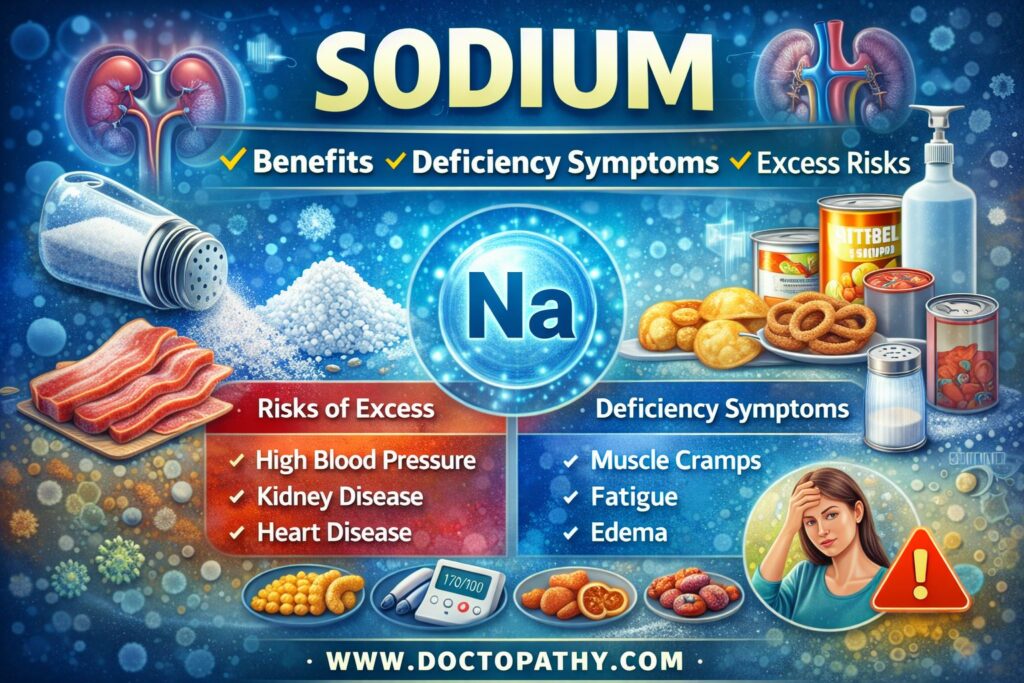
Symptoms of Sodium Deficiency
Although sodium deficiency is relatively rare in healthy individuals, it can occur in certain situations such as:
- Excessive sweating
- Severe diarrhea or vomiting
- Certain medical conditions
- Prolonged physical activity without electrolyte replacement
When sodium levels become too low, the condition is known as hyponatremia.
Common symptoms of sodium deficiency include:
- Muscle cramps
- Weakness
- Fatigue
- Nausea
- Headache
- Confusion
- Swelling (edema)
In severe cases, sodium deficiency may lead to neurological problems and serious health complications.
Causes of Excess Sodium in the Body
While sodium deficiency is uncommon, excess sodium intake is very common, especially in modern diets.
Many processed foods contain high amounts of sodium, which can lead to excessive consumption.
Common sources of high sodium intake include:
- Processed foods
- Packaged snacks
- Fast food
- Preserved meats
- Restaurant foods
Eating these foods regularly may increase sodium levels beyond healthy limits.
Also read this post :- Potassium Benefits, Deficiency Symptoms and Best Food Sources
Health Risks of Excess Sodium
Consuming too much sodium over a long period can lead to several serious health problems.
1. High Blood Pressure
Excess sodium increases fluid retention in the body, which raises blood pressure. High blood pressure is a major risk factor for heart disease and stroke.
2. Kidney Disease
The kidneys regulate sodium levels in the body. When sodium intake is too high, the kidneys must work harder to remove excess sodium, which may contribute to kidney damage over time.
3. Liver Cirrhosis
Excess sodium can worsen fluid retention in people suffering from liver diseases such as cirrhosis, leading to swelling in the abdomen and limbs.
4. Congestive Heart Disease
High sodium levels can increase fluid accumulation in the body, which may place additional stress on the heart and worsen congestive heart failure.
Also read this post :- Iron: Benefits, Deficiency, Symptoms, and Best Food Sources
Sodium Loss Through Sweat and Urine
The body naturally eliminates sodium through urine and sweat.
During hot weather or intense physical activity, large amounts of sodium may be lost through sweating. In such situations, the body may require additional sodium and electrolytes to maintain balance.
However, for most people consuming a normal diet, sodium intake is usually sufficient.
Natural Sources of Sodium
Sodium is widely present in many foods. The most common dietary source is table salt (sodium chloride).
Major sources of sodium include:
- Table salt
- Processed foods
- Meat products
- Packaged snacks
- Fast foods
- Canned foods
Because sodium is already present in many foods, most people do not need to add large amounts of salt to their diet.
Recommended Sodium Intake
Health experts recommend moderate sodium intake to maintain good health.
Excess salt consumption should be avoided, especially for individuals with:
- High blood pressure
- Kidney disease
- Heart disease
Reducing processed foods and limiting salt intake can help maintain healthy sodium levels.
Tips to Maintain Healthy Sodium Levels
To maintain balanced sodium intake, consider the following tips:
- Avoid excessive salt in cooking
- Limit processed and packaged foods
- Read nutrition labels carefully
- Choose fresh foods whenever possible
- Drink adequate water
Maintaining a balanced diet is the best way to ensure proper sodium levels.
Also read this post :- What is calcium and why does the body need it? The best food sources of calcium.
Conclusion
Sodium is an essential mineral that plays a crucial role in maintaining fluid balance, nerve function, and muscle activity in the human body. While the body needs sodium to function properly, excessive intake can lead to serious health problems such as high blood pressure, kidney disease, and heart complications.
Most people receive enough sodium through their daily diet, especially from processed foods and table salt. Therefore, the key to maintaining good health is avoiding excessive sodium consumption and maintaining a balanced diet.
FAQs
Sodium helps maintain fluid balance, supports nerve signals, and enables proper muscle function.
Low sodium levels can cause muscle cramps, fatigue, confusion, and swelling.
Too much sodium can lead to high blood pressure, kidney disease, liver problems, and heart disease.
Common sources include table salt, processed foods, packaged snacks, and meat products.
No, sodium deficiency is relatively rare because sodium is widely available in most foods.