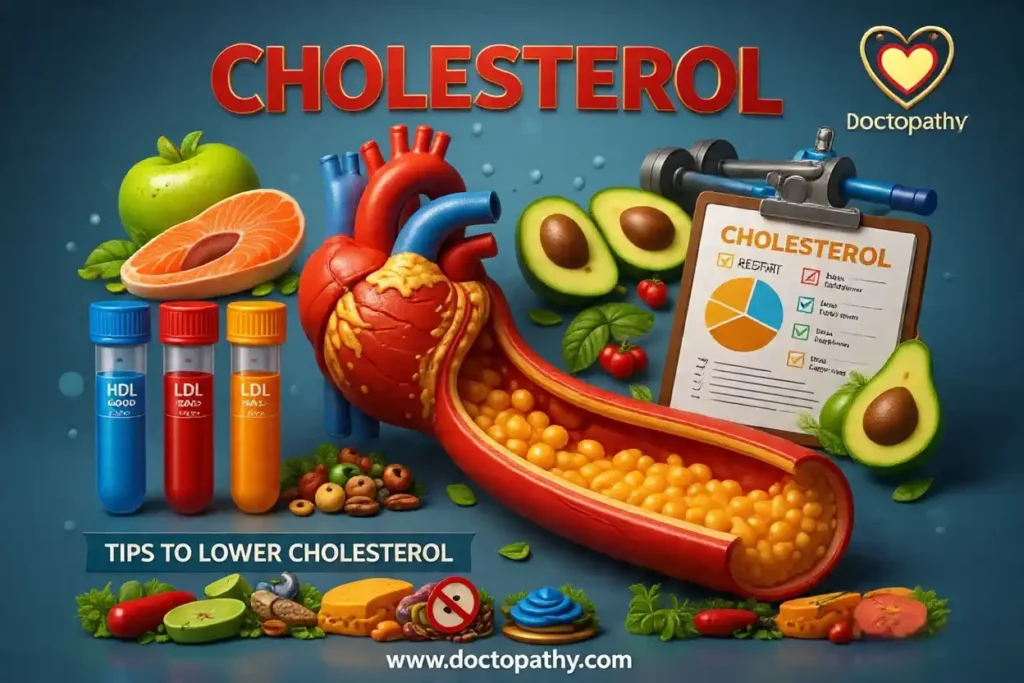
Cholesterol is a fatty substance that the body needs for many important functions. Although people often connect cholesterol with heart disease, the body actually needs a healthy amount of cholesterol to work properly.
However, high cholesterol levels can become dangerous. Excess cholesterol may build up inside the arteries and increase the risk of heart disease and stroke.
Therefore, understanding cholesterol and learning how to control it is important for overall health.
What is Cholesterol?
Cholesterol is a waxy, fat-like substance mainly made by the liver. The body also gets cholesterol from animal-based foods.
This substance helps the body in many ways. For example, cholesterol helps:
- Build cell membranes
- Produce hormones such as estrogen and testosterone
- Form vitamin D
- Produce bile acids for digestion
- Support brain and nerve function
The body naturally makes enough cholesterol for its needs. However, unhealthy food and lifestyle habits can increase cholesterol levels too much.
Normal Cholesterol Levels
Healthy cholesterol levels help protect the heart and blood vessels.
General cholesterol guidelines include:
- Total cholesterol below 200 mg/dL — Healthy
- 200–240 mg/dL — Borderline high
- Above 240 mg/dL — High cholesterol
For better heart health:
- LDL cholesterol should stay below 130 mg/dL
- HDL cholesterol should remain higher
- The total cholesterol to HDL ratio should stay below 4.5
Lower ratios usually mean better heart health.
Types of Cholesterol
Cholesterol travels in the blood through proteins called lipoproteins.
1. LDL (Low-Density Lipoprotein)
LDL is known as “bad cholesterol.”
It carries cholesterol to the arteries. When LDL becomes high, cholesterol starts building up in artery walls. As a result, the arteries become narrow and hard.
This condition increases the risk of heart attack and stroke.
2. HDL (High-Density Lipoprotein)
HDL is called “good cholesterol.”
It removes extra cholesterol from the blood and carries it back to the liver. Therefore, higher HDL levels help protect the heart.
3. VLDL (Very Low-Density Lipoprotein)
VLDL mainly carries triglycerides in the blood.
Although it is different from LDL, high VLDL levels may also increase the risk of heart disease.
Causes of High Cholesterol
Many factors can increase cholesterol levels.
1. Genetics
Some people inherit high cholesterol from family members.
2. Increasing Age
Cholesterol levels often rise with age.
3. Smoking
Smoking damages blood vessels and lowers good cholesterol levels.
4. High Blood Pressure
High blood pressure damages artery walls and allows cholesterol deposits to build up more easily.
5. Obesity
Excess weight increases bad cholesterol and lowers good cholesterol.
6. Diabetes
Diabetes can affect fat metabolism and raise cholesterol levels.
7. Lack of Exercise
Physical inactivity lowers HDL cholesterol and increases fat buildup.
8. Unhealthy Diet
Foods rich in saturated fats and trans fats can raise cholesterol quickly.
9. Hormonal Changes
After menopause, estrogen levels decrease. As a result, the risk of high cholesterol may increase.
Symptoms of High Cholesterol
High cholesterol usually does not cause symptoms in the early stages.
Therefore, many people do not know they have it.
However, severe or long-term high cholesterol may cause:
- Chest pain
- Shortness of breath
- Fatigue
- Heart attack
- Stroke
Regular blood tests help detect high cholesterol early.
Role of Exercise in Controlling Cholesterol
Exercise helps improve cholesterol balance and heart health.
Aerobic exercises are especially helpful because they increase HDL cholesterol.
Good exercises include:
- Walking
- Jogging
- Cycling
- Swimming
- Aerobic workouts
Walking is one of the safest and easiest exercises for most people.
In addition, regular exercise helps control weight and improves blood circulation.
Cholesterol in Foods
Animal-based foods contain cholesterol.
Examples include:
| Food Item | Cholesterol |
|---|---|
| Lean beef | 70 mg |
| Fish | 70 mg |
| Butter | 250–280 mg |
| Ice cream | 45 mg |
| Cheese | 100 mg |
| Pork | 70 mg |
| Chicken | 60 mg |
| Shrimp | 125 mg |
| Whole egg | 550 mg |
| Egg yolk | 1500–2000 mg |
| Whole milk | 11 mg |
| Cream | 120–140 mg |
Plant-based foods naturally contain little or no cholesterol.
Examples include:
- Fruits
- Vegetables
- Cereals
- Whole grains
Therefore, plant-based foods support better heart health.
Natural Ways to Control Cholesterol
1. Eat a Healthy Diet
Include more:
- Fruits
- Vegetables
- Whole grains
- Oats
- Nuts and seeds
At the same time, reduce fried foods and processed foods.
2. Exercise Regularly
Daily exercise helps lower LDL and increase HDL cholesterol.
3. Maintain Healthy Weight
Weight loss can improve cholesterol levels significantly.
4. Stop Smoking
Quitting smoking improves blood vessel health and raises HDL cholesterol.
5. Limit Alcohol
Too much alcohol may increase triglycerides and worsen cholesterol problems.
6. Get Regular Health Checkups
Routine blood tests help monitor cholesterol levels early.
Conclusion
Cholesterol is important for normal body functions. However, high cholesterol levels—especially high LDL cholesterol—can increase the risk of heart disease and stroke.
Fortunately, healthy lifestyle habits can help control cholesterol naturally. Eating a balanced diet, exercising regularly, avoiding smoking and maintaining a healthy weight are important steps for heart health.
Regular medical checkups also help detect cholesterol problems before serious complications develop.
Frequently Asked Questions (FAQs)
Cholesterol is a waxy, fat-like substance that helps build cells, produce hormones, form vitamin D and support digestion.
The three main types are:
• LDL (bad cholesterol)
• HDL (good cholesterol)
• VLDL
Common causes include unhealthy diet, obesity, smoking, diabetes, lack of exercise, aging and genetics.
Total cholesterol should remain below 200 mg/dL for most adults.
You can lower cholesterol by eating healthy foods, exercising regularly, losing excess weight, avoiding smoking and limiting alcohol.
Medical Disclaimer :
This article is for educational purposes only. It should not replace professional medical advice, diagnosis or treatment. Always consult a qualified healthcare professional before making medical or dietary changes.
Medical Content Writer:- Dr. Parminder Singh (BEMS)