Introduction
Silica, also known as silicon dioxide, is an essential trace mineral that plays an important role in maintaining the health of connective tissues, bones, skin, hair, and nails. Although the body requires only small amounts of silica, it contributes significantly to overall structural health and cellular functioning.
Silica is commonly found in nature in rocks, sand, and soil. It is also present in many plant-based foods and drinking water. In natural medicine systems such as biochemical therapy, silica is considered an important mineral for strengthening tissues and promoting healing.
This article explains the importance of silica, its functions in the human body, symptoms of deficiency, health benefits, and natural food sources.
Also read this post :- Iodine: An essential mineral for a healthy body and mind
What is Silica?
Silica is a naturally occurring mineral compound made of silicon and oxygen. It is widely distributed in nature and is present in small amounts in the human body.
Silica contributes to the formation and maintenance of:
- Connective tissues
- Skin structure
- Bones and cartilage
- Hair and nails
Because of its role in tissue strength and regeneration, silica is often referred to as the “beauty mineral” or “connective tissue mineral.”
Role of Silica in the Human Body
Silica performs several essential functions that support structural integrity and overall health.
1. Strengthening Bones
Silica plays a supportive role in bone formation and mineralization. It helps the body utilize calcium more efficiently and contributes to stronger bones and joints.
Research suggests that silica helps improve bone density, especially when combined with calcium and vitamin D.
2. Supporting Healthy Skin
Silica is important for maintaining elastic and healthy skin. It helps strengthen connective tissues and supports collagen production.
Adequate silica intake may help improve:
- Skin elasticity
- Skin hydration
- Wound healing
For this reason, silica is often included in beauty and skincare supplements.
Also read this post :- Chromium: Benefits, Deficiency, and Natural Food Sources
3. Promoting Hair and Nail Growth
Silica helps strengthen hair strands and nails by supporting the formation of keratin and connective tissues.
Benefits for hair and nails include:
- Stronger hair roots
- Reduced hair breakage
- Healthier nail growth
Many natural hair supplements contain silica because of these benefits.
4. Supporting Connective Tissue Health
Silica contributes to the health of ligaments, tendons, cartilage, and connective tissues. It helps maintain the structural framework that holds body tissues together.
This makes silica particularly important for joint health and flexibility.
5. Detoxification Support
Silica may help support the body’s natural detoxification processes by binding to certain harmful substances and assisting in their removal.
Some studies suggest silica may help reduce the accumulation of aluminum in the body, which could be beneficial for neurological health.
Also read this post :- Iron: Benefits, Deficiency, Symptoms, and Best Food Sources
Silica in Biochemical Medicine
In biochemical therapy, Silicea (a form of silica) is considered one of the twelve tissue salts used to support the body’s healing processes.
Silicea is often used to help:
- Strengthen weak tissues
- Support wound healing
- Improve skin conditions
- Remove foreign substances from tissues
Because of these properties, silica is sometimes referred to as the “homeopathic surgeon.”
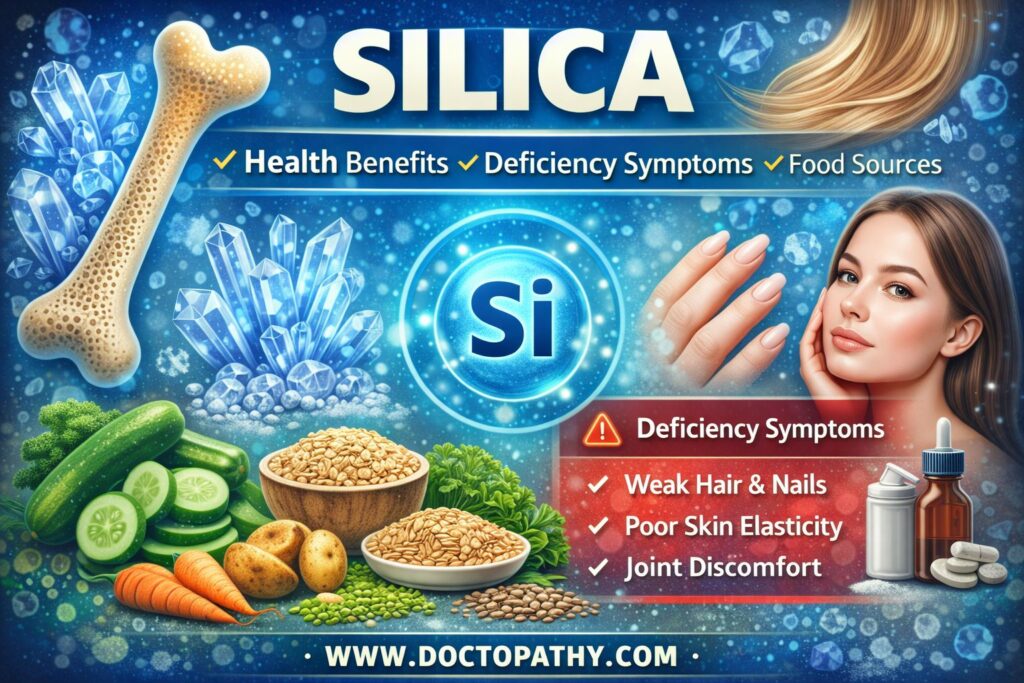
Symptoms of Silica Deficiency
Although silica deficiency is not very common, low levels of silica in the body may lead to several health issues.
Possible symptoms include:
- Weak or brittle hair
- Fragile nails
- Poor skin elasticity
- Delayed wound healing
- Weak connective tissues
- Joint discomfort
- Bone weakness
These symptoms occur because silica is necessary for maintaining the strength and structure of connective tissues.
Health Benefits of Silica
Adequate silica intake provides several health benefits.
Improved Bone Health
Silica supports bone mineralization and may reduce the risk of bone-related disorders.
Stronger Hair and Nails
It helps maintain healthy hair growth and stronger nails.
Better Skin Health
Silica contributes to youthful, elastic, and hydrated skin.
Joint Support
Silica helps maintain healthy cartilage and connective tissues, supporting joint flexibility.
Tissue Repair
Silica assists in repairing damaged tissues and promoting wound healing.
Also read this post :- Copper: Benefits, Deficiency Symptoms, Sources, and Importance for Health
Natural Food Sources of Silica
Silica is found primarily in plant-based foods and natural water sources.
Important dietary sources include:
- Whole grains
- Oats
- Barley
- Brown rice
- Green leafy vegetables
- Cucumbers
- Bananas
- Beans
- Lentils
- Root vegetables
Drinking water may also contain small amounts of silica depending on the mineral content of the soil.
Eating a balanced diet rich in whole foods usually provides enough silica for the body.
Silica Supplements
Silica is also available as a dietary supplement in several forms, including:
- Silica capsules
- Liquid silica
- Silica-containing herbal extracts
However, supplements should only be used when necessary and under the guidance of a healthcare professional.
For most people, natural food sources are the safest and most effective way to obtain silica.
Safety and Precautions
Silica obtained from natural foods is generally safe for consumption.
However, inhalation of silica dust (such as in industrial environments) can cause lung problems known as silicosis. This condition is related to occupational exposure rather than dietary silica.
When consumed through food or supplements in appropriate amounts, silica is generally considered safe.
Conclusion
Silica is an important trace mineral that supports bone health, connective tissues, skin elasticity, hair strength, and nail growth. Although the body requires only small amounts, silica plays a significant role in maintaining structural health and supporting tissue repair.
A balanced diet rich in whole grains, vegetables, and plant-based foods can provide adequate silica for most individuals. Maintaining proper silica levels helps support overall health and contributes to stronger bones, healthier skin, and improved connective tissue function.
Also read this post :- Potassium Benefits, Deficiency Symptoms and Best Food Sources
FAQs
Silica helps strengthen connective tissues, support bone health, improve skin elasticity, and promote healthy hair and nails.
Foods rich in silica include oats, barley, whole grains, cucumbers, bananas, leafy vegetables, and beans.
Yes, silica supports keratin formation, which helps strengthen hair strands and improve nail growth.
Yes, silica supports bone mineralization and may help improve bone density.
Silica from natural foods is generally safe. However, inhaling silica dust can be harmful in industrial environments.
Medical Disclaimer:
The information provided on this website is for educational and informational purposes only. It is not intended as a substitute for professional medical advice, diagnosis, or treatment. Always consult a qualified healthcare professional before starting any treatment or medication. Do not ignore medical advice because of information read on this website.