What is Potassium?
Potassium is an essential mineral and electrolyte required for the proper functioning of the human body. It plays a crucial role in maintaining nerve signals, muscle strength, heart function, and fluid balance.
Potassium is usually found in combination with other substances, especially acids, and is present in many natural foods. Without potassium, life cannot be sustained, as it is vital for many biological processes.
Also read this post :- Magnesium: Benefits, Deficiency Symptoms, Food Sources, and Importance for Health
Role of Potassium in the Human Body
Potassium is involved in several important body functions, including:
1. Muscle and Nerve Function
Potassium helps transmit nerve signals and ensures proper muscle contraction. Adequate potassium levels are necessary for maintaining normal muscle strength and nerve activity.
2. Heart Health
Potassium plays an important role in maintaining a normal heartbeat and regulating blood pressure. It helps the heart muscles function properly and reduces the risk of irregular heart rhythms.
3. Fluid and Electrolyte Balance
Potassium regulates the balance of fluids inside and outside body cells, which is necessary for maintaining normal body chemistry.
4. Enzyme Activity
Many enzymes in the body require potassium to function properly, which supports metabolism and energy production.
Importance of Potassium for Body Tissues
Potassium is particularly important for the soft tissues of the body. It plays a role similar to the way calcium supports hard tissues such as bones and teeth.
It also helps maintain the electrolyte balance of body fluids and supports proper cellular activity.
Symptoms of Potassium Deficiency
A deficiency of potassium can affect several body systems and lead to various health problems.
Common symptoms include:
- Muscle weakness
- Fatigue and tiredness
- Memory loss
- Irritability
- Irregular heartbeat
- Muscle cramps
- Constipation
- Nausea
- Itchy skin
- Reduced mental alertness
- Difficulty relaxing or resting
In some cases, potassium deficiency may even cause unusual cravings such as craving clay or dried mud, especially in pregnant women.
Also read this post :- Sodium: Importance, Functions, Deficiency Symptoms, Risks of Excess, and Natural Sources
Effects of Excess Potassium
Although potassium is essential, excessive potassium levels can also cause problems. High potassium levels may lead to:
- Irregular heart rhythms
- Heart complications
Therefore, potassium intake should always remain balanced.
Potassium and Aging
As people grow older, the body may require increased potassium intake to maintain proper muscle function, heart health, and metabolic processes.
Higher sodium intake can increase potassium loss from the body, making it important to maintain a balanced diet rich in potassium-containing foods.
Potassium also helps keep the walls of blood vessels free from calcium deposits, which supports cardiovascular health.
Apple Cider Vinegar as a Potassium Source
In many developed countries, apple cider vinegar is considered a good natural source of potassium.
A common traditional method of use is:
- Mix one teaspoon of apple cider vinegar in a glass of water
- Sip slowly
This drink is believed to help support metabolism and may assist in burning body fat.
In some animal experiments, apple cider vinegar has also been observed to support joint health and improve productivity in dairy animals.
Natural Food Sources of Potassium
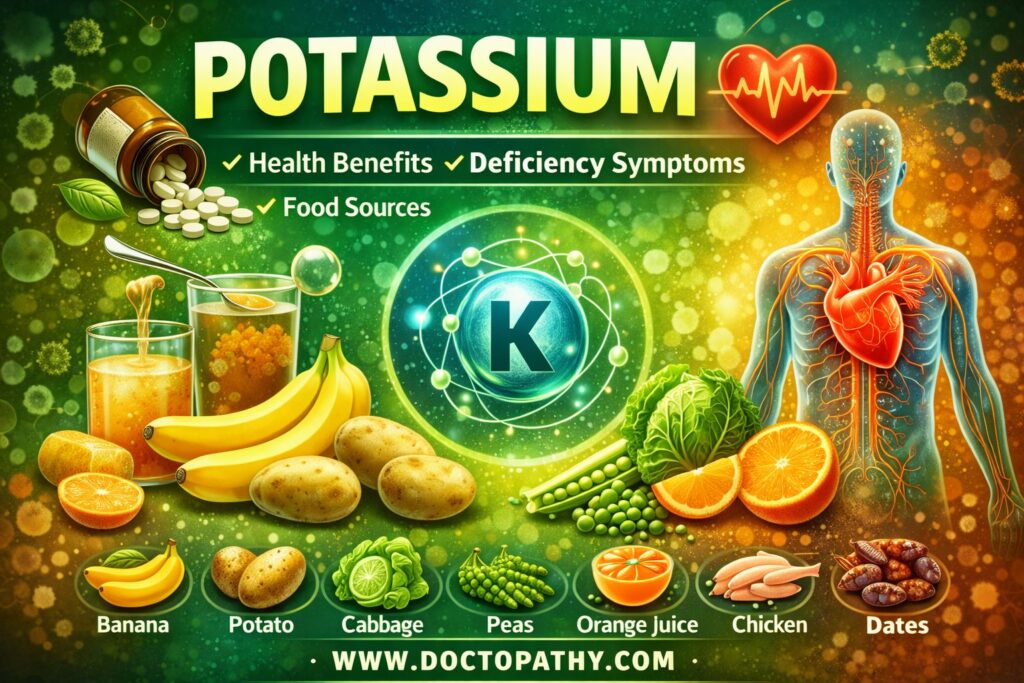
Potassium is widely available in many natural foods. Some of the most important sources include:
- Dried skimmed milk powder
- Wheat germ
- Dates
- Yeast
- Potatoes
- Peanuts
- Cabbage
- Peas
- Bananas
- Dried fruits
- Orange juice and other fruit juices
- Melon seeds
- Chicken
- Fish
- Paprika
- Apple cider vinegar
Including these foods regularly in your diet can help maintain healthy potassium levels.
Also read this post :- Chromium: Benefits, Deficiency, and Natural Food Sources
Conclusion
Potassium is one of the most important minerals required for maintaining muscle strength, nerve function, heart health, and fluid balance in the body. A balanced diet rich in potassium-containing foods helps prevent deficiency and supports overall health.
Maintaining proper potassium levels is essential for healthy body chemistry and optimal organ function.
FAQs
Potassium is essential for muscle contraction, nerve signaling, heart rhythm regulation, and maintaining fluid balance in the body.
Common symptoms include muscle weakness, fatigue, irregular heartbeat, constipation, irritability, and muscle cramps.
Foods such as bananas, potatoes, dates, dried fruits, peas, cabbage, fish, chicken, wheat germ, and orange juice are rich in potassium.
Yes, excessive potassium intake may cause irregular heartbeat and other heart-related complications.
Yes, apple cider vinegar contains potassium and is often used as a natural health drink when mixed with water.