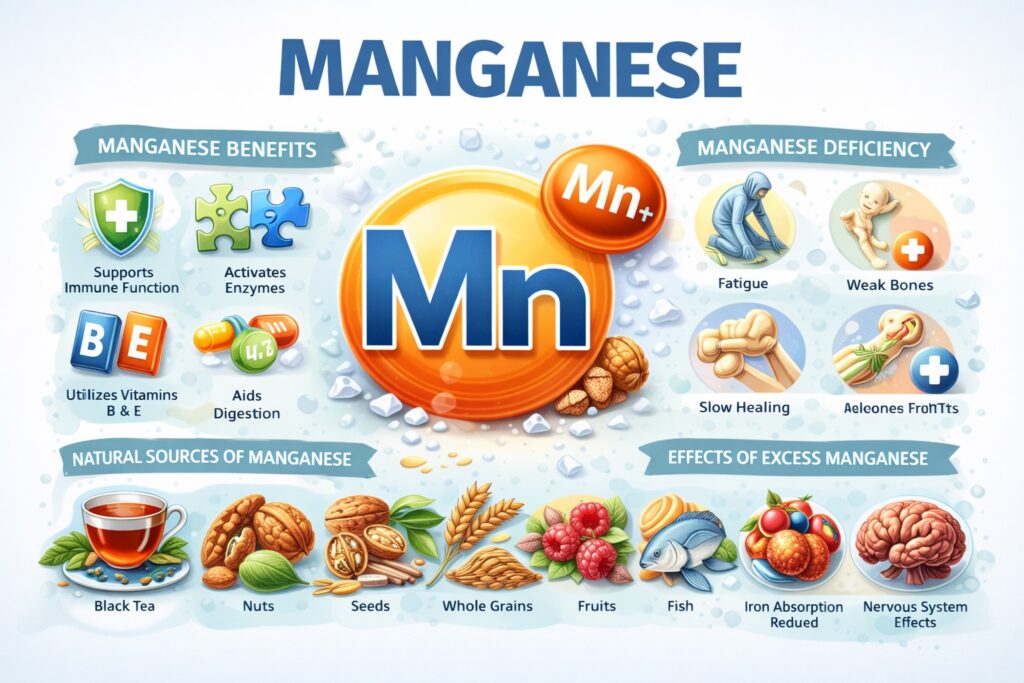
Manganese is an essential trace mineral that plays an important role in maintaining overall health. Although the body requires it in very small amounts, manganese is vital for many biological processes, including enzyme activation, metabolism, bone development, and antioxidant defense. This mineral supports the proper functioning of several systems in the body and helps maintain optimal health.
Manganese is naturally present in many foods such as whole grains, nuts, fruits, seeds, and tea. Because it is widely available in common foods, manganese deficiency is relatively rare. However, maintaining the right balance of manganese is important because both deficiency and excessive intake may affect health.
Also read this post :- Magnesium: Benefits, Deficiency Symptoms, Food Sources, and Importance for Health
What is Manganese?
Manganese is a trace mineral that the body needs in small quantities to function properly. It is involved in many enzymatic reactions and contributes to metabolism, bone health, and the body’s defense against oxidative stress.
This mineral plays a crucial role in activating several enzymes that support metabolic processes. It also helps the body utilize important vitamins such as vitamin B and vitamin E effectively.
Although the body only requires small amounts of manganese, it is essential for maintaining proper physiological functions.
Functions of Manganese in the Body
Manganese contributes to several vital processes in the human body.
1. Supports Antioxidant Defense
Manganese is involved in the production of antioxidant enzymes such as manganese superoxide dismutase. These enzymes protect the body from damage caused by harmful free radicals.
By supporting the body’s natural defense mechanisms, manganese helps reduce oxidative stress and maintain healthy cells.
2. Activates Important Enzymes
Manganese activates many enzymes that are involved in metabolic reactions. These enzymes help break down carbohydrates, proteins, and fats, allowing the body to convert food into energy.
3. Helps Utilize Vitamins
Manganese assists the body in the proper utilization of important vitamins such as vitamin B and vitamin E. These vitamins are essential for energy production, immune function, and maintaining healthy tissues.
4. Supports Digestion
This mineral contributes to digestive health by helping enzymes involved in the breakdown of food. Proper digestion ensures that nutrients are efficiently absorbed and used by the body.
5. Promotes Blood Clotting
Manganese helps support the processes involved in blood clotting. Proper clotting is essential for preventing excessive bleeding when injuries occur.
6. Reduces Fatigue
Manganese plays a role in energy metabolism, helping the body convert nutrients into usable energy. This process may help reduce fatigue and improve overall vitality.
7. Supports Lactation
Manganese may help promote milk production in lactating mothers by supporting metabolic and hormonal functions related to lactation.
8. Helps Regulate Blood Sugar
Manganese is beneficial for individuals with diabetes because it may help improve glucose tolerance. It supports the metabolism of carbohydrates and may contribute to better blood sugar regulation.
Also read this post :- Cholesterol: Causes, Types, Symptoms, and Natural Ways to Control It
Health Benefits of Manganese
Adequate manganese intake can provide several health benefits.
1. Improves Bone Health
Manganese is important for bone formation and maintenance. It helps in the production of connective tissues and contributes to strong and healthy bones.
2. Supports Brain Function
Manganese plays a role in nerve function and brain health. Proper manganese levels help support normal brain activity and cognitive function.
3. Enhances Metabolism
The mineral helps activate enzymes responsible for the metabolism of carbohydrates, proteins, and fats. This supports efficient energy production in the body.
4. Strengthens the Immune System
Manganese contributes to the body’s immune defense by supporting antioxidant enzymes that protect cells from damage.
Manganese Deficiency
Manganese deficiency in humans is uncommon because this mineral is widely available in various foods. However, low intake or certain health conditions may lead to insufficient levels.
Possible Symptoms of Manganese Deficiency
Although rare, manganese deficiency may lead to symptoms such as:
- Weak bones or poor bone development
- Fatigue or low energy
- Poor wound healing
- Reduced fertility
- Problems with metabolism
Proper dietary intake generally prevents deficiency.
Also read this post :- What is calcium and why does the body need it? The best food sources of calcium.
Health Risks of Excess Manganese
While manganese is necessary for health, excessive intake can be harmful. Consuming too much manganese may interfere with the body’s ability to absorb iron.
This imbalance may lead to reduced iron levels and potentially contribute to iron deficiency.
In rare cases, extremely high levels of manganese exposure may affect the nervous system. Therefore, maintaining balanced intake is important.
Recommended Daily Intake of Manganese
The recommended daily intake of manganese varies according to age and gender.
General guidelines suggest:
- Adult men: about 2.3 mg per day
- Adult women: about 1.8 mg per day
These amounts can easily be obtained from a balanced diet containing plant-based foods.
Dietary Sources of Manganese
Manganese is found in many natural foods, particularly plant-based foods.
1. Whole Grains
Whole grains such as brown rice, oats, and whole wheat products are rich sources of manganese.
2. Nuts and Seeds
Nuts and seeds contain significant amounts of manganese. Examples include:
- Almonds
- Walnuts
- Pumpkin seeds
- Sunflower seeds
3. Fruits
Certain fruits provide manganese along with other essential nutrients.
4. Black Tea
A simple cup of black tea is a good source of manganese and can contribute to daily intake.
5. Bran
Bran products contain high levels of manganese due to their whole-grain content.
6. Fish and Meat
Although plant foods are the primary sources, small amounts of manganese can also be obtained from fish and meat.
Tips to Maintain Healthy Manganese Levels
Maintaining balanced manganese levels is simple with proper dietary habits.
1. Eat a Balanced Diet
Include a variety of whole grains, nuts, fruits, and seeds in daily meals.
2. Avoid Excess Supplements
Manganese supplements should only be taken when recommended by a healthcare professional.
3. Maintain Proper Iron Intake
Ensuring adequate iron intake can help prevent mineral imbalances caused by excessive manganese.
4. Choose Natural Foods
Natural, unprocessed foods usually provide sufficient manganese for the body’s needs.
Also read this post :- Silica: Health Benefits, Functions, Deficiency Symptoms and Natural Sources
Conclusion
Manganese is an essential trace mineral that plays an important role in many biological processes. It supports enzyme activity, antioxidant defense, digestion, bone health, and energy metabolism. Manganese also contributes to proper vitamin utilization and may help improve glucose tolerance in individuals with diabetes.
Although manganese deficiency is rare due to its presence in many foods, maintaining balanced intake is important. Excessive manganese can interfere with iron absorption and may cause health issues.
Consuming a balanced diet that includes whole grains, nuts, seeds, fruits, and tea is usually sufficient to meet the body’s manganese requirements. Maintaining proper nutrition helps support overall health and ensures that the body functions efficiently.
Frequently Asked Questions (FAQs)
Manganese is an essential trace mineral that helps activate many enzymes in the body. It supports metabolism, digestion, bone development, and the proper use of vitamins such as vitamin B and vitamin E.
Manganese helps improve digestion, reduce fatigue, support bone health, assist in blood clotting, and improve glucose tolerance. It also helps strengthen the body’s natural defense system.
Good dietary sources of manganese include whole grains, nuts, seeds, black tea, fruits, bran, fish, and meat.
Manganese deficiency is rare, but it may lead to weak bones, poor growth, metabolic problems, and fatigue if it occurs.
Yes. Excess manganese intake may interfere with iron absorption in the body and may lead to health issues if consumed in very high amounts.
Medical Disclaimer:
This article is for informational and educational purposes only and should not be considered medical advice. Always consult a qualified healthcare professional for medical concerns, diagnosis, or treatment.