A single finger-prick blood sugar test only tells you your sugar level at that moment. It goes up after eating and down after exercise. But how do you know what your blood sugar has been doing for the last 3 months?
That’s where the HbA1c Test (Hemoglobin A1c, Glycated Hemoglobin or A1C Test) comes in. It is considered the gold standard for diagnosing and monitoring diabetes.
If you are over 45, overweight, have a family history of diabetes or already have diabetes, you must know about this test.
What is HbA1c?
Hemoglobin is a protein inside your red blood cells that carries oxygen. When sugar (glucose) enters your bloodstream, it attaches to hemoglobin. This process is called glycation.
Everyone has some sugar attached to hemoglobin, but people with higher blood sugar have more.
Red blood cells live for about 120 days (2-3 months). The HbA1c test measures the percentage of hemoglobin that is coated with sugar during this lifespan. So it gives you an average picture, not a snapshot.
You do NOT need to fast for this test. It can be done any time of the day with a simple blood sample from your finger or vein.
HbA1c Normal Range Chart – Diagnosis Criteria
According to CDC and ADA guidelines:
| HbA1c Level | Status | What it Means |
|---|---|---|
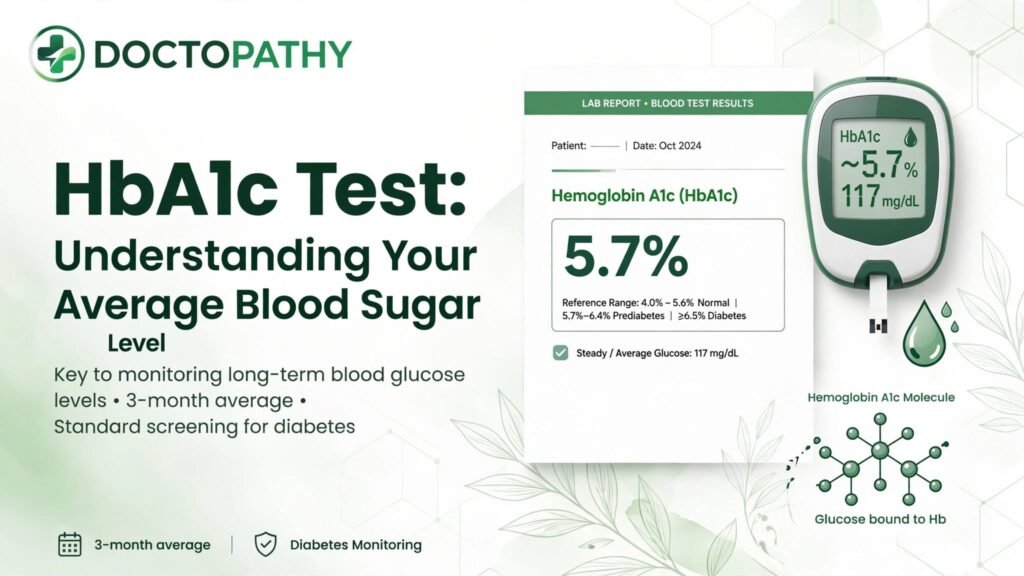
| Below 5.7% | Normal | Healthy, no diabetes |
| 5.7% to 6.4% | Prediabetes | High risk of developing diabetes. Lifestyle changes needed |
| 6.5% or above | Diabetes | Diabetes diagnosed |
Target for people already with diabetes: For most adults with diabetes, the goal is below 7.0%. However, your doctor may set a different target based on your age, health conditions and risk of low blood sugar. Some doctors keep target <6.5% for young patients and <8.0% for elderly patients with other diseases.
HbA1c to Average Blood Sugar (eAG) Conversion Chart
Your doctor often converts your HbA1c % into estimated Average Glucose (eAG) in mg/dL, because that is what you see on your glucometer.
| HbA1c % | Estimated Average Glucose (eAG) mg/dL | eAG mmol/L |
|---|---|---|
| 5% | 97 mg/dL | 5.4 |
| 6% | 126 mg/dL | 7.0 |
| 6.5% | 140 mg/dL | 7.8 |
| 7% | 154 mg/dL | 8.6 |
| 8% | 183 mg/dL | 10.2 |
| 9% | 212 mg/dL | 11.8 |
| 10% | 240 mg/dL | 13.4 |
| 11% | 269 mg/dL | 14.9 |
| 12% | 298 mg/dL | 16.5 |
Formula: eAG (mg/dL) = (28.7 x HbA1c) – 46.7
For example, if your HbA1c is 7%, your blood sugar has been averaging around 154 mg/dL for the last 3 months.
Why is the HbA1c Test Important?
- Early Diagnosis: Can catch prediabetes before it becomes type 2 diabetes.
- Monitoring Treatment: Shows if your diet, exercise and medicines are working.
- Predicts Complications: Higher HbA1c over time is the strongest risk factor for complications like diabetic retinopathy (blindness), nephropathy (kidney failure), neuropathy (nerve damage leading to amputation) and heart disease.
Your doctor will advise you to get HbA1c tested every 6 months if your sugar is controlled or every 3 months if treatment has changed or sugar is not controlled.
Factors That Can Affect HbA1c Accuracy
HbA1c can be falsely high or low in some conditions. Inform your doctor if you have:
- Severe anemia, iron deficiency anemia
- Kidney failure or liver disease
- Sickle cell anemia, thalassemia or other hemoglobin variants (Very important in India)
- Recent blood loss or blood transfusion
- Pregnancy (early or late)
- Certain medicines like opioids, HIV medicines
In these cases, your doctor may use fructosamine test or continuous glucose monitoring instead.
How to Lower HbA1c Naturally?
If your HbA1c is in the prediabetes or high range, you can lower it:
1. Diet Changes:
- Eat smaller, frequent meals
- Fill half your plate with non-starchy vegetables
- Choose whole grains, lean proteins and healthy fats (olive oil, nuts)
- Cut added sugar, white bread, sugary drinks
- Drink plenty of water
2. Exercise:
- At least 150 minutes/week of brisk walking, cycling or swimming. Exercise makes your cells more sensitive to insulin.
3. Weight Loss:
- Losing just 7-10% of your body weight can dramatically improve HbA1c.
4. Medication Adherence:
- Take Metformin, GLP-1 agonists, SGLT2 inhibitors or insulin as prescribed. Don’t skip doses.
5. Regular Monitoring:
- Check fasting and post-meal sugar as advised to understand spikes.
HbA1c vs Fasting Blood Sugar: What’s the Difference?
| Feature | Fasting Blood Sugar (FBS) | HbA1c Test |
|---|---|---|
| What it measures | Sugar at that moment | Average of 2-3 months |
| Fasting required | Yes (8-10 hours) | No |
| Affected by last meal | Yes | No |
| Best for | Daily monitoring | Long-term control & diagnosis |
Both tests are complementary. HbA1c does not replace daily glucometer checks, as it does not show lows and highs.
When Should You Get Tested?
- All adults over 45 years
- Adults under 45 who are overweight with risk factors (family history, high BP, PCOS, sedentary lifestyle)
- If you have symptoms of diabetes: excessive thirst, frequent urination, fatigue, blurred vision
- If you already have diabetes: every 3-6 months
Conclusion
HbA1c is more than just a number – it’s the story of your last 3 months of blood sugar control. Keeping it below 7% (or your personalized target) is the best way to live well with diabetes and prevent serious complications.
Don’t wait for symptoms. Get your HbA1c tested today.
Medical Disclaimer: This article is for educational purposes only. Please consult a qualified doctor for diagnosis and treatment.
Dr. Parminder Singh BEMS