Vitamin B12, also called Cobalamin, is one of the most important yet most commonly deficient vitamins, especially in vegetarians. It is a water-soluble vitamin that your body cannot make on its own. You must get it from food or supplements.
Unlike other vitamins, your liver can store Vitamin B12 for 2-5 years, so deficiency develops slowly and silently. If left untreated, it can cause irreversible nerve damage and serious blood disorders.
Let’s understand why B12 is so crucial.
1. Role of Vitamin B12 in the Body
Vitamin B12 works as a cofactor for two critical enzymes in the body.
a) Formation of Red Blood Cells and Prevention of Anemia
B12 is required for DNA synthesis in red blood cells. Without enough B12, red blood cells become large, abnormal and dysfunctional – a condition called Megaloblastic Anemia. Healthy RBCs are needed to carry oxygen.
b) Brain, Nervous System and Myelin Formation
It is essential for the development, myelination and function of the central nervous system. It helps maintain the myelin sheath that protects nerves.
c) DNA Synthesis and Cell Division
Every cell that divides needs B12 to make new DNA.
d) Energy and Metabolism
It helps convert food into energy and helps metabolize fats and proteins by converting L-methylmalonyl-CoA to succinyl-CoA.
e) Other Protective Roles
- Helps produce serotonin, affecting mood and depression
- Lowers homocysteine, which may protect against heart disease and macular degeneration
- Crucial in pregnancy to prevent neural tube birth defects
How is B12 absorbed?
- Hydrochloric acid in your stomach separates B12 from food protein.
- B12 then binds to Intrinsic Factor, a protein made by the stomach.
- This complex is absorbed in the distal ileum (last part of small intestine).
Recommended Daily Allowance (RDA) for adults: 2.4 mcg/day, 2.6 mcg for pregnant women and 2.8 mcg for breastfeeding women.
2. Best Food Sources of Vitamin B12
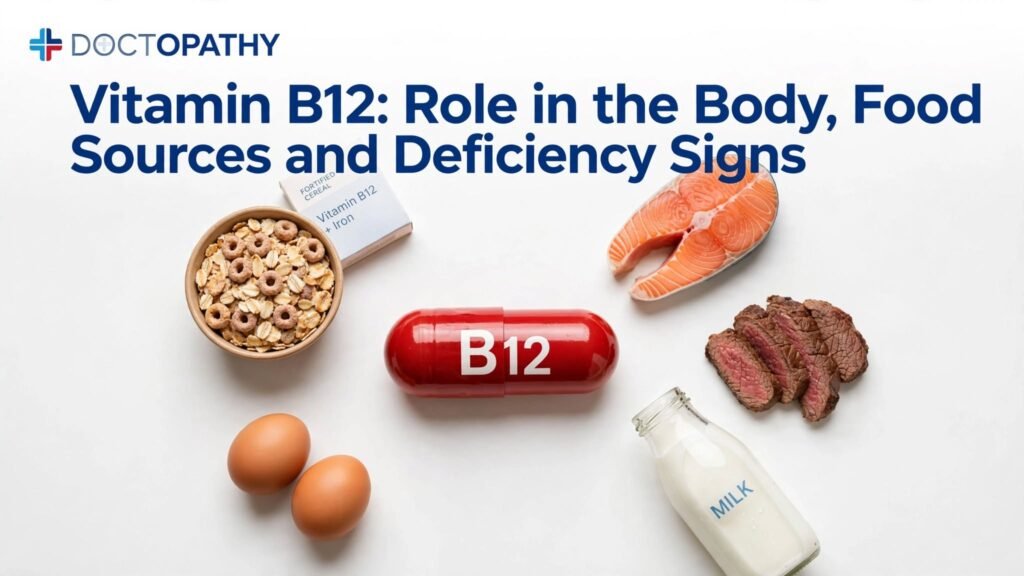
B12 is naturally found only in animal-origin foods. Plant foods do not contain it unless fortified.
A. Non-Vegetarian Sources (Highest Bioavailability)
| Food (3 oz / ∼85g serving) | Vitamin B12 (mcg) |
|---|---|
| Beef Liver | 70.7 mcg (2944% DV) |
| Clams | 17 mcg |
| Oysters | 14.9 mcg |
| Salmon (Atlantic) | 2.6 mcg |
| Tuna (canned in water) | 2.5 mcg |
| Chicken / Turkey Breast | 0.3 – 0.5 mcg |
| Eggs (1 large) | 0.5 mcg |
B. Vegetarian & Dairy Sources
- Milk (1 cup): 1.3 mcg
- Yogurt (6 oz): 1.0 mcg
- Cheese (Cheddar): 0.5 mcg
C. For Vegans & Vegetarians – Fortified Foods (Very Important for India)
Since a large Indian population is vegetarian, deficiency is very common. Look for:
- Fortified Breakfast Cereals
- Fortified Nutritional Yeast (8.3 to 24 mcg per 1/4 cup)
- Fortified Soya Milk, Almond Milk, Oat Milk
- Fortified Tofu / Tempeh
Tip: Check the Nutrition Facts Label. FDA does not require B12 listing unless added, so look for foods that say “fortified with B12”.
Bioavailability is about 3x higher from dairy than from meat, and about 50% higher from supplements than from food.
3. Vitamin B12 Deficiency: Signs and Symptoms
Deficiency can take years to appear because the body stores 1000-2000 times the daily intake. Symptoms are often categorized into 3 types:
A. Physical & Anemia Symptoms
- Extreme fatigue, weakness, lethargy
- Pale or yellowish skin
- Shortness of breath and palpitations
- Sore, red tongue (glossitis) and mouth ulcers
- Loss of appetite and weight loss
B. Neurological Symptoms (Most Serious)
Nerve damage can become irreversible if not treated early:
- Tingling and numbness in hands and feet (pins and needles sensation)
- Difficulty walking, balance problems
- Memory loss, brain fog, confusion
C. Psychological Symptoms
- Irritability, depression
- Mood swings
In infants, signs include failure to thrive, developmental delay, and irritability.
4. Who is at Risk for Deficiency?
You may be more likely to have low B12 if you:
- Are vegan or vegetarian
- Are over 50 years old (less stomach acid)
- Have digestive disorders: Crohn’s disease, Celiac disease
- Have had gastric bypass surgery
- Lack Intrinsic Factor (Pernicious Anemia)
- Long-term use of Metformin (for diabetes) and PPIs (Omeprazole, Pantoprazole) for acidity
- Have tapeworm infection or chronic alcohol use
5. Diagnosis and Treatment
Diagnosis:
- Serum Vitamin B12 level: <200 pg/mL is considered deficient
- Methylmalonic Acid (MMA) is the most sensitive marker
- Homocysteine level
- Complete Blood Count (CBC) shows large RBCs
Treatment:
- Dietary Correction: Increase B12 rich foods
- Oral Supplements: Cyanocobalamin or Methylcobalamin (50-1000 mcg)
- Sublingual Tablets: Dissolved under tongue
- Vitamin B12 Injections (Intramuscular): For severe deficiency, pernicious anemia or malabsorption issues
Always consult a doctor before starting high-dose supplements. Excess dose can cause headache, nausea, tingling.
6. Prevention Tips
- Include at least one animal source or fortified food daily
- Vegetarians in India should get B12 levels tested annually
- People on Metformin or antacids should discuss B12 monitoring with their doctor
- Pregnant women who are vegetarian must take B12 supplements
When to See a Doctor?
If you have persistent fatigue, tingling in hands/feet, memory issues or you are a strict vegetarian/vegan, get your Vitamin B12 levels checked. Early diagnosis can prevent permanent neurological damage.
Disclaimer: This article is for informational purposes only and does not constitute medical advice. For diagnosis and treatment, please consult a qualified healthcare professional.
Dr. Parminder Singh BEMS