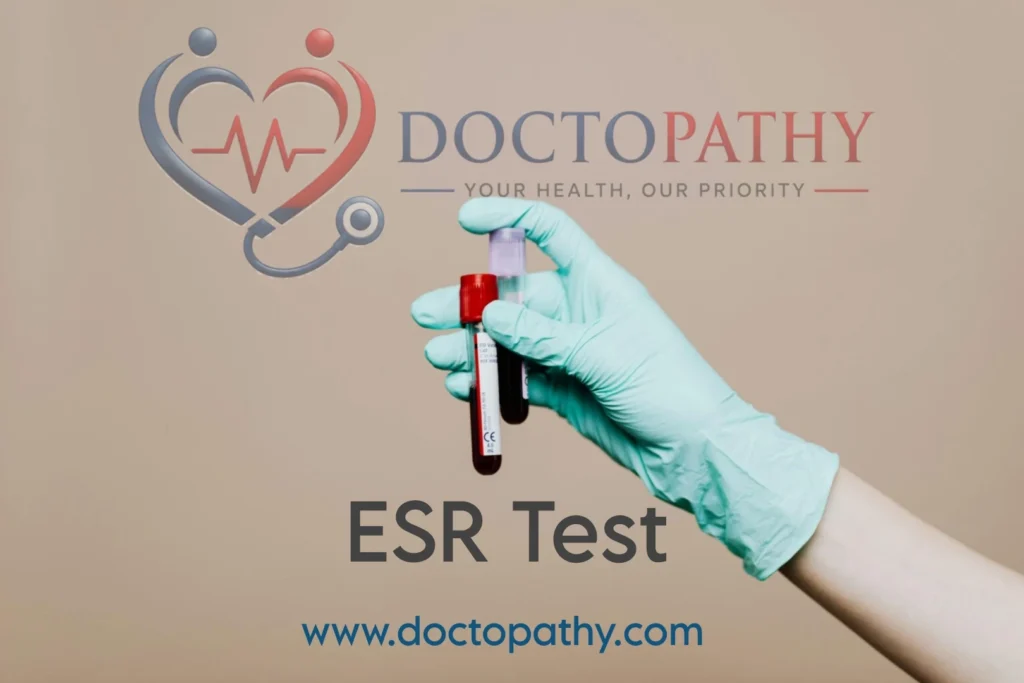
The ESR (Erythrocyte Sedimentation Rate) test is a simple blood test that helps detect inflammation in the body.
This test measures how quickly red blood cells settle at the bottom of a test tube within one hour. Normally, red blood cells settle slowly. However, when inflammation or infection is present, they settle faster than usual.
Doctors often use the ESR test along with other blood tests to understand a patient’s health condition.
Why is the ESR Test Done?
Doctors may recommend an ESR test for many reasons.
Common Uses of the ESR Test
- To detect infections
- To identify inflammation in the body
- To help diagnose autoimmune diseases
- To monitor chronic diseases
- To check treatment progress
- To investigate unexplained fever or body pain
In addition, doctors often use this test in conditions such as rheumatoid arthritis and lupus.
Why is the ESR test done?
Normal ESR Range
Normal ESR values may differ according to age and gender.
| Age/Gender | Normal ESR Range (mm/hr) |
|---|---|
| Men below 50 years | 0 – 15 |
| Women below 50 years | 0 – 20 |
| Men above 50 years | 0 – 20 |
| Women above 50 years | 0 – 30 |
| Children | 0 – 10 |
How is the ESR Test Performed?
The ESR test is quick and simple.
Procedure
- A healthcare worker collects a small blood sample from a vein in the arm.
- The laboratory places the blood in a special test tube.
- After one hour, the technician measures how far the red blood cells have settled.
The result is measured in millimeters per hour (mm/hr).
Usually, the test does not require fasting or special preparation.
What Does a High ESR Mean?
A high ESR level usually suggests inflammation or infection somewhere in the body.
Common Causes of High ESR
- Bacterial or viral infections
- Autoimmune diseases
- Tuberculosis
- Kidney disease
- Thyroid disorders
- Rheumatoid arthritis
- Lupus
- Pregnancy (mild increase may occur normally)
Sometimes, doctors may order more tests to find the exact cause.
What Does a Low ESR Mean?
Low ESR levels are less common. However, they may occur in certain conditions.
Causes of Low ESR
- High red blood cell count (polycythemia)
- Heart failure
- Sickle cell anemia
- Certain blood disorders
A low ESR usually needs further evaluation only if symptoms are present.
Is the ESR Test Safe?
Yes, the ESR test is safe. Most people only feel slight pain during blood collection. Occasionally, mild bruising may occur, but it usually disappears quickly.
Preparation for ESR Test
In most cases, you do not need special preparation.
Before the Test
- Eat and drink normally unless your doctor advises otherwise
- Inform the doctor about medicines you take
- Stay relaxed during blood collection
Cost of ESR Test
The ESR test is affordable in most laboratories.
Average Cost
- India: around ₹100 to ₹300
- Other countries: about $5 to $10
The price may vary depending on the laboratory and location.
Conclusion
The ESR test is a useful blood test that helps detect inflammation and infection in the body. Although it cannot diagnose a specific disease alone, it gives doctors important information about your health.
Doctors often combine ESR with other tests such as CBC and CRP for accurate diagnosis and treatment planning.
Frequently Asked Questions (FAQs)
No, fasting is usually not required before an ESR test.
High ESR levels may suggest infection, inflammation, autoimmune disease or other medical conditions.
A very high ESR may occur in some cancers, but the test alone cannot confirm cancer.
Blood collection takes only a few minutes and results are usually available within a few hours.
No, ESR is not a disease. It is a blood test that shows inflammation in the body.
Medical Disclaimer :
This article is for educational purposes only and does not replace professional medical advice. Always consult a qualified healthcare provider for diagnosis and treatment.