
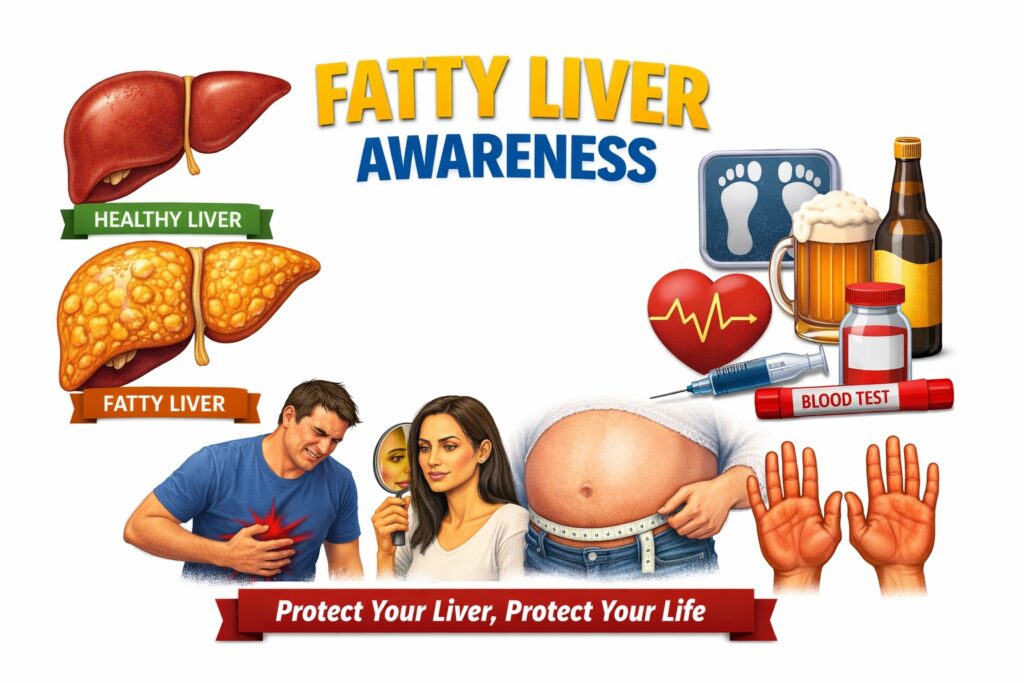
Fatty liver disease is becoming very common nowadays. Unhealthy eating habits, lack of exercise, obesity, diabetes, and alcohol use are some major causes of this condition. In fatty liver disease, excess fat collects inside the liver cells. As a result, the liver cannot work properly.
If the condition is ignored for a long time, serious liver damage may develop. Therefore, early diagnosis and proper care are very important.
This article explains fatty liver disease in simple English, including its types, stages, symptoms, causes, tests, treatment, and prevention tips.
What is Fatty Liver?
Fatty liver is a condition where too much fat builds up inside the liver. Normally, the liver contains a small amount of fat. However, when fat increases beyond normal levels, the liver may become swollen and damaged.
Sometimes alcohol is responsible for fatty liver disease. In other cases, problems like diabetes, obesity, high cholesterol, and poor lifestyle habits may lead to this condition.
Also read this post :- Jaundice: Causes, Symptoms & Homeopathic Treatment
Types of Fatty Liver
1. Alcoholic Fatty Liver Disease (AFLD)
This type develops because of excessive alcohol consumption. Over time, alcohol damages liver cells and increases fat buildup in the liver.
If alcohol use continues for many years, the liver may become severely damaged. Consequently, the risk of liver failure also increases.
2. Non-Alcoholic Fatty Liver Disease (NAFLD)
NAFLD occurs in people who drink little or no alcohol. Nowadays, it is one of the most common liver diseases worldwide.
Several health conditions may increase the risk, such as:
- Obesity
- Diabetes
- High blood pressure
- High cholesterol
- High triglyceride levels
Therefore, people with these conditions should have regular health checkups.
Stages of Fatty Liver
1. Steatosis (Simple Fatty Liver)
Steatosis is the earliest stage of fatty liver disease. During this stage, extra fat collects inside the liver, but inflammation is usually minimal.
Most people do not notice symptoms at this point. As a result, the disease often remains undetected.
2. Steatohepatitis
At this stage, fat buildup begins to cause liver inflammation. Because of continuous inflammation, liver cells may slowly become damaged.
Doctors usually recommend treatment and lifestyle changes to stop further damage.
3. Fibrosis
Fibrosis develops when inflammation continues for a long period. In this stage, scar tissue forms around the liver.
Although the liver may still function normally for some time, the damage gradually increases.
4. Cirrhosis
Cirrhosis is the most serious stage of fatty liver disease. During this stage, the liver becomes hard, shrunken, and permanently damaged.
In severe cases, liver failure may occur. Therefore, some patients may eventually require a liver transplant.
Symptoms of Fatty Liver
In the early stages, fatty liver may not cause noticeable symptoms. However, symptoms may appear as the disease progresses.
Common symptoms include:
Upper Abdominal Pain
Many people feel pain or discomfort in the upper right side of the abdomen.
Unexplained Weight Loss
Sometimes weight loss may occur without dieting or exercise.
Yellow Skin and Eyes
The skin and eyes may turn yellow due to liver problems. This condition is known as jaundice.
Swelling in the Abdomen
Certain patients may notice swelling or heaviness in the stomach area.
Redness of the Palms
In some cases, the palms become red because of liver disease.
Weakness and Tiredness
Additionally, many people feel tired, weak, or low in energy.
Also read this post :- Acute Intestinal Obstruction – Symptoms, Causes & Emergency Treatment
Causes of Fatty Liver
Several factors can increase the risk of fatty liver disease.
High Blood Pressure
Moreover, high blood pressure is commonly linked with fatty liver disease.
Obesity
People with excess body weight are more likely to develop fatty liver.
High Cholesterol and Triglycerides
High fat levels in the blood can also damage the liver over time.
Diabetes
Diabetes may increase fat storage inside the liver due to insulin resistance.
High Blood Sugar
Similarly, uncontrolled blood sugar levels may worsen liver fat buildup.
Alcohol Consumption
Heavy alcohol use is another major cause of liver damage.
Also read this post :- Types of Diabetes Mellitus: Causes, Symptoms and Classification
Tests for Fatty Liver
Doctors may suggest different tests to diagnose fatty liver disease properly.
Blood Tests
Blood tests help check liver enzymes and overall liver function.
Imaging Tests
Doctors may also recommend imaging tests, including:
- Ultrasound
- CT Scan
- MRI Scan
These tests help detect fat buildup and liver damage.
Treatment of Fatty Liver
Treatment mainly depends on the cause and stage of the disease. Along with medicines, healthy lifestyle changes are extremely important.
Healthy Diet and Lifestyle
Doctors usually recommend the following habits:
- Eat a balanced low-fat diet
- Avoid junk and oily foods
- Eat fresh fruits and vegetables
- Reduce sugar intake
- Exercise regularly
- Avoid alcohol completely
- Maintain a healthy body weight
- Drink enough water daily
As a result, liver fat may gradually decrease.
Medicines Commonly Used
Doctors may prescribe medicines according to the patient’s condition.
Cap. Omeprazole 20 mg
Usually taken twice daily before meals.
Tab. Tiemonium Methylsulphate
Generally taken three times daily.
Tab. Ketorolac 10 mg
This medicine may help reduce pain.
Tab. Albendazole 400 mg
Usually taken at bedtime if advised by a doctor.
If Triglyceride Levels are High
Tab. Fenofibrate 200 mg
Doctors may recommend this medicine at bedtime to control triglyceride levels.
Note: Medicines should only be taken after consulting a qualified doctor.
Lifestyle Tips for Fatty Liver
The following lifestyle habits may help improve liver health:
- Stay physically active
- Avoid smoking
- Control blood sugar levels
- Manage blood pressure properly
- Eat meals on time
- Sleep properly every night
- Avoid processed foods and soft drinks
Furthermore, regular medical checkups can help prevent complications.
Also read this post :- ESR test: Purpose, normal range, procedure and interpretation of results
Conclusion
Fatty liver disease is common, but early treatment can prevent serious liver problems. Therefore, healthy eating, regular exercise, weight control, and proper medical care are very important.
If you notice symptoms like abdominal pain, yellow skin, swelling, or constant tiredness, consult a doctor immediately for proper diagnosis and treatment.
FAQs About Fatty Liver
Yes, early-stage fatty liver can often improve with healthy eating, exercise, and lifestyle changes.
If it is not treated, fatty liver disease can progress to fibrosis, cirrhosis, and liver failure.
People with fatty liver should avoid fried foods, oily meals, sugary drinks, alcohol, and processed foods.
Yes, regular exercise helps reduce liver fat and improves overall health.
Yes, non-alcoholic fatty liver disease can develop in people with diabetes, high cholesterol, and higher body weight.
⚠️ Note: Medications must only be taken under medical supervision. Self‑medication can be harmful.