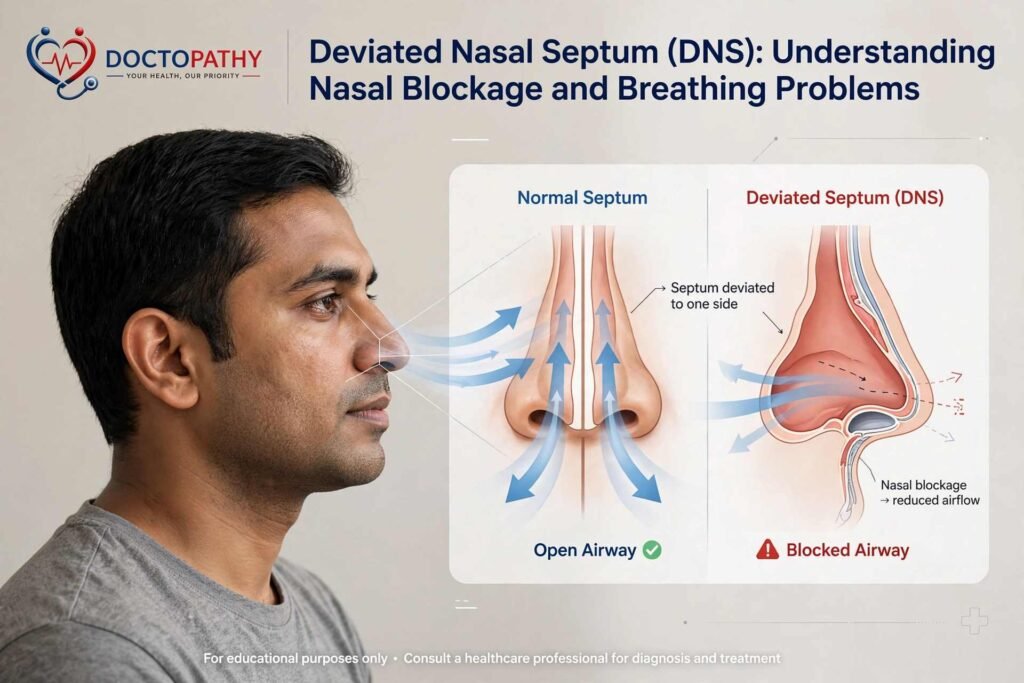
A deviated nasal septum (DNS) is a condition in which the thin wall separating the two sides of the nose, called the nasal septum, is displaced or bent toward one side.
Normally, the septum divides the nose into two relatively equal passages. When it is significantly deviated, one nasal passage may become narrower than the other. This can reduce airflow and make breathing through the nose difficult.
A deviated septum is common and many people may have a slight deviation without experiencing any symptoms. However, a more pronounced deviation can cause nasal blockage, nosebleeds, snoring, facial discomfort and sleep problems.
What Is a Deviated Nasal Septum?
The nasal septum is made of bone and cartilage and lies between the two nostrils. Its main function is to separate the left and right nasal passages.
In DNS, the septum is shifted away from the center. Depending on the degree of deviation, one or both sides of the nose may become partially blocked.
Nasal blockage can become more noticeable during a cold or when a person has allergies because the nasal tissues may become swollen.
Symptoms of Deviated Septum
Some people with a deviated septum have no symptoms. Others may experience one or more of the following:
1. Blocked Nose
One of the most common symptoms is difficulty breathing through one nostril. In some cases, both sides may feel blocked.
Nasal congestion may become worse during a cold, flu or allergic reaction.
2. Nosebleeds
A deviated septum can cause uneven airflow through the nose. In some people, this may contribute to dryness and irritation of the nasal lining, increasing the chance of nosebleeds.
3. Difficulty Breathing Through the Nose
A narrow nasal passage can make it harder to get enough air through the nose. Some people may notice this especially during exercise or while sleeping.
4. Facial Pain or Pressure
Some people may experience discomfort or pressure on one side of the face. However, facial pain can have many causes, including sinus problems, so it should not automatically be attributed to DNS.
5. Snoring
A blocked or narrowed nasal passage can make breathing more difficult during sleep and may contribute to snoring.
6. Sleep Problems
Difficulty breathing through the nose may disturb sleep. Some people naturally change their sleeping position to make breathing easier.
Poor sleep can contribute to daytime tiredness and difficulty concentrating.
What Causes a Deviated Septum?
A deviated septum can develop for several reasons.
Congenital Deviation
In some people, the nasal septum develops in a deviated position before birth. It may be noticed at birth or may not cause symptoms until later in life.
Nose Injury
An injury to the nose can move the septum away from its normal position. Injuries may occur during childhood, sports activities, accidents or other situations.
Sometimes, nasal injury can happen during childbirth.
Age-Related Changes
The structure of the nose can change gradually with age. These changes may make existing nasal problems more noticeable.
Nasal and Sinus Inflammation
Conditions that cause swelling inside the nose, such as allergies or rhinosinusitis, can make nasal obstruction worse. However, inflammation itself does not usually cause the septum to become permanently deviated.
DNS and Sinus Problems
A deviated septum does not always cause sinus disease. However, significant narrowing of the nasal passages can interfere with normal airflow and drainage in some people.
If a person has repeated nasal blockage, facial pressure or sinus symptoms, a doctor can determine whether a deviated septum or another nasal condition is contributing to the problem.
How Is DNS Diagnosed?
A doctor, often an ENT specialist, can evaluate a deviated septum by examining the nose and asking about symptoms.
The doctor may use a lighted instrument to look inside the nasal passages. In some cases, a nasal endoscope or imaging such as a CT scan may be recommended, particularly when other nasal or sinus problems are suspected.
Treatment for Deviated Septum
Treatment depends on the severity of the deviation and the symptoms it causes.
Medicines
Medicines do not straighten a deviated septum, but they may help control symptoms caused by swelling or inflammation.
Depending on the cause of symptoms, a doctor may recommend treatments such as:
- Saline nasal sprays
- Allergy medicines
- Nasal corticosteroid sprays
- Other medicines when appropriate
You should use medicines according to professional medical advice.
Surgery
When a deviated septum causes significant breathing problems that do not improve with medical treatment, an ENT specialist may recommend septoplasty.
Septoplasty is a surgical procedure used to straighten or reposition parts of the nasal septum to improve airflow.
In some cases, other nasal procedures may be considered at the same time, depending on the patient’s condition.
Can DNS Be Prevented?
A congenital deviated septum cannot be prevented. However, protecting the nose from injury may reduce the risk of developing or worsening a deviation caused by trauma.
Useful precautions include:
- Wearing appropriate protective equipment during contact sports
- Using a seat belt while travelling by car
- Taking care to prevent facial injuries
- Seeking medical attention after a significant nose injury
When Should You See a Doctor?
Consult a healthcare professional if you have:
- Persistent nasal blockage
- Frequent nosebleeds
- Difficulty breathing through the nose
- Persistent facial pressure or discomfort
- Loud or frequent snoring
- Sleep problems related to nasal breathing
- Repeated sinus symptoms
- Breathing problems that interfere with daily activities
An ENT specialist can determine whether a deviated septum is responsible for the symptoms and discuss suitable treatment options.
Final Thoughts
A deviated nasal septum (DNS) occurs when the wall between the two nasal passages is displaced toward one side. A mild deviation may cause no problems, while a more significant deviation can lead to nasal blockage, difficulty breathing, nosebleeds, snoring and disturbed sleep.
The condition may be present from birth or develop after an injury. Medicines can help manage swelling and related symptoms, but they cannot straighten the septum. When symptoms are severe or persistent, an ENT specialist may consider surgery such as septoplasty.
Disclaimer: This article is for general health information only and should not be considered a substitute for professional medical diagnosis or treatment. If you have persistent nasal blockage, recurrent nosebleeds, facial pain or breathing problems, consult a qualified healthcare professional.
Dr. Parminder Singh (BEMS)