Rosacea is a common skin condition that mainly affects the face. It can cause persistent or repeated redness, especially on the nose, cheeks, chin and forehead. Some people may also develop small red bumps and pimples in the affected areas.
Rosacea can sometimes affect the eyes and cause irritation, dryness, burning, or eye pain. The symptoms may continue for weeks or months and can improve for some time before returning.
Because rosacea can look similar to acne, an allergic reaction or other skin conditions, it may sometimes be difficult to identify without a proper medical evaluation.
What Is Rosacea?
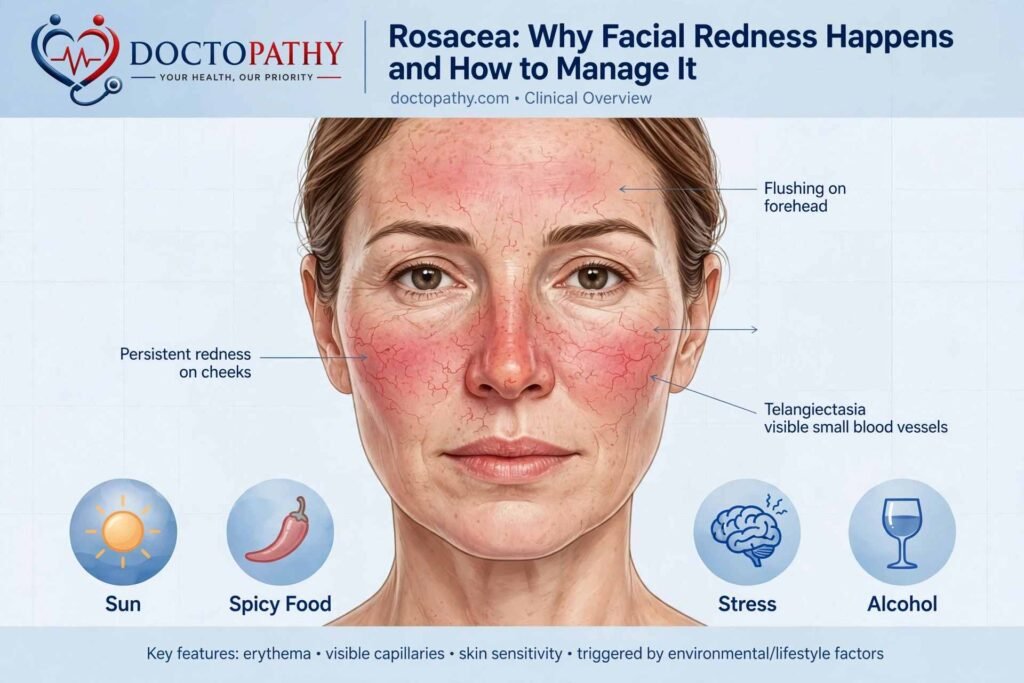
Rosacea is a long-term skin condition that commonly causes facial redness and visible blood vessels. In some people, the skin may become swollen or develop acne-like bumps.
Rosacea can affect anyone, although it is more commonly seen in middle-aged women with lighter skin. It is not caused by poor hygiene.
There is no single known cause of rosacea. However, treatment and lifestyle changes can help control symptoms, improve the appearance of the skin and reduce flare-ups.
Symptoms of Rosacea
The symptoms of rosacea can vary from person to person. Common symptoms include:
- Facial redness, especially around the cheeks and nose
- Red or swollen bumps on the face
- Small pimples in areas of redness
- Burning or stinging of the skin
- Visible small blood vessels
- Dry or sensitive skin
- Eye irritation or discomfort
- Red, watery or irritated eyes
- Swelling around the eyes
- An enlarged or thickened nose in severe or long-standing cases
Symptoms may come and go. Some people notice that their skin becomes red for a short period, while others develop more persistent redness over time.
What Causes Rosacea?
The exact cause of rosacea is still not fully understood. Experts believe that a combination of genetic and environmental factors may play a role.
Rosacea is not caused by dirt or poor personal hygiene. Certain factors can increase blood flow to the skin or irritate the skin and may trigger or worsen symptoms.
Common triggers include:
Hot Drinks and Spicy Foods
Very hot beverages and spicy foods may cause facial flushing in some people. If these foods repeatedly trigger redness, reducing them may help.
Alcohol
Alcohol can cause blood vessels to widen and may increase facial redness in people with rosacea.
Sun and Wind
Sun exposure and strong winds can irritate sensitive skin and trigger rosacea flare-ups. Protecting the face from excessive sunlight and harsh weather can be helpful.
Temperature Changes
Moving quickly between very hot and very cold environments may trigger facial flushing.
Emotional Stress
Strong emotions, stress, embarrassment or anger may cause temporary facial flushing and can worsen rosacea symptoms in some people.
Exercise
Physical activity can increase body temperature and blood flow. Some people with rosacea notice more redness after intense exercise.
Cosmetics
Certain cosmetic products or skincare ingredients may irritate sensitive skin. People with rosacea may benefit from gentle, fragrance-free products.
Some Medicines
Certain medicines that widen blood vessels, including some medicines used for high blood pressure, may contribute to facial flushing in some people. Do not stop any prescribed medicine without speaking with your doctor.
Can Rosacea Affect the Eyes?
Yes. Rosacea can sometimes affect the eyes, a condition often called ocular rosacea.
Possible eye symptoms include:
- Eye redness
- Burning or stinging
- Dry eyes
- Watery eyes
- Irritation
- Swollen eyelids
- Eye discomfort or pain
Eye symptoms should not be ignored. If you have significant eye pain, blurred vision, light sensitivity or worsening eye symptoms, seek medical attention promptly.
Rosacea vs. Acne
Rosacea and acne can sometimes look similar because both may cause bumps and pimples. However, they are different conditions.
Rosacea usually causes facial redness and flushing, particularly around the cheeks and nose. Acne commonly involves blackheads, whiteheads, pimples and sometimes deeper lesions.
A dermatologist can help determine whether facial redness and bumps are caused by rosacea, acne or another skin condition.
How Is Rosacea Diagnosed?
There is no single laboratory test that can confirm every case of rosacea. A doctor or dermatologist usually diagnoses it by examining the skin and asking about symptoms and possible triggers.
Your doctor may ask:
- When the facial redness started
- Whether the redness comes and goes
- What makes the symptoms worse
- Whether you have eye symptoms
- What skincare and cosmetic products you use
- Which medicines you take
If another skin condition is suspected, additional tests may sometimes be needed.
Treatment and Management
Rosacea cannot always be permanently cured, but its symptoms can often be controlled.
Treatment depends on the type and severity of rosacea. A doctor may recommend prescription creams, gels, oral medicines or other treatments when appropriate.
Some people also benefit from identifying and avoiding their personal triggers.
Protect Your Skin
Use gentle skincare products and avoid harsh scrubs or products that cause burning or irritation.
Use Sun Protection
Sun exposure can worsen rosacea in many people. Wearing protective clothing and using a suitable sunscreen can help protect sensitive facial skin.
Identify Your Triggers
Keep track of situations that make your redness worse. Common triggers include spicy foods, alcohol, heat, sunlight, stress and certain cosmetics.
Choose Gentle Cosmetics
Look for skincare and cosmetic products designed for sensitive skin. Avoid products that cause burning, stinging, or irritation.
Follow Medical Advice
If symptoms are frequent, severe or getting worse, consult a dermatologist. Medical treatment can help control flare-ups and reduce complications.
When Should You See a Doctor?
You should consider seeing a doctor or dermatologist if:
- Facial redness keeps returning
- Redness becomes persistent
- You develop repeated bumps or pimples
- Your skin becomes painful or swollen
- You have eye redness or irritation
- Symptoms are affecting your daily life
- The condition is getting worse despite avoiding triggers
If you develop eye pain, vision changes or severe eye irritation, seek medical care promptly.
Final Thoughts
Rosacea is a common skin condition that can cause facial redness, bumps, flushing and sometimes eye problems. The exact cause is not known, but certain environmental and lifestyle factors can trigger or worsen symptoms.
Understanding your personal triggers, protecting your skin from the sun, using gentle skincare products and getting appropriate medical advice can help manage rosacea. Early attention to symptoms may also help prevent the condition from becoming more troublesome.
Disclaimer: This article is for general health information only. It is not a substitute for professional medical diagnosis or treatment. If you have persistent facial redness, skin changes or eye symptoms, consult a qualified healthcare professional.
Dr. Parminder Singh (BEMS)