
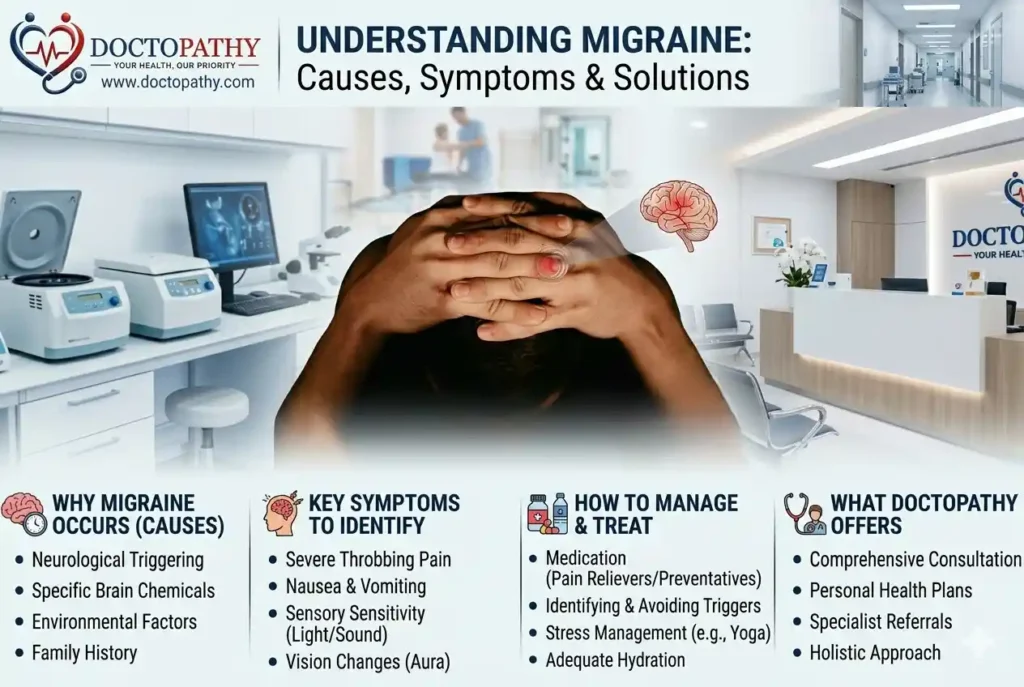
Migraine is a complex neurological disorder that causes intense, throbbing headaches—often on one side of the head. It is more than just a headache, as it is commonly associated with nausea, vomiting and extreme sensitivity to light and sound. Migraine attacks can last for hours or even days and significantly affect daily life.
What is Migraine?
Migraine is a brain-related condition involving abnormal nerve activity, chemical changes and blood vessel inflammation. It often progresses in stages and may include warning signs known as aura.
Symptoms of Migraine
Migraine symptoms usually occur in four stages, though not everyone experiences all of them:
1. Prodrome (Early Warning Stage)
Occurs hours or days before the headache:
- Sensitivity to light, sound or smell
- Fatigue or low energy
- Mood swings
- Food cravings or loss of appetite
- Excessive thirst
- Bloating
- Constipation or diarrhea
👉 Around 60% of people experience this stage.
2. Aura (Neurological Symptoms)
Affects about 20% of migraine sufferers and lasts 5–60 minutes:
- Visual disturbances (flashes, zigzag lines, blind spots)
- Tingling or numbness (face, arms, legs)
- Difficulty speaking
- Ringing in ears
- Changes in taste, smell or touch
3. Attack Phase
The main headache stage:
- Throbbing or pulsating pain (often one-sided)
- Pain worsens with activity
- Nausea and vomiting (seen in ~80% cases)
- Sensitivity to light and sound
4. Postdrome (Recovery Phase)
Lasts up to 24 hours:
- Fatigue or weakness
- Muscle pain
- Mood changes (feeling refreshed or drained)
- Appetite changes
Causes of Migraine
The exact cause of migraine is unclear, but it involves:
- Changes in brain activity
- Imbalance of neurotransmitters like serotonin
- Release of Calcitonin Gene-Related Peptide
- Activation of the trigeminal nerve
- Inflammation of brain blood vessels
Risk Factors
- Family history (genetics)
- Hormonal changes (especially in women)
- Stress and anxiety
- Sleep disturbances
Common Migraine Triggers
Different people have different triggers, but common ones include:
- Stress
- Skipping meals
- Alcohol consumption
- Too much or too little sleep
- Weather or pressure changes
- Certain foods (chocolate, cheese, caffeine)
- Hormonal fluctuations
- Head injury
Types of Migraine
1. Chronic Migraine
- Occurs 15+ days per month
2. Migraine with Aura
- Includes visual or neurological warning signs
3. Migraine without Aura
- Most common type without warning symptoms
4. Menstrual Migraine
- Linked to hormonal cycles in women
5. Abdominal Migraine
- More common in children under 14
- Causes abdominal pain instead of headache
6. Vestibular Migraine
- Causes dizziness and balance issues
7. Hemiplegic Migraine
- Causes temporary weakness on one side of the body
8. Basilar Migraine
- Affects brainstem functions like speech and coordination
Lifestyle Tips to Prevent Migraine
- Maintain regular sleep schedule
- Avoid known food triggers
- Stay hydrated
- Practice stress management (yoga, meditation)
- Eat meals on time
- Limit caffeine and alcohol
When to See a Doctor
Seek medical help if:
- Headaches are frequent or worsening
- Pain is severe and sudden
- Neurological symptoms persist
- Medications are not effective
Conclusion
Migraine is a disabling neurological condition, but with proper understanding, trigger management and medical treatment, it can be effectively controlled. Early diagnosis and preventive care are key to improving quality of life.
FAQs:- Migraine
What is the main cause of Migraine?
The exact cause of migraine is not fully understood, but it is linked to abnormal brain activity, changes in nerve signals and chemical imbalances. Factors like stress, hormonal changes, lack of sleep and certain foods can trigger migraine attacks.
What are the early warning signs of a migraine?
Early signs (prodrome stage) include fatigue, mood swings, food cravings, sensitivity to light or sound and excessive thirst. Some people also experience aura symptoms like flashing lights or tingling sensations before the headache begins.
How can I stop a migraine quickly?
You can manage migraine attacks with medications like Rizatriptan, rest in a dark and quiet room, hydration and avoiding triggers. Early treatment at the first sign of symptoms is most effective.
What foods can trigger migraine headaches?
Common trigger foods include chocolate, cheese, caffeine, processed foods and alcohol. Skipping meals can also trigger migraines, so maintaining a regular eating schedule is important.
When should I see a doctor for migraine?
You should consult a doctor if migraines are frequent, severe or worsening, if symptoms like vision loss or confusion occur or if over-the-counter medications are not providing relief.
Medical Disclaimer
This content is for educational purposes only and should not replace professional medical advice, diagnosis or treatment. Always consult a qualified healthcare provider.