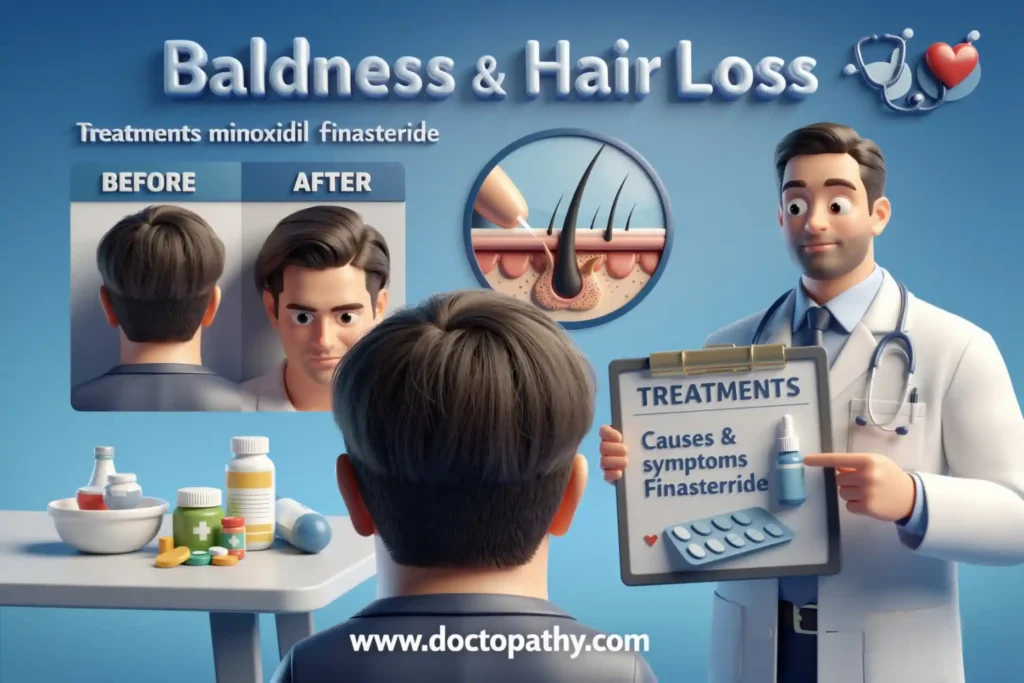
Baldness, also called Alopecia, means excessive hair loss from the scalp or body. Losing around 50–100 hairs daily is normal. However, when hair fall becomes heavy or new hair does not grow back, it may lead to thinning hair or bald patches.
The most common type of hair loss is hereditary baldness, also known as Androgenetic Alopecia. It usually develops gradually with age.
Also read this post :- Silica: Health Benefits, Functions, Deficiency Symptoms and Natural Sources
What is Normal Hair Loss?
Hair grows in different stages:
- Growth stage (Anagen)
- Resting stage (Telogen)
- Shedding stage (Exogen)
A small amount of daily hair shedding is normal. However, excessive hair fall may be a sign of a health problem or poor hair care.
Symptoms of Baldness
Common symptoms include:
- Gradual thinning of hair on the scalp
- Receding hairline
- Round or patchy bald spots
- Sudden hair fall after stress or illness
- Hair loss on different parts of the body
- Scaly patches on the scalp caused by fungal infection
Causes of Baldness
Hair loss can happen for many reasons.
1. Genetic and Hormonal Causes
- Family history of baldness
- Hormonal imbalance
- Androgenetic Alopecia
2. Nutritional Deficiencies
- Low protein intake
- Vitamin B deficiency
- Iron deficiency and anemia
3. Medical Conditions
- Diabetes Mellitus
- Thyroid disease
- Alopecia Areata
- Scalp infections
4. Lifestyle and External Factors
- Mental stress
- Sudden weight loss
- Pregnancy-related hormonal changes
- Hair pulling disorder (Trichotillomania)
- Excessive use of hair chemicals or heat styling
5. Medicines and Medical Treatments
- Chemotherapy
- Side effects of certain medicines
Risk Factors
The risk of baldness may increase due to:
- Increasing age
- Family history of hair loss
- Poor nutrition
- Chronic stress
- Hormonal imbalance
- Thyroid disorders or anemia
Treatment for Baldness
Treatment depends on the cause and severity of hair loss.
1. Medicines
Finasteride (1 mg daily)
Doctors often prescribe Finasteride for male pattern baldness. It may slow hair loss and help hair regrow.
Minoxidil (2% lotion)
Apply Minoxidil to a dry scalp as directed. It helps improve blood flow to hair follicles and supports hair growth.
Natural and Preventive Tips
You can also reduce hair fall by following healthy habits:
- Eat protein-rich foods like eggs, pulses, and nuts
- Maintain proper iron and vitamin B levels
- Reduce stress through yoga and meditation
- Avoid excessive heat styling and chemical treatments
- Use mild, sulfate-free shampoos
- Keep the scalp clean
When Should You See a Doctor?
Consult a healthcare professional if:
- Hair loss is sudden or severe
- Bald patches appear on the scalp
- Hair fall occurs with itching, redness, or pain
- You suspect an underlying medical condition
Also read this post :- What is Vitamin H (Biotin)? Benefits, Sources, Deficiency Symptoms & Daily Value
FAQs About Baldness
Is baldness always permanent?
No. Some types of hair loss, such as Alopecia Areata, may be temporary and reversible.
Can hair grow back naturally?
Yes. Hair may regrow if the cause is stress, nutritional deficiency, or temporary illness.
Can stress cause hair loss?
Yes. Stress can trigger temporary hair loss conditions like Telogen Effluvium.
Is Minoxidil safe to use?
Yes. Minoxidil is generally safe when used correctly and under proper guidance.
Who can use Finasteride?
Doctors usually prescribe Finasteride for people with pattern baldness after medical evaluation.
Medical Disclaimer :
This article is for informational purposes only. It is not a substitute for medical advice, diagnosis, or treatment. Always consult a qualified healthcare professional before starting any medicine or treatment.