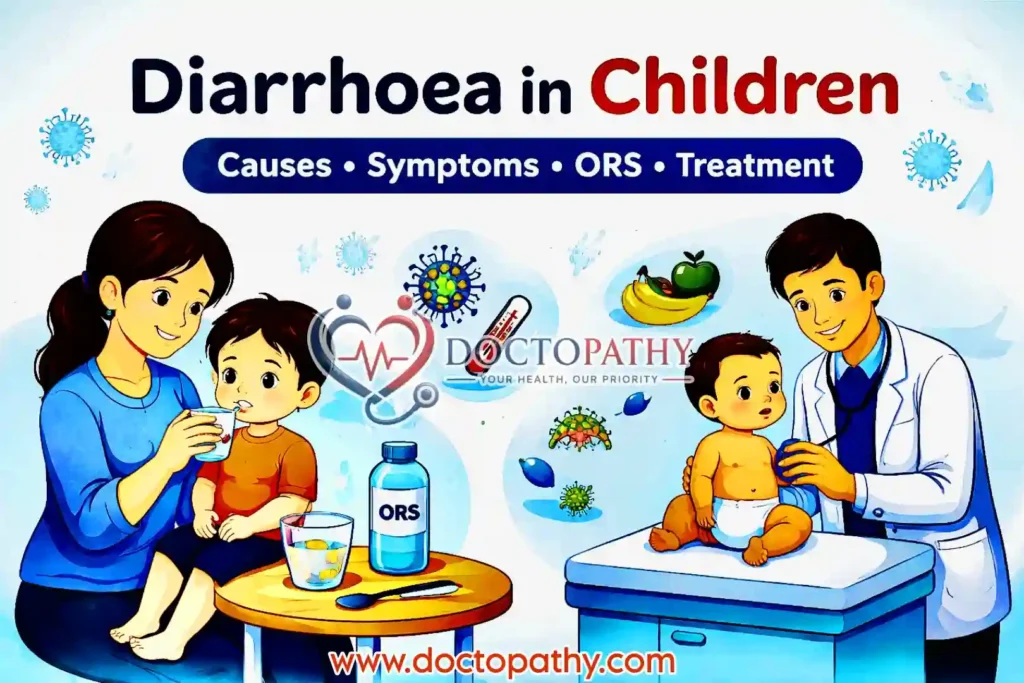
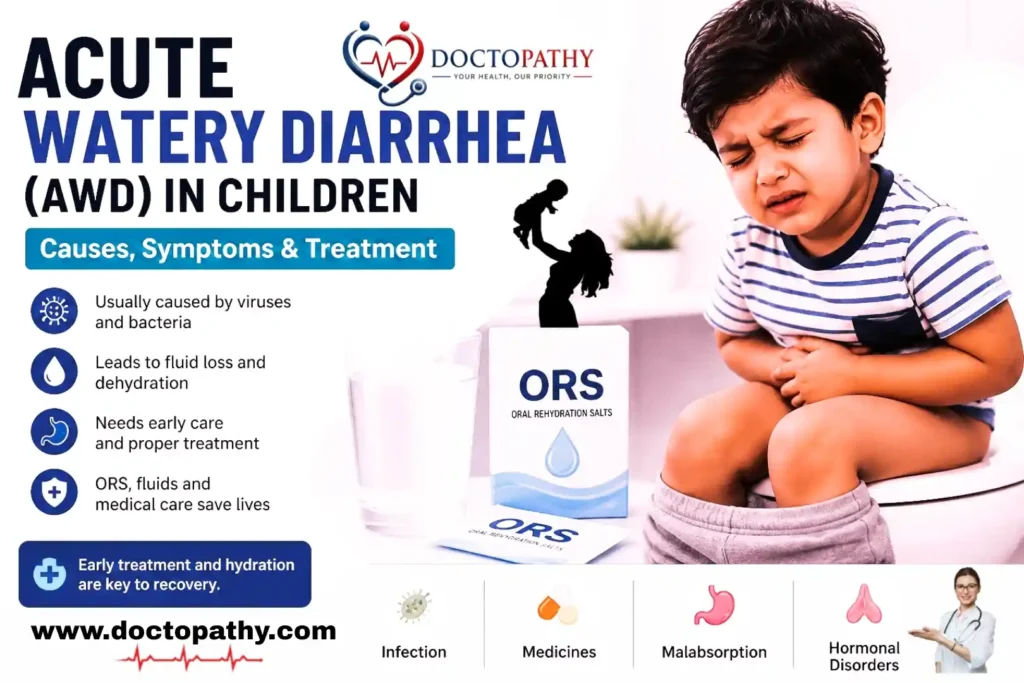
Acute Watery Diarrhea (AWD), also known as pediatric diarrhea, is one of the most common health problems in children. According to the Centers for Disease Control and Prevention (CDC), diarrhea is the second leading cause of death in children under 5 years of age worldwide. Most cases happen due to viral or bacterial infections, poor hygiene, contaminated food or unsafe drinking water.
Although diarrhea is common, parents should never ignore it because severe dehydration can become dangerous very quickly in young children.
In this article, we will explain the causes, symptoms, treatment and prevention of Acute Watery Diarrhea in simple and easy-to-understand language.
What is Acute Watery Diarrhea?
Acute Watery Diarrhea is a condition in which a child passes loose or watery stools several times a day. The condition usually lasts for a few days but may become severe if the body loses too much water and salts.
Children are more vulnerable because their bodies lose fluids faster than adults. If treatment is delayed, dehydration can become life-threatening.
Common Causes of Acute Watery Diarrhea in Children
There are several reasons why children may develop watery diarrhea.
1. Viral Infections
Viruses are the most common cause of diarrhea in children. Rotavirus and norovirus are frequently responsible for stomach infections.
2. Bacterial Infections
Bacteria from contaminated food or water can infect the intestines and cause diarrhea.
3. Malabsorption
Sometimes the digestive system fails to absorb nutrients properly from food. This condition can lead to loose stools and stomach discomfort.
4. Medicines
Certain medicines, especially antibiotics and laxatives, can disturb the natural balance of the intestine and trigger diarrhea.
5. Hormonal Disorders
Hormonal problems may affect bowel movement and digestion. For example, children with Addison’s disease may experience diarrhea due to low steroid hormone levels.
6. Poor Hygiene
Not washing hands before eating or after using the toilet increases the spread of infections.
7. Unsafe Food and Water
Drinking contaminated water or eating unhygienic food is a major reason for diarrhea in children.
Symptoms of Acute Watery Diarrhea
Symptoms may vary depending on the cause of diarrhea. Some children may experience only mild loose motions, while others may become seriously ill.
Common symptoms include:
- Frequent watery stools
- Nausea and vomiting
- Abdominal cramps
- Bloating
- Fever
- Weakness and tiredness
- Loss of appetite
- Blood in stool in severe cases
- Signs of dehydration
Signs of Dehydration in Children
Dehydration is the biggest danger associated with diarrhea.
Parents should immediately seek medical help if a child shows:
- Dry mouth and tongue
- Sunken eyes
- Excessive thirst
- Reduced urination
- Crying without tears
- Dizziness or weakness
- Fast heartbeat
- Sleepiness or irritability
Diagnosis of Acute Watery Diarrhea
Doctors usually diagnose diarrhea based on symptoms and physical examination.
In severe cases, additional tests may be required such as:
- Stool examination
- Blood tests
- Dehydration assessment
- Electrolyte level testing
Treatment of Acute Watery Diarrhea
Treatment mainly focuses on preventing dehydration and controlling infection.
Fluid Replacement Therapy
Replacing lost fluids is the most important step.
IV Fluid Therapy
Doctors may recommend intravenous fluids in moderate to severe dehydration.
Treatment Protocol:
- Inj. Koloride [500ml] I/V @_d/min, then adjust the drop rate according to dehydration status every half hourly for 4 hours.
Antibiotic Therapy
If bacterial infection is suspected, antibiotics may be prescribed.
Medication:
- Inj. Neofloxin [200mg/100ml] I/V BD
Nutritional Support
Children should continue light and nutritious food during recovery.
Supplement:
- Syp. Zesup tsf x BD
Oral Rehydration Solution (ORS)
ORS helps replace water and essential salts lost during diarrhea.
Parents should give ORS frequently in small amounts.
Foods Recommended During Diarrhea
Some foods are gentle on the stomach and help recovery.
Recommended foods include:
- Rice
- Bananas
- Applesauce
- Toast
- Khichdi
- Boiled potatoes
- Curd or yogurt
- Coconut water
Avoid:
- Oily foods
- Spicy foods
- Junk food
- Cold drinks
- Excess sweets
How to Prevent Acute Watery Diarrhea
Prevention is always better than treatment.
Important Prevention Tips
- Wash hands regularly with soap
- Drink clean and safe water
- Avoid stale or uncovered food
- Maintain proper kitchen hygiene
- Keep feeding bottles clean
- Ensure proper sanitation
- Vaccinate children against rotavirus
When Should Parents Consult a Doctor?
Immediate medical attention is needed if:
- Diarrhea lasts more than 2 days
- The child refuses to drink fluids
- High fever develops
- Blood appears in stool
- Severe vomiting occurs
- The child becomes very weak or sleepy
Conclusion
Acute Watery Diarrhea in children is common but should never be ignored. Early treatment, proper hydration and good hygiene can prevent serious complications. Parents should monitor dehydration signs carefully and seek medical care when symptoms become severe.
Maintaining cleanliness, safe drinking water and healthy eating habits can significantly reduce the risk of diarrhea in children.
Medical Disclaimer:
This article is for educational and informational purposes only and should not be considered medical advice, diagnosis or treatment. Always consult a qualified healthcare professional before starting any medication or treatment for children.