
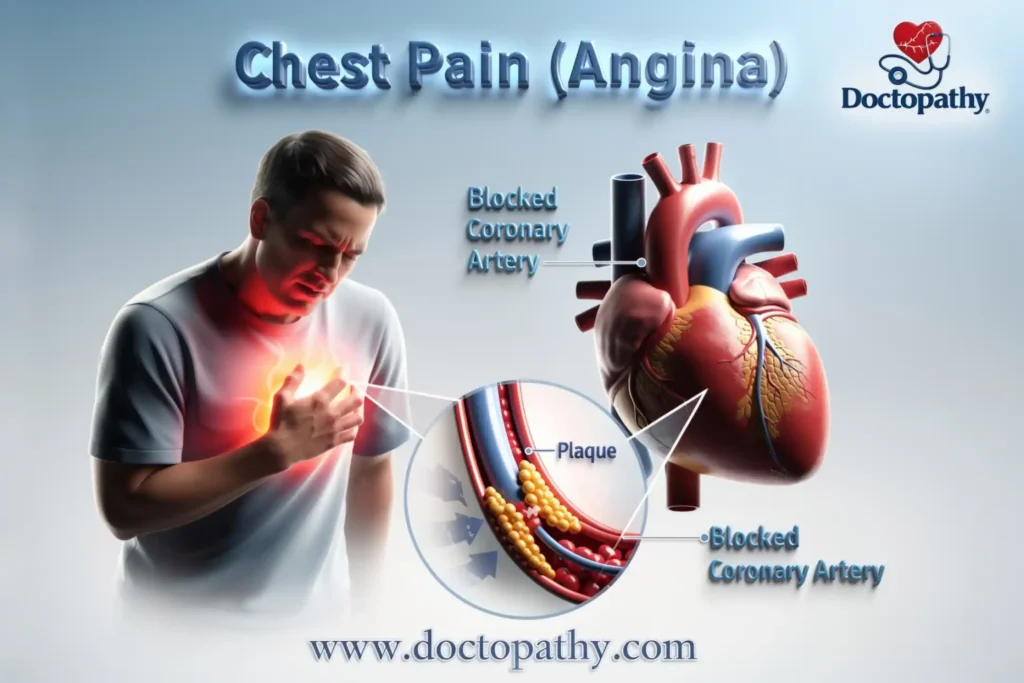
Chest pain is one of the most concerning symptoms related to heart health. One of the most common heart-related causes of chest pain is angina. Angina is the medical term used to describe chest pain or discomfort caused by reduced blood flow to the heart muscle.
The heart requires a continuous supply of oxygen-rich blood to function properly. When the blood supply to the heart muscle decreases, the heart does not receive enough oxygen. This condition is called myocardial ischemia, and it leads to chest pain known as angina.
Angina is not a disease itself but rather a symptom of an underlying heart problem, most commonly coronary artery disease (CAD). It may appear during physical activity, emotional stress, or even while resting in severe cases.
Understanding the causes, symptoms, types and treatment of angina is essential for early diagnosis and prevention of serious complications such as heart attack.
What is Angina?
Angina refers to pain, pressure or discomfort in the chest caused by reduced blood flow to the heart muscle. Many people describe angina as a feeling of:
- Pressure
- Tightness
- Heaviness
- Burning sensation
- Squeezing pain in the chest
The pain usually occurs behind the breastbone (sternum) and may spread to other parts of the body such as the arms, shoulders, neck, jaw, throat or back.
Angina may last from a few minutes to several minutes and often improves with rest or medication.
Types of Angina
Angina is mainly divided into two major types depending on its pattern and severity.
1. Stable Angina
Stable angina is the most common form of angina. It occurs when the heart works harder than usual and needs more oxygen.
For example:
- Physical exercise
- Climbing stairs
- Emotional stress
- Heavy meals
- Cold weather
Characteristics of Stable Angina
- Follows a predictable pattern
- Occurs during physical exertion
- Improves with rest or medication
- Usually lasts less than 5 minutes
Because stable angina follows a pattern, patients can often recognize the triggers and manage symptoms effectively.
Stable angina is also known as angina pectoris.
2. Unstable Angina
Unstable angina is more dangerous and requires immediate medical attention.
Unlike stable angina, it:
- Occurs suddenly
- Happens even at rest
- Becomes more frequent and severe
- Lasts longer than normal angina
Unstable angina can lead to a heart attack if not treated quickly.
It is considered a medical emergency and requires urgent hospital care.
Symptoms of Angina
The main symptom of angina is chest pain or discomfort, but other symptoms may also occur.
Common Symptoms
- Chest pain
- Burning sensation in the chest
- Tightness in the chest
- Pressure or squeezing feeling
- Heaviness in the chest
Pain Radiation
Angina pain may spread to:
- Shoulders
- Arms
- Neck
- Throat
- Jaw
- Back
Sometimes people confuse angina pain with gas or acidity.
Additional Symptoms
Other symptoms that may accompany angina include:
- Shortness of breath
- Sweating
- Dizziness
- Nausea
- Fatigue
Angina Symptoms in human beings
Symptoms may differ slightly between human beings.
In Male
Male commonly experience pain in:
- Chest
- Neck
- Shoulders
- Arms
In Female
Female may feel discomfort in:
- Abdomen
- Neck
- Jaw
- Throat
- Back
Studies have shown that women often describe angina pain as pressure, tightness or crushing pain rather than sharp chest pain.
Causes of Angina
The main cause of angina is reduced blood flow to the heart muscle.
The heart muscle requires oxygen-rich blood to function properly. When blood flow decreases, the heart muscle does not receive enough oxygen.
This condition is known as ischemia, which leads to chest pain.
Coronary Artery Disease
The most common cause of angina is coronary artery disease (CAD).
In this condition, the arteries that supply blood to the heart become narrowed due to plaque buildup.
Plaque is made of:
- Fat
- Cholesterol
- Calcium
- Other substances
This narrowing of arteries is called atherosclerosis.
When arteries become narrow, less blood reaches the heart muscle, causing angina.
Causes of Stable and Unstable Angina
Causes of Stable Angina
Stable angina usually occurs when the heart requires more oxygen than usual.
Common triggers include:
- Physical exertion
- Emotional stress
- Cold temperatures
- Heavy meals
- Smoking
These factors temporarily reduce blood flow through narrowed arteries.
Causes of Unstable Angina
Unstable angina occurs when a fatty plaque inside the artery ruptures.
This rupture causes:
- Formation of a blood clot
- Blockage of blood flow
This sudden blockage can lead to severe chest pain and heart attack.
Risk Factors for Angina
Several lifestyle and health conditions increase the risk of angina.
Major Risk Factors
- High blood pressure
- High cholesterol
- Smoking
- Diabetes
- Obesity
- Sedentary lifestyle
- Family history of heart disease
- Aging
Lifestyle Factors
Unhealthy lifestyle habits also increase the risk:
- Poor diet
- Lack of exercise
- Excessive alcohol consumption
- Chronic stress
Managing these risk factors can significantly reduce the chances of developing angina.
Diagnosis of Angina
Doctors diagnose angina based on symptoms, medical history, physical examination and diagnostic tests.
Several tests may be performed to confirm angina.
1. Electrocardiogram (ECG or EKG)
This test records the electrical activity of the heart and helps detect abnormal heart rhythms or reduced blood flow.
2. Stress Test
A stress test measures heart function during physical activity. It helps identify problems with blood flow to the heart.
3. Echocardiogram
This imaging test uses ultrasound waves to create pictures of the heart and evaluate its pumping function.
4. Nuclear Stress Test
This test uses a small amount of radioactive material to observe blood flow to the heart during rest and exercise.
5. Chest X-Ray
A chest X-ray helps examine the heart, lungs, and chest structures.
6. Blood Tests
Blood tests can detect markers related to heart damage or other medical conditions.
7. Coronary Angiography
This test uses contrast dye and X-ray imaging to view the coronary arteries and detect blockages.
8. Cardiac CT Scan
A cardiac CT scan provides detailed images of the heart and arteries to detect narrowing or plaque buildup.
Treatment of Angina
The treatment of angina focuses on:
- Improving blood flow to the heart
- Reducing symptoms
- Preventing heart attacks
Treatment may include medications, lifestyle changes and medical procedures.
Lifestyle Changes to Prevent Angina
Healthy lifestyle changes play an important role in preventing angina and improving heart health.
Recommended Lifestyle Habits
- Maintain a healthy body weight
- Eat a balanced heart-healthy diet
- Exercise regularly
- Stop smoking
- Limit alcohol intake
- Manage stress
- Control blood pressure and cholesterol
Regular medical checkups also help detect heart problems early.
When to Seek Medical Help
Immediate medical attention is required if:
- Chest pain lasts more than 5 minutes
- Pain spreads to arms or jaw
- Shortness of breath occurs
- Severe sweating or dizziness appears
These symptoms may indicate a heart attack, which requires emergency care.
Conclusion
Angina is a warning sign that the heart muscle is not receiving enough oxygen-rich blood. It usually occurs due to coronary artery disease and narrowing of heart arteries.
Although stable angina can often be managed with medication and lifestyle changes, unstable angina is a serious condition that requires urgent medical attention.
Recognizing the symptoms early and seeking prompt treatment can help prevent life-threatening complications such as heart attack.
Maintaining a healthy lifestyle, managing risk factors, and undergoing regular medical checkups are essential steps to protect heart health and prevent angina.
Medical Disclaimer
This article is for educational purposes only and should not replace professional medical advice. Always consult a qualified healthcare professional before taking any medication or treatment.