Biochemic medicines are an important part of homeopathy. This system is also called Biochemic Therapy or Tissue Salt Therapy.
German doctor Wilhelm Heinrich Schüßler introduced this method in 1863. He developed this system by following the homeopathic principles of Samuel Hahnemann.
According to Dr. Schuessler, the human body needs twelve important mineral salts to keep cells healthy and active. These mineral salts are called tissue salts.
When the body has the right balance of these salts, the cells work properly and the person stays healthy. However, if the body lacks any one of these salts, different health problems may appear.
Biochemic medicines help restore this mineral balance naturally.

What are Biochemic Medicines?
Biochemic medicines are small mineral-based remedies used in homeopathy. These medicines support the body by improving cell function and restoring mineral balance.
Doctors and homeopathic practitioners commonly use these remedies along with other homeopathic medicines.
Biochemic medicines are easy to take and are available in:
- Tablets
- Powders
People of almost all age groups can use them under professional guidance.
The 12 Biochemic Tissue Salts
Dr. Schuessler identified twelve important tissue salts.
1. Calcarea Fluorica
This salt supports:
- Teeth
- Bones
- Elastic tissues
- Skin
It is often used for weak teeth, cracked skin and enlarged veins.
2. Calcarea Phosphorica
This salt helps:
- Bone growth
- Body strength
- Nutrition
It is commonly used for weak bones, delayed growth and tiredness.
3. Calcarea Sulphurica
This tissue salt supports healthy skin and healing.
People often use it for:
- Pimples
- Skin infections
- Slow-healing wounds
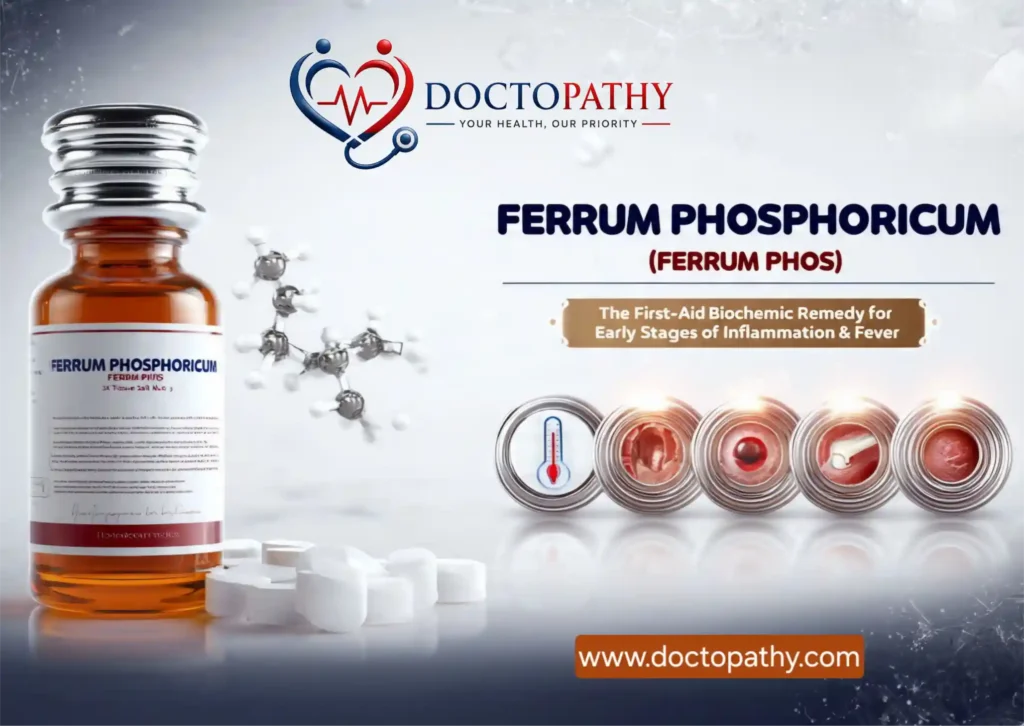
4. Ferrum Phosphoricum
This salt is commonly used during the early stage of inflammation and fever.
It may help with:
- Mild fever
- Redness
- Weakness
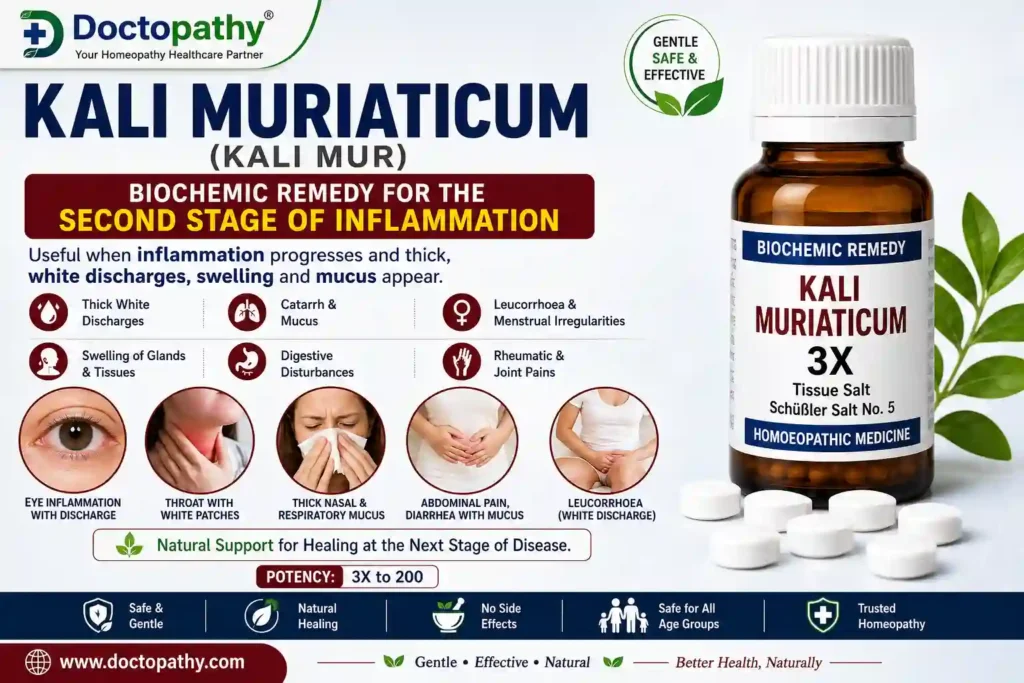
5. Kali Muriaticum
This tissue salt supports the glands and mucus membranes.
It is often used for:
- Colds
- White-coated tongue
- Ear problems
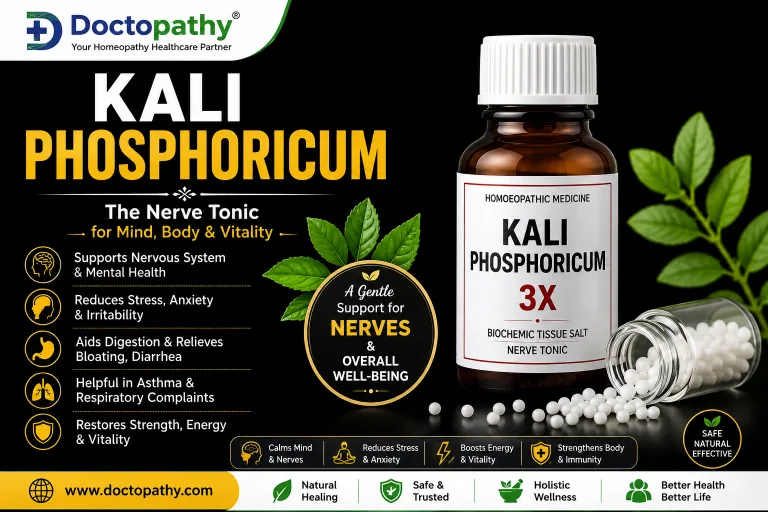
6. Kali Phosphoricum
This salt is known as a nerve tonic.
People commonly use it for:
- Stress
- Mental tiredness
- Weak memory
- Nervous weakness
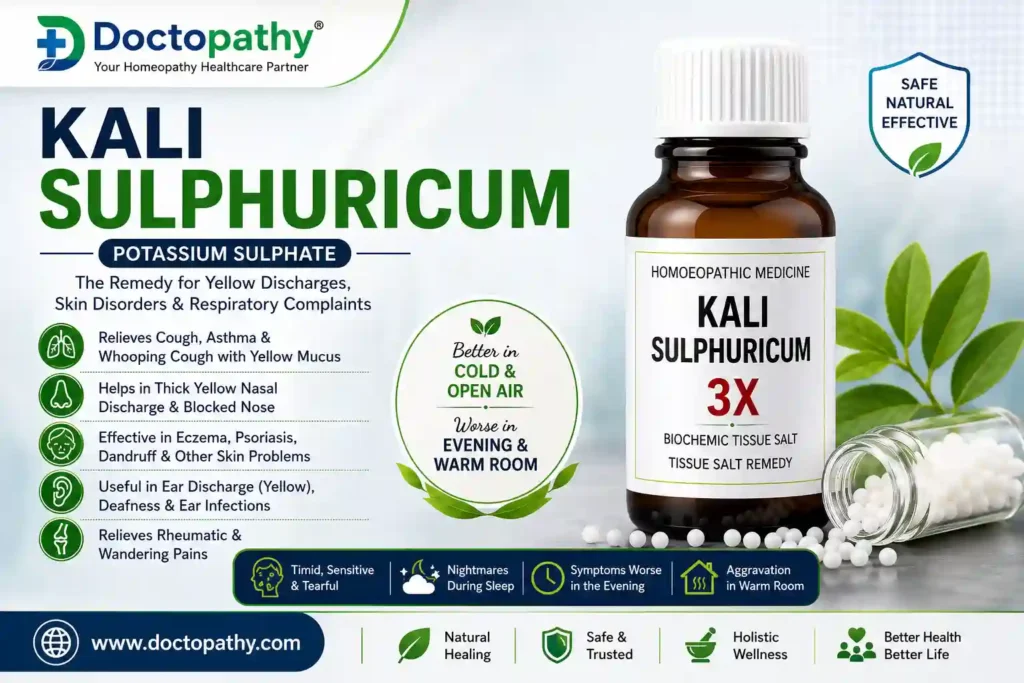
7. Kali Sulphuricum
This tissue salt supports the skin and respiratory system.
It may help with:
- Yellow mucus
- Skin problems
- Sinus issues
8. Magnesia Phosphorica
This is one of the most popular tissue salts for pain and cramps.
It is often used for:
- Muscle cramps
- Nerve pain
- Stomach spasms
9. Natrum Muriaticum
This salt helps control fluid balance in the body.
People commonly use it for:
- Headache
- Dry skin
- Dehydration
- Emotional stress
10. Natrum Phosphoricum
This tissue salt helps balance acid levels in the body.
It may help with:
- Acidity
- Indigestion
- Sour burping
11. Natrum Sulphuricum
This salt supports the liver and helps remove extra fluids from the body.
It is commonly used for:
- Liver problems
- Water retention
- Damp weather complaints
12. Silicea
Silicea supports:
- Hair
- Nails
- Skin
- Connective tissues
People often use it for:
- Weak nails
- Hair fall
- Abscesses
- Slow healing
How Biochemic Medicines Work
Biochemic medicines work by improving mineral balance inside the cells.
When cells do not receive enough tissue salts, they cannot function properly. As a result, different symptoms may appear.
These remedies provide the needed mineral salts in a gentle and easy-to-absorb form. Therefore, they help the body heal naturally.
Biochemic therapy may help:
- Improve cell function
- Support metabolism
- Increase natural healing power
- Reduce symptoms caused by mineral deficiency
Potencies of Biochemic Medicines
Biochemic medicines usually come in X potency, also called the decimal potency system.
Common potencies include:
- 3X
- 6X
- 12X
Homeopathic pharmacies and dispensaries widely sell these medicines.
Benefits of Biochemic Medicines
Many people prefer biochemic remedies because they are:
- Easy to take
- Gentle in action
- Simple to use
- Commonly available
- Suitable for daily support
However, people should always take medicines under qualified medical or homeopathic guidance.
Conclusion
Biochemic medicines are a simple and popular part of homeopathy. Dr. Schuessler introduced this system to restore mineral balance inside the body’s cells.
The twelve tissue salts help support normal body functions and natural healing. Many homeopathic practitioners use these remedies to support health and relieve symptoms related to mineral imbalance.
Although biochemic medicines are widely used, proper medical advice is important before starting any treatment.
FAQs
1. What are biochemic medicines?
Biochemic medicines are mineral-based homeopathic remedies that help restore tissue salt balance in the body.
2. Who introduced biochemic therapy?
German physician Dr. Wilhelm Heinrich Schuessler introduced biochemic therapy in 1863.
3. How many tissue salts are used in biochemic medicine?
Biochemic medicine uses 12 essential tissue salts.
4. What are common potencies of tissue salts?
Common potencies include 3X, 6X and 12X.
5. Are biochemic medicines safe?
People generally consider biochemic medicines gentle and easy to use, but professional guidance is always recommended.