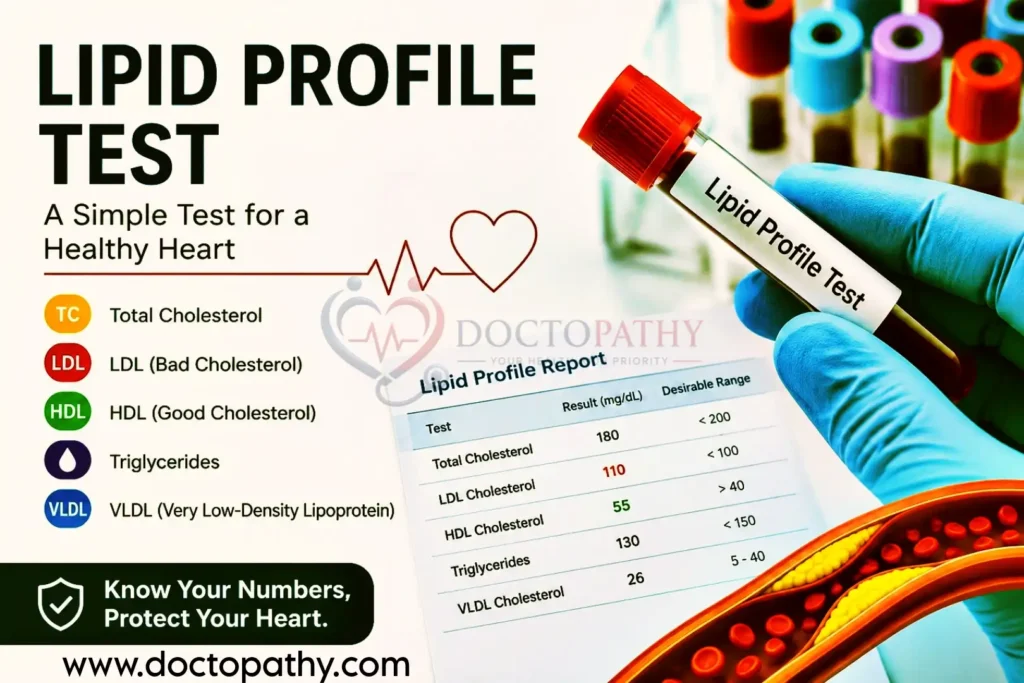
A Lipid Profile Test is a blood test that measures different types of fats (lipids) in your blood. It helps doctors evaluate your risk of heart disease, stroke and other cardiovascular problems.
High cholesterol and abnormal lipid levels usually do not cause symptoms in the early stages. Therefore, regular testing is important to detect problems before they become serious.
Also read this post :- Creatinine Test: Purpose, Normal Range, Procedure & Results
What Does a Lipid Profile Test Measure?
1. Total Cholesterol
Total cholesterol is the overall amount of cholesterol present in your blood. Maintaining a healthy cholesterol level is important for heart health.
2. LDL (Low-Density Lipoprotein) – “Bad Cholesterol”
LDL cholesterol is often called bad cholesterol because high levels can build up in the walls of arteries. This can lead to blockage of blood flow and increase the risk of heart attack and stroke.
3. HDL (High-Density Lipoprotein) – “Good Cholesterol”
HDL cholesterol is known as good cholesterol. It helps remove excess cholesterol from the bloodstream and carries it back to the liver for removal from the body.
4. Triglycerides
Triglycerides are a type of fat found in the blood. High triglyceride levels can increase the risk of heart disease, obesity and diabetes-related complications.
5. VLDL (Very Low-Density Lipoprotein)
VLDL carries triglycerides throughout the body. Elevated VLDL levels may contribute to plaque formation in the arteries.
Why is a Lipid Profile Test Important?
A lipid profile test helps:
- Assess the risk of heart disease and stroke
- Detect high cholesterol levels early
- Monitor cholesterol-lowering treatment
- Evaluate overall cardiovascular health
- Identify risk factors for blocked arteries
When Should You Get a Lipid Profile Test?
Your doctor may recommend a lipid profile test if:
- You are having a routine health check-up
- You have high blood pressure (hypertension)
- You have diabetes
- You are overweight or obese
- You have a family history of heart disease
- You smoke or consume excessive alcohol
- You are taking cholesterol-lowering medications
Adults should have their cholesterol checked regularly, especially after the age of 20.
How to Prepare for a Lipid Profile Test?
Before the test, keep the following points in mind:
- Fasting for 9–12 hours is usually recommended
- Drink only water during the fasting period
- Avoid tea, coffee, juice and other beverages
- Inform your doctor about any medicines you are taking
- Follow your doctor’s instructions carefully
In some situations, your doctor may allow a non-fasting lipid profile test.
What Are the Normal Lipid Profile Values?
| Test | Normal Range |
|---|---|
| Total Cholesterol | Less than 200 mg/dL |
| LDL Cholesterol | Less than 100 mg/dL |
| HDL Cholesterol | Above 40 mg/dL (Men), Above 50 mg/dL (Women) |
| Triglycerides | Less than 150 mg/dL |
| VLDL Cholesterol | 5–40 mg/dL |
Normal values may vary slightly depending on the laboratory.
What Happens if Cholesterol Levels Are High?
High cholesterol levels can lead to:
- Heart disease
- Stroke
- Narrowing of arteries (atherosclerosis)
- High blood pressure
- Increased risk of heart attack
Lifestyle changes, healthy eating, regular exercise and medications can help manage cholesterol levels.
Tips to Maintain Healthy Cholesterol Levels
- Eat a balanced and healthy diet
- Reduce saturated and trans fats
- Exercise regularly
- Maintain a healthy body weight
- Avoid smoking
- Limit alcohol consumption
- Get regular health check-ups
Also read this post :- ESR test: Purpose, normal range, procedure and interpretation of results
Conclusion
A Lipid Profile Test is a simple and important blood test that helps assess your heart health. Regular testing can detect cholesterol problems early and help prevent serious conditions such as heart disease and stroke. If you have risk factors like diabetes, high blood pressure, obesity or a family history of heart disease, talk to your doctor about getting a lipid profile test.