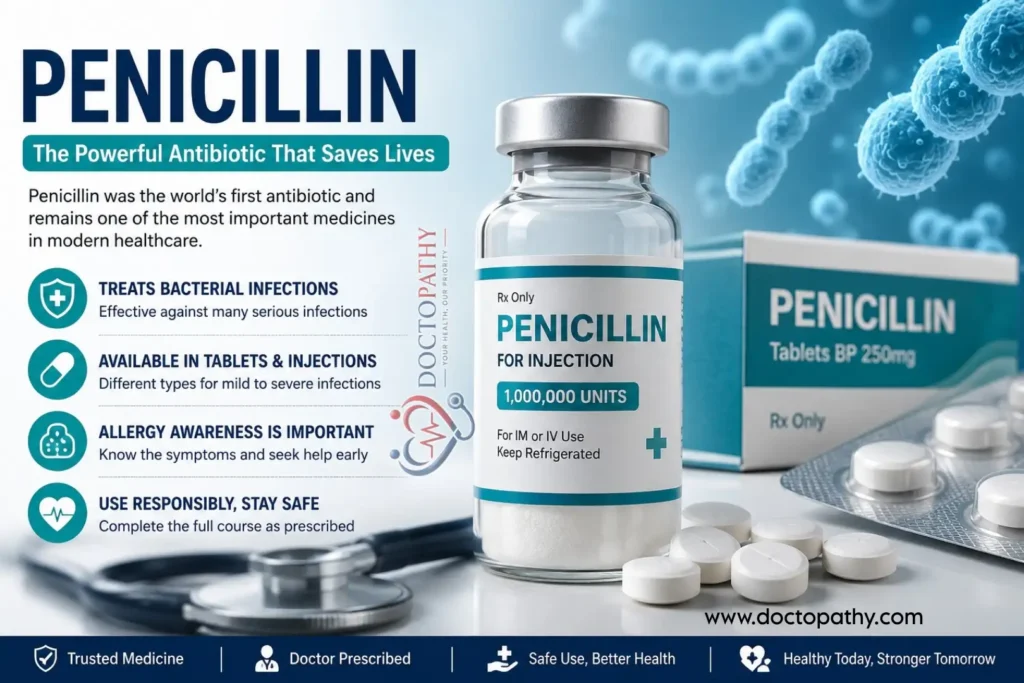
Penicillin is one of the world’s first and most important antibiotics. It belongs to the bactericidal group of antibiotics, meaning it kills bacteria rather than simply stopping their growth.
Since its discovery,The medicine has saved millions of lives by treating various bacterial infections. Even today, it remains an effective treatment for many diseases caused by susceptible bacteria.
This antibiotic works well against it:
- Gram-positive bacteria
- Certain Gram-negative bacteria such as gonococci and meningococci
- Streptococcal infections
- Spirochetes such as syphilis-causing bacteria
Also read this post :- Amikacin Sulphate Injection: Uses, Benefits, Side Effects, and Precautions
How Does Penicillin Work?
This antibiotic destroys the protective cell walls of bacteria, causing them to die. Due to this mechanism, it is highly effective against many bacterial infections.
However, penicillin only works against bacterial infections and is not effective against viral illnesses such as:
- Common cold
- Flu
- Most sore throats caused by viruses
- COVID-19
Common Uses
Doctors may prescribe penicillin for:
Respiratory Infections
- Pneumonia
- Streptococcal throat infections
- Some cases of bronchitis
Ear, Nose and Throat Infections
- Ear infections
- Tonsillitis
- Sinus infections caused by susceptible bacteria
Skin and Soft Tissue Infections
- Infected wounds
- Cellulitis
- Erysipelas
- Skin abscesses
Dental Infections
- Tooth abscesses
- Gum infections
Serious Infections
- Meningitis
- Septicemia (blood infection)
- Tetanus
- Gangrene
Sexually Transmitted Infections
- Syphilis
- Certain cases of gonorrhea (depending on antibiotic sensitivity)
Prevention of Disease
Also be used to prevent:
- Rheumatic fever recurrence
- Certain heart infections in high-risk patients
Types of Penicillin
1. Oral
Oral antibiotic is usually prescribed for mild to moderate infections.
Common forms include:
- Penicillin V
- Penicillin G tablets
These medicines are available as tablets, capsules or syrups.
2. Injectable
Injectable this antibiotic is used when infections are severe or require rapid treatment.
Common types include:
Crystalline Penicillin (Short-Acting)
Acts quickly but requires frequent dosing.
Procaine Penicillin (Intermediate-Acting)
Provides longer-lasting effects and may be given once daily.
Benzathine Penicillin (Long-Acting)
Slowly releases medicine into the bloodstream and can remain effective for several weeks.
Penicillin Allergy
Although antibacterial medicine is generally safe, some people may develop an allergic reaction.
Mild Allergic Symptoms
- Skin rash
- Itching
- Hives
- Redness
- Swelling
These symptoms may appear within hours or days after taking the medicine.
Severe Allergic Reaction (Anaphylaxis)
In rare cases, this medication can cause a life-threatening allergic reaction called anaphylaxis.
Symptoms include:
- Difficulty breathing
- Swelling of the face or throat
- Severe dizziness
- Rapid heartbeat
- Low blood pressure
- Loss of consciousness
This is a medical emergency and requires immediate treatment.
Also read this post :- Tetanus Infection After Injury: Symptoms and Medical Care
Who Should Avoid Penicillin?
Do not take penicillin without medical advice if:
- You have previously had an allergic reaction to this medicine.
- You experienced a severe rash or difficulty breathing after taking this medicine.
- You are allergic to related antibiotics such as ampicillin or amoxicillin.
Always inform your doctor about any previous drug allergies.
Side Effects of Penicillin
Most people tolerate the medication well.
Common side effects include:
- Nausea
- Vomiting
- Stomach upset
- Mild diarrhea
- Headache
These side effects are usually mild and temporary.
Seek immediate medical attention if severe allergic symptoms occur.
Resistance
Over time, some bacteria have become resistant to penicillin.
This means the antibiotic no longer works effectively against them.
Common reasons include:
- Taking antibiotics unnecessarily
- Stopping treatment too early
- Using incorrect doses
- Frequent misuse of antibiotics
Antibiotic resistance is a growing global health problem.
Always use antibiotics exactly as prescribed by your healthcare provider.
Important Precautions While Taking Penicillin
Complete the Full Course
Even if symptoms improve, continue the medicine for the entire prescribed duration.
Stopping early may:
- Cause the infection to return
- Increase antibiotic resistance
Take on an Empty Stomach
Penicillin V is often absorbed better when taken:
- 1 hour before meals, or
- 2 hours after meals
Follow your doctor’s instructions regarding timing.
Never Self-Medicate
Penicillin should only be used under professional medical supervision.
Can Penicillin Be Applied Directly to Wounds?
Generally, topical use of penicillin is not recommended unless specifically prescribed.
Improper use may increase the risk of allergic reactions and antibiotic resistance.
Always follow a healthcare professional’s advice for wound care.
Rheumatic Fever
This medicine is one of the most effective medicines for the prevention of recurrent rheumatic fever.
Patients with a history of rheumatic fever may require long-term preventive treatment using benzathine penicillin injections as advised by their doctor.
For Syphilis
Benzathine Penicillin G remains the preferred treatment for most stages of syphilis and is considered highly effective when administered correctly.
Treatment should always be supervised by a qualified healthcare professional.
When Should You Consult a Doctor?
Seek medical attention if:
- Symptoms worsen despite treatment.
- Fever persists after several days.
- Breathing difficulty develops.
- Severe rash appears.
- Signs of an allergic reaction occur.
- The infection keeps returning.
Conclusion
This antibiotic remains one of the most valuable discoveries in modern medicine. It is widely used for treating bacterial infections such as pneumonia, throat infections, skin infections, rheumatic fever and syphilis.
When used correctly and under medical supervision, the medicine is generally safe and highly effective. Completing the prescribed course and following dosage instructions can help ensure successful treatment while reducing the risk of antibiotic resistance.
Responsible use of antibiotics is essential to protect public health and maintain their effectiveness for future generations.
Also read this post :- Brivaracetam Tablets – Uses, Dosage, Side Effects and Precautions
FAQs
It is commonly prescribed to treat bacterial infections such as pneumonia, strep throat, skin infections, rheumatic fever and syphilis.
Yes. Some people may experience mild rashes, itching or severe allergic reactions such as anaphylaxis.
It is generally considered safe during pregnancy when prescribed by a qualified healthcare professional.
Take the missed dose as soon as you remember. If it is nearly time for the next dose, skip the missed dose and continue your regular schedule.
Completing the full course helps eliminate the infection completely and reduces the risk of antibiotic resistance.
Medical Disclaimer:
This article is for educational and informational purposes only. It does not replace professional medical advice, diagnosis or treatment. Always consult a qualified healthcare professional before taking any medication.