शराब (Alcohol) का सेवन आज के समय में कई लोग शौक या सामाजिक अवसरों पर करते हैं। लेकिन यदि इसका सेवन अधिक मात्रा में और लंबे समय तक किया जाए, तो यह शरीर के लगभग हर अंग को नुकसान पहुँचा सकती है। शराब का असर केवल लीवर तक ही सीमित नहीं रहता, बल्कि यह हृदय, मस्तिष्क, पाचन तंत्र, अग्न्याशय (Pancreas) और प्रतिरक्षा प्रणाली (Immune System) को भी प्रभावित करती है।
इसलिए शराब का अधिक सेवन स्वास्थ्य के लिए गंभीर खतरा बन सकता है।
शराब शरीर को कैसे प्रभावित करती है?
शराब शरीर में एक विषैले (Toxic) पदार्थ की तरह काम करती है। बार-बार या अधिक मात्रा में शराब पीने से शरीर के अंग धीरे-धीरे कमजोर होने लगते हैं। इसके कारण कई गंभीर बीमारियों का खतरा बढ़ जाता है।
यदि कोई व्यक्ति लंबे समय से बहुत अधिक शराब पी रहा है, तो उसे बिना डॉक्टर की सलाह के अचानक शराब छोड़नी नहीं चाहिए। कुछ लोगों में ऐसा करने से Alcohol Withdrawal के गंभीर लक्षण हो सकते हैं।
अधिक शराब पीने के संकेत
अधिक शराब पीने वाले लोगों में कुछ जांचों की रिपोर्ट असामान्य आ सकती है। जैसे—
- Mean Corpuscular Volume (MCV) बढ़ जाना।
- Uric Acid का बढ़ना।
- Triglyceride का स्तर बढ़ना।
- Gamma-Glutamyl Transferase (GGT) का बढ़ना।
ये बदलाव लंबे समय तक अधिक शराब पीने का संकेत हो सकते हैं।
अधिक शराब पीने के सामान्य लक्षण
- बार-बार एसिडिटी और अपच होना।
- उच्च रक्तचाप (High Blood Pressure)।
- लीवर से जुड़ी समस्याएँ।
- अग्न्याशय (Pancreas) की बीमारी।
- बार-बार संक्रमण होना, जैसे निमोनिया।
- नसों की कमजोरी या हाथ-पैरों में झुनझुनी।
- लार ग्रंथियों (Salivary Glands) में सूजन।
- हर समय थकान और कमजोरी महसूस होना।
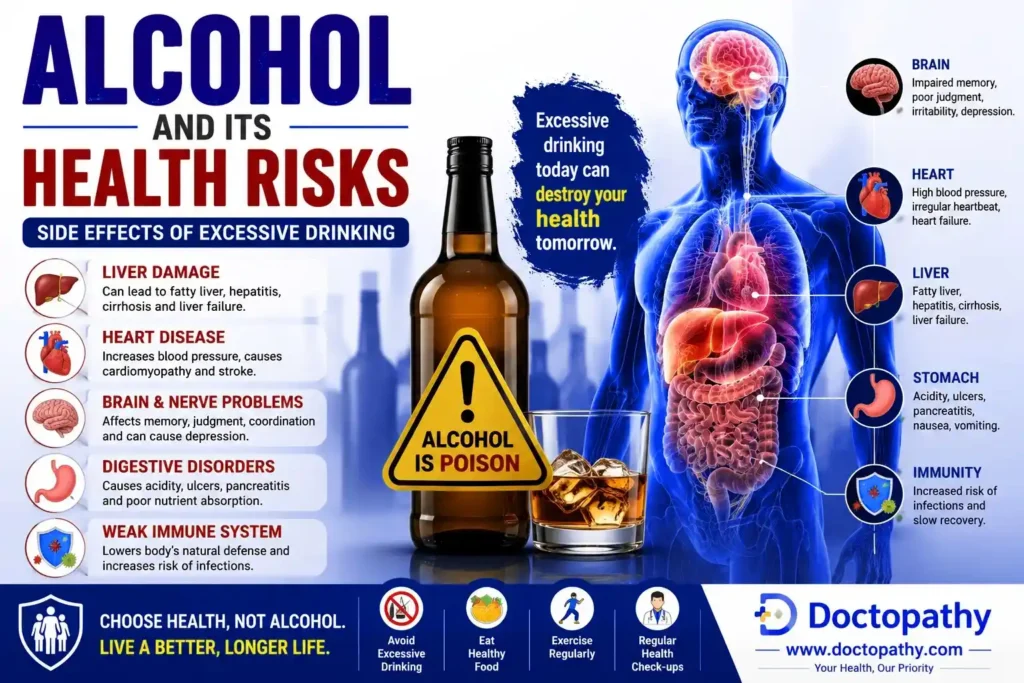
शराब से होने वाले स्वास्थ्य संबंधी नुकसान
1. पाचन तंत्र पर प्रभाव
अधिक शराब पीने से पाचन तंत्र प्रभावित हो सकता है, जिससे—
- एसिडिटी बढ़ना।
- पेट का अल्सर।
- भोजन का सही से न पचना।
- अग्नाशय की सूजन (Pancreatitis)
2. लीवर की बीमारी
लीवर शराब से सबसे अधिक प्रभावित होने वाला अंग है। लंबे समय तक शराब पीने से—
- फैटी लीवर (Fatty Liver)
- अल्कोहॉलिक हेपेटाइटिस (Alcoholic Hepatitis)
- लीवर सिरोसिस (Liver Cirrhosis)
- लीवर फेल होने जैसी गंभीर समस्याएँ हो सकती हैं।
3. हृदय और रक्त वाहिकाओं पर प्रभाव
अधिक शराब पीने से—
- उच्च रक्तचाप हो सकता है।
- हृदय की मांसपेशियाँ कमजोर हो सकती हैं।
- दिल की धड़कन अनियमित हो सकती है।
- स्ट्रोक का खतरा बढ़ सकता है।
4. शरीर के मेटाबॉलिज्म पर असर
शराब शरीर की सामान्य कार्यप्रणाली को भी प्रभावित करती है। इसके कारण—
- रक्त में वसा की मात्रा बढ़ सकती हैं।
- रक्त में शर्करा का स्तर कम हो सकता है।
- मधुमेह के रोगियों की स्थिति बिगड़ सकती है।
- शरीर में एसिड-बेस असंतुलन हो सकता है।
5. मस्तिष्क और मानसिक स्वास्थ्य पर प्रभाव
अधिक शराब पीने से मस्तिष्क की कार्यक्षमता प्रभावित होती है। इसके कारण—
- लड़खड़ाकर बोलना।
- संतुलन बिगड़ना।
- याददाश्त कमजोर होना।
- ध्यान लगाने में कठिनाई।
- चिंता और अवसाद।
- सोचने-समझने की क्षमता कम होना।
6. रोग प्रतिरोधक क्षमता कमजोर होना
शराब शरीर की प्रतिरक्षा प्रणाली को कमजोर कर देती है। इससे व्यक्ति को संक्रमण जल्दी हो सकता है और बीमारी से ठीक होने में अधिक समय लग सकता है।
7. खून और पोषक तत्वों की कमी
लंबे समय तक शराब पीने से शरीर में आवश्यक पोषक तत्वों की कमी हो सकती है, जिससे—
- एनीमिया (खून की कमी)
- मैग्नीशियम की कमी
- फॉस्फेट की कमी
- इलेक्ट्रोलाइट असंतुलन जैसी समस्याएँ हो सकती हैं।
क्या शराब की लत का इलाज संभव है?
हाँ। यदि समय रहते इलाज शुरू किया जाए, तो शराब की लत से बाहर निकला जा सकता है।
इसके लिए डॉक्टर निम्न उपाय सुझा सकते हैं—
- चिकित्सकीय निगरानी (Medical Supervision)
- परामर्श (Counseling)
- व्यवहार चिकित्सा (Behavior Therapy)
- सहायता समूह (Support Groups)
- आवश्यकता अनुसार दवाएँ
- स्वस्थ जीवनशैली अपनाना
शराब से होने वाले नुकसान से कैसे बचें?
- शराब का सेवन न करें या जितना हो सके उससे बचें।
- संतुलित और पौष्टिक भोजन करें।
- नियमित व्यायाम करें।
- समय-समय पर स्वास्थ्य जांच कराते रहें।
- यदि शराब छोड़ने में कठिनाई हो रही हो तो डॉक्टर से सलाह लें।
निष्कर्ष
शराब का अधिक और लगातार सेवन शरीर के लगभग हर अंग को नुकसान पहुँचा सकता है। इससे लीवर, हृदय, मस्तिष्क, पाचन तंत्र और प्रतिरक्षा प्रणाली प्रभावित हो सकती है। यदि समय रहते शराब की आदत पर नियंत्रण कर लिया जाए और आवश्यकता होने पर चिकित्सकीय सहायता ली जाए, तो कई गंभीर बीमारियों से बचाव संभव है।
अक्सर पूछे जाने वाले प्रश्न (FAQs)
अधिक शराब पीने से लीवर की बीमारी, उच्च रक्तचाप, हृदय रोग, अग्नाशय की सूजन, मस्तिष्क संबंधी समस्याएँ और कई अन्य गंभीर बीमारियाँ हो सकती हैं।
हाँ। लंबे समय तक अधिक शराब पीने से Fatty liver, Alcoholic Hepatitis, Liver cirrhosis और Liver failure होने का खतरा बढ़ जाता है।
शराब याददाश्त, सोचने-समझने की क्षमता, संतुलन और निर्णय लेने की क्षमता को प्रभावित करती है। लंबे समय तक अधिक सेवन करने से मानसिक स्वास्थ्य पर भी बुरा असर पड़ सकता है।
यदि कोई व्यक्ति लंबे समय से बहुत अधिक शराब पी रहा है, तो उसे बिना डॉक्टर की सलाह के अचानक शराब नहीं छोड़नी चाहिए। कुछ लोगों में Withdrawal के गंभीर लक्षण हो सकते हैं।
यदि समय रहते शराब छोड़ दी जाए और उचित इलाज कराया जाए, तो कई समस्याओं में सुधार हो सकता है। लेकिन Liver cirrhosis जैसी गंभीर क्षति हमेशा पूरी तरह ठीक नहीं होती।