
What is Nightfall?
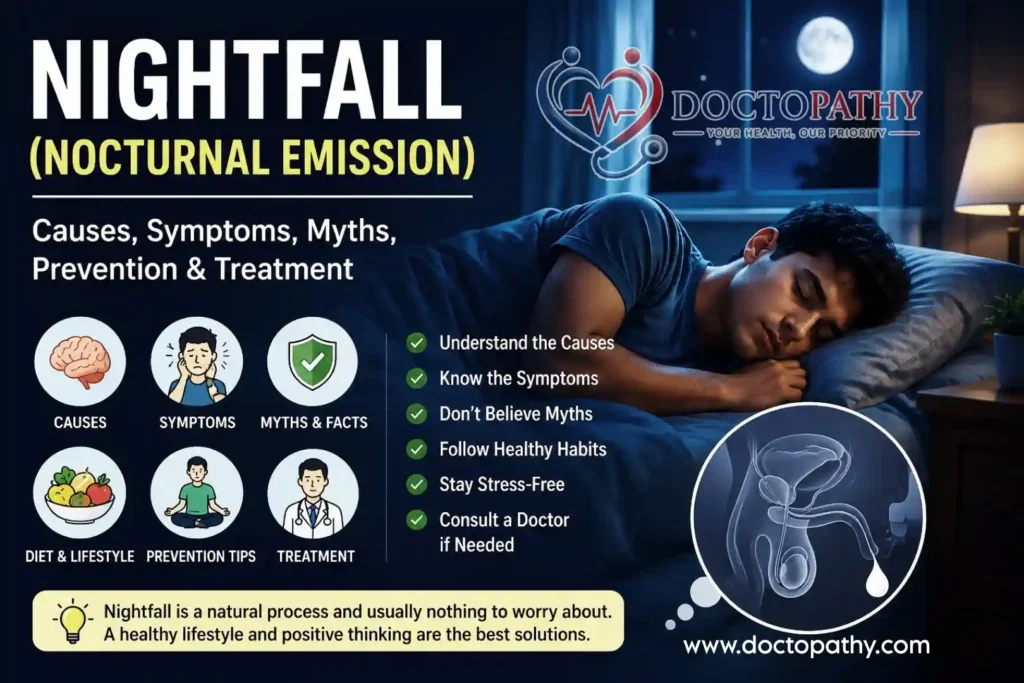
Nightfall, also known as Nocturnal Emission or a Wet Dream, is the involuntary release of semen during sleep. It is a common and natural process that usually occurs in teenage boys and young men, especially during puberty. However, some adult men may also experience nightfall occasionally.
Nightfall happens when the body naturally releases excess semen during sleep. It may occur with sexual dreams, but it can also happen without any dream. In most cases, nightfall is not a disease and does not indicate any health problem.
Also read this post :- Impotence (Erectile Dysfunction): Causes, Symptoms & Homeopathic Treatment
Other Names for Nightfall
Nightfall is known by several names, including:
- Nocturnal Emission
- Wet Dream
- Night Discharge
- Sleep Ejaculation
- Nightfall
At What Age Does Nightfall Start?
Nightfall generally begins during puberty, usually between the ages of 13 and 14 years. During this period, the body undergoes hormonal changes and starts producing sperm. As a result, wet dreams may occur naturally.
Some men continue to experience occasional nightfall throughout adulthood, which is generally considered normal.
Is Nightfall Normal?
Yes, nightfall is completely normal in most cases.
Many people worry that wet dreams may cause weakness, infertility, or sexual problems. However, medical experts agree that occasional nightfall is a natural body function and does not harm physical or sexual health.
Experiencing a wet dream once in a while is usually nothing to worry about.
Common Causes of Nightfall
Several factors may contribute to nightfall, including:
- Hormonal changes during puberty
- Increased sexual thoughts or fantasies
- Long periods without ejaculation
- Sexual dreams during sleep
- Stress and anxiety
- Emotional excitement
- Irregular sleeping habits
- Watching sexually stimulating content before bedtime
Risk Factors That May Increase Nightfall
Some factors may increase the frequency of wet dreams:
- Lack of physical exercise
- Poor sleep quality
- Excessive stress
- Anxiety and emotional tension
- Consumption of alcohol
- Exposure to sexual content before sleep
- Irregular daily routine
Symptoms Associated with Frequent Nightfall
Occasional nightfall usually does not cause any symptoms. However, people who worry excessively about it may experience:
- Disturbed sleep
- Fatigue due to poor sleep quality
- Anxiety and stress
- Embarrassment or emotional discomfort
- Difficulty concentrating because of worry
If nightfall becomes very frequent and affects daily life, medical advice may be helpful.
Also read this post :- Male Fertility Facts: Age, Sperm Health, and Common Myths
Common Myths About Nightfall
Many myths exist regarding nightfall. Let’s separate facts from fiction.
Myth 1: Nightfall Causes Physical Weakness
Fact: Occasional nightfall does not cause weakness or loss of strength.
Myth 2: Nightfall Reduces Sexual Performance
Fact: There is no scientific evidence that normal wet dreams cause erectile dysfunction or sexual weakness.
Myth 3: Nightfall Shrinks the Penis
Fact: Nightfall does not affect the size, shape, or growth of the penis.
Myth 4: Nightfall Causes Infertility
Fact: Normal nocturnal emissions do not reduce fertility or reproductive ability.
Myth 5: Nightfall Is a Disease
Fact: In most cases, nightfall is a natural body process and not a medical condition.
When Should You See a Doctor?
You should consult a healthcare professional if:
- Nightfall occurs very frequently and causes emotional distress.
- There is pain during ejaculation.
- Blood appears in the semen.
- There is burning or pain during urination.
- Signs of infection are present.
- You have concerns about your sexual health.
How is Nightfall Diagnosed?
In most cases, no special tests are required.
A doctor may ask about:
- Frequency of wet dreams
- Medical history
- Lifestyle habits
- Sleep patterns
- Sexual health concerns
Additional tests may only be needed if another medical condition is suspected.
Treatment of Nightfall
Most people do not require any treatment because nightfall is a normal body function.
Lifestyle Changes
The following habits may help maintain overall health:
- Exercise regularly
- Follow a consistent sleep schedule
- Manage stress effectively
- Avoid excessive alcohol consumption
- Reduce exposure to sexual content before bedtime
- Stay physically active
Psychological Support
Many people become anxious after experiencing wet dreams. Learning that nightfall is normal often helps reduce stress and unnecessary fear.
Diet Tips for Better Health
A healthy diet supports overall physical and mental well-being.
Include:
- Fresh fruits
- Green vegetables
- Whole grains
- Milk and dairy products
- Lentils and pulses
- Plenty of water
Limit:
- Junk food
- Smoking
- Alcohol
- Excessively processed foods
Prevention Tips
Although nightfall cannot always be prevented, the following habits may help reduce its frequency:
- Stay physically active
- Sleep on time every night
- Avoid excessive stress
- Practice relaxation techniques
- Avoid watching sexually stimulating content before sleep
- Maintain a healthy daily routine
Conclusion
Nightfall, also known as nocturnal emission or wet dreams, is a natural and common process in males. It usually occurs during puberty but may continue occasionally into adulthood. Most cases do not require treatment and do not affect fertility, sexual performance, or overall health.
Also read this post :- Semen Test: Purpose, Procedure, Normal Range and Result Meaning
Frequently Asked Questions (FAQs
Nightfall, also known as a wet dream or nocturnal emission, is the involuntary release of semen during sleep. It is a normal biological process, especially during puberty and young adulthood.
No. Occasional nightfall is generally harmless and does not cause weakness, infertility, or sexual problems. It is a natural way for the body to release semen.
There is no fixed number. Some men may experience it occasionally, while others may have it more often. If it becomes very frequent and causes distress, consult a healthcare professional.
Nightfall cannot always be prevented completely. However, regular exercise, good sleep habits, stress management, and avoiding sexually stimulating content before bedtime may help reduce its frequency.
You should consult a doctor if nightfall is extremely frequent, causes emotional distress, is accompanied by pain, blood in semen, burning during urination, or other unusual symptoms.
Disclaimer:
If nightfall becomes unusually frequent, painful, or causes significant emotional distress, consult a qualified healthcare professional for proper evaluation and guidance.