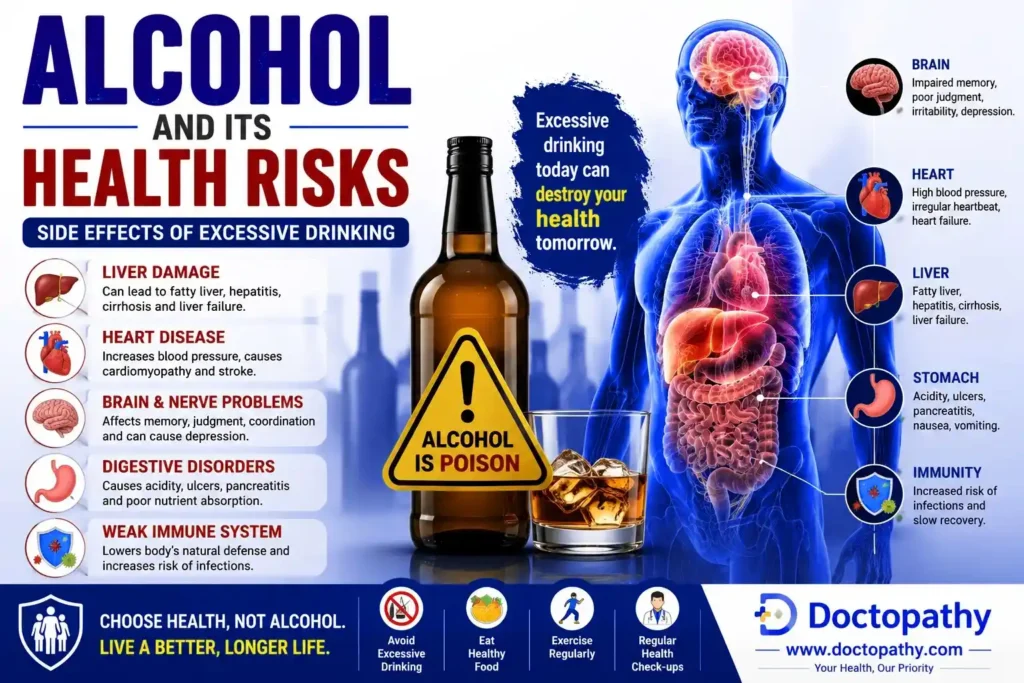
Excessive alcohol consumption can seriously affect your physical and mental health. While some people drink occasionally, frequent or heavy drinking can damage vital organs such as the liver, heart, brain and digestive system. Research shows that alcohol increases the risk of liver disease, high blood pressure, several types of cancer and mental health problems and the risk generally rises as alcohol consumption increases.
In this article, you’ll learn about the short-term and long-term effects of alcohol, warning signs of alcohol dependence and practical ways to reduce alcohol-related harm.
What Happens to Your Body After Drinking Alcohol?
Alcohol enters the bloodstream quickly through the stomach and small intestine and reaches the brain within minutes. It affects the central nervous system, slowing communication between the brain and the body, which can impair judgment, coordination and reaction time.
Change block type or style
Move Paragraph block from position 11 up to position 10
Block Paragraph is at the end of the content and can’t be moved down
Change alignment
Change text alignment
Displays more block tools
The effects depend on several factors, including:
- The amount of alcohol consumed
- Body weight
- Age
- Sex
- Overall health
- Whether alcohol was consumed with food
Short-Term Side Effects of Alcohol
Even a single drinking session can produce noticeable effects.
Dizziness and poor coordination: Alcohol slows brain function, making it difficult to walk, drive or maintain balance safely.
Headache and dehydration: Alcohol increases urine production, which can lead to dehydration and hangover symptoms such as headache and fatigue.
Nausea and vomiting: Excessive drinking irritates the stomach lining and may cause vomiting or stomach discomfort.
Slurred speech and confusion: Heavy drinking can impair memory, slow speech and reduce decision-making ability.
Long-Term Health Risks of Alcohol
Regular or heavy alcohol use can damage nearly every organ in the body over time.
1. Liver Damage
The liver processes alcohol, so it is one of the first organs to be affected.
Long-term drinking may lead to:
- Fatty liver disease
- Alcoholic hepatitis
- Liver cirrhosis
- Liver failure
The risk increases with frequent and excessive alcohol consumption.
2. Brain and Mental Health Problems
Alcohol affects both brain structure and function.
Possible long-term effects include:
- Memory problems
- Difficulty concentrating
- Anxiety
- Depression
- Increased risk of alcohol dependence
Heavy alcohol use can also damage nerves, causing numbness or burning sensations in the hands and feet.
3. Heart and Blood Pressure Problems
Excessive drinking may increase the risk of:
- High blood pressure
- Heart disease
- Stroke
- Irregular heartbeat
Current evidence does not support starting alcohol consumption for heart health.
4. Digestive System Damage
Alcohol can irritate the digestive tract and interfere with nutrient absorption.
Common problems include:
- Gastritis
- Acid reflux
- Stomach ulcers
- Pancreatitis
- Poor nutrient absorption
5. Increased Cancer Risk
Research shows that alcohol consumption increases the risk of several cancers, including:
- Mouth cancer
- Throat cancer
- Esophageal cancer
- Liver cancer
- Breast cancer
- Colorectal cancer
The risk rises with increasing alcohol intake, and even lower levels of consumption can contribute to cancer risk.
How Alcohol Weakens the Immune System
Frequent alcohol use can reduce the body’s ability to fight infections.
This may increase the likelihood of:
- Colds
- Flu
- Pneumonia
- Slower recovery from illness
Signs of Alcohol Dependence
You should seek professional help if you experience:
- Difficulty controlling alcohol intake
- Drinking every day
- Needing more alcohol to achieve the same effect
- Withdrawal symptoms when stopping
- Alcohol affecting work or family life
Early treatment can significantly improve recovery outcomes.
How to Reduce Alcohol-Related Harm
If you choose to drink, these habits can help reduce risk:
- Avoid binge drinking.
- Drink water between alcoholic beverages.
- Never drink and drive.
- Eat food before drinking.
- Avoid mixing alcohol with certain medicines unless advised by a doctor.
- Seek medical support if quitting becomes difficult.
When to Seek Emergency Medical Help
Call emergency medical services immediately if someone who has been drinking experiences:
- Difficulty breathing
- Unconsciousness
- Repeated vomiting while unconscious
- Seizures
- Blue or pale skin
- Inability to wake up
These may be signs of alcohol poisoning, which is a medical emergency.
Conclusion
Alcohol can affect nearly every part of the body, from the brain and liver to the heart and digestive system. While occasional drinking may seem harmless to some people, the health risks generally increase with greater alcohol consumption, including a higher risk of liver disease, heart problems, certain cancers and mental health disorders.
If alcohol is becoming difficult to control, speaking with a qualified healthcare professional is the safest next step.
Dr. Parminder Singh (BEMS)