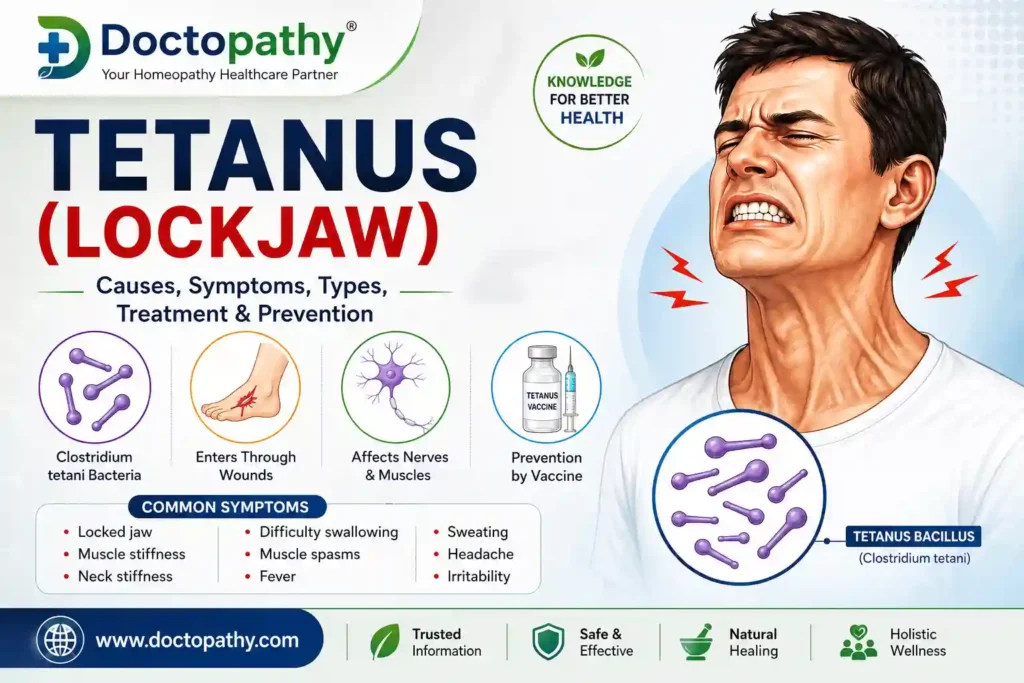
Tetanus is a serious bacterial infection that affects the nervous system. It is caused by bacteria called Clostridium tetani. These bacteria usually enter the body through cuts, wounds, burns or injuries caused by dirty or rusty objects.
Tetanus causes painful muscle stiffness and spasms. It mainly affects the jaw and neck muscles, making it difficult to open the mouth or swallow food. Because the jaw becomes tight or “locked,” tetanus is also called lockjaw.
Tetanus can become life-threatening if not treated quickly. However, proper vaccination and wound care can help prevent this disease.
What Causes Tetanus?
Tetanus happens when harmful bacteria enter the body through broken skin.
The infection may occur because of:
- Deep cuts or wounds
- Rusty nail injuries
- Burns
- Animal or insect bites
- Dirty wounds
- Crush injuries
- Surgical wounds
- Infected injections
- Compound fractures
- Unclean medical tools
The bacteria produce a toxin that attacks the nerves and muscles.
Types of Tetanus
There are four main types of tetanus.
1. Generalized Tetanus
This is the most common type of tetanus.
Symptoms usually begin with:
- Jaw stiffness
- Neck pain
- Muscle tightness
- Difficulty opening the mouth
Later, the patient may develop:
- Painful body spasms
- Breathing problems
- Seizures
- Severe muscle pain
2. Localized Tetanus
In this type, muscle spasms happen near the injured area.
Symptoms are usually mild, but the infection can become serious if treatment is delayed.
3. Cephalic Tetanus
This type mostly develops after a head or face injury.
Symptoms may include:
- Facial weakness
- Jaw stiffness
- Difficulty swallowing
- Nerve problems
Sometimes, cephalic tetanus can turn into generalized tetanus.
4. Neonatal Tetanus
Tetanus in newborn babies is called neonatal tetanus.
This usually happens when:
- The mother is not vaccinated
- Delivery conditions are not clean
- Unsterile tools are used to cut the umbilical cord
Neonatal tetanus is very dangerous for babies.
Symptoms of Tetanus
Symptoms may appear within a few days after infection.
Common symptoms include:
- Stiff muscles
- Painful muscle cramps
- Locked jaw
- Neck stiffness
- Difficulty swallowing
- Fever
- Sweating
- Drooling
- Headache
- Irritability
- Hand and foot spasms
- Fast heartbeat
- High blood pressure
- Seizures
Severe tetanus can also affect breathing muscles.
How Doctors Diagnose Tetanus
There is no special laboratory test for tetanus.
Doctors usually diagnose tetanus by:
- Checking symptoms
- Examining the wound
- Asking about recent injuries
Treatment of Tetanus
Tetanus needs emergency medical treatment.
Doctors may recommend:
- Staying in a quiet and dark room
- Soft food or liquid diet
- Proper wound cleaning
- Opening and cleaning closed wounds
Medicines commonly used include:
- Tetanus Immunoglobulin (TIG)
- Tetanus vaccine
- Antibiotics like Penicillin or Metronidazole
- Diazepam for muscle spasms
- Pain-relieving medicines
- IV fluids
Severe patients may need oxygen support or ICU care.
Prevention of Tetanus
Tetanus can be prevented easily with vaccination and proper wound care.
Prevention Tips
- Take tetanus vaccines on time
- Get booster doses regularly
- Clean wounds immediately
- Avoid dirty injections or tools
- Visit a doctor for deep wounds
Tetanus Vaccine
The tetanus vaccine gives strong protection against infection.
Children usually receive tetanus protection through:
- DPT vaccine
- Booster doses
Adults should take a booster dose every 10 years.
Pregnant woman should also get tetanus vaccination to protect newborn babies.
Complications of Tetanus
Without treatment, tetanus may cause:
- Breathing failure
- Broken bones from severe spasms
- Lung infection
- Heart problems
- Brain damage
- Death
Early treatment lowers the risk of complications.
Conclusion
Tetanus is a dangerous bacterial infection that affects the muscles and nerves. It usually enters the body through dirty wounds or injuries. The disease can cause severe muscle stiffness, painful spasms and breathing problems.
Quick treatment and proper vaccination are very important. Keeping wounds clean and taking booster vaccines on time can help prevent tetanus and its serious complications.
Tetanus Infection FAQs
Tetanus is a bacterial infection that causes muscle stiffness and painful spasms.
Tetanus tightens the jaw muscles, making it difficult to open the mouth.
No, tetanus does not spread from person to person.
Tetanus can be prevented through vaccination and proper wound cleaning.
Yes, severe tetanus can become life-threatening without treatment.
Medical Disclaimer:
This content is for educational purposes only and is not a substitute for professional medical advice, diagnosis, or treatment. Always consult a qualified healthcare provider for any medical concerns.