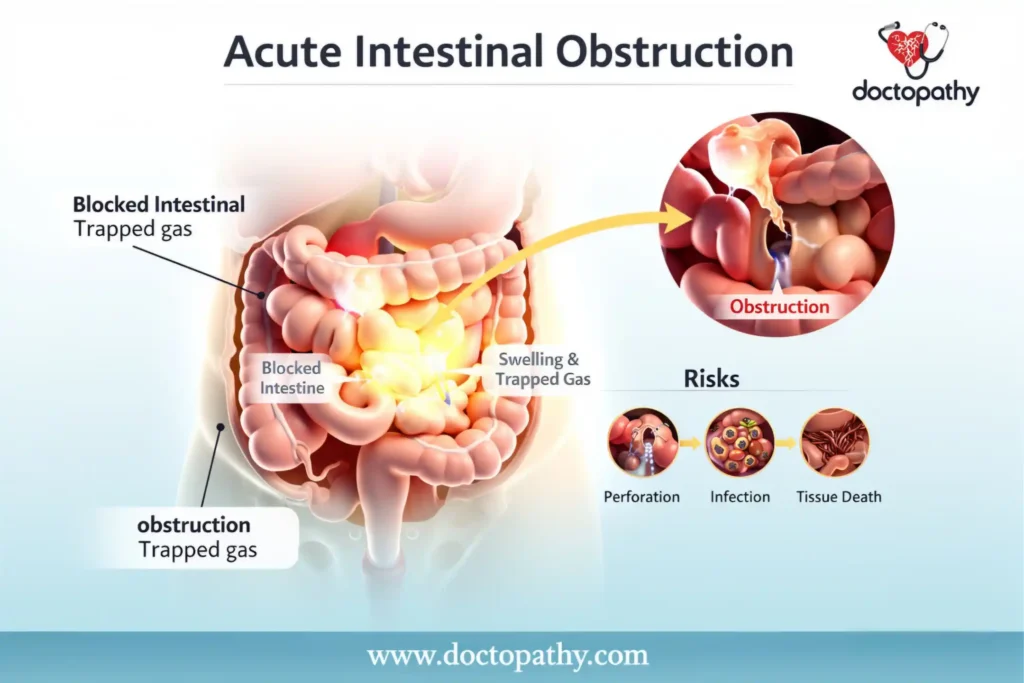
Acute intestinal obstruction is a serious medical emergency in which the normal passage of food, fluids, and gas through the intestines becomes blocked. This blockage can occur in either the small intestine or the large intestine and prevents the digestive system from functioning properly.
When the intestine becomes obstructed, food, liquid, and gas accumulate behind the blockage, leading to severe abdominal pain, vomiting, swelling of the abdomen, and inability to pass stool or gas. If left untreated, the blocked portion of the intestine may lose its blood supply and die, resulting in life-threatening complications.
Conditions such as intestinal perforation, volvulus (twisting of the intestine), strangulation, intussusception, and acute appendicitis are often associated with intestinal obstruction and require urgent medical attention.
Early diagnosis and timely treatment are essential to prevent complications and save the patient’s life.
Also read this post :- Continuous Hiccups: Causes, Symptoms, Risk Factors, Diagnosis, and Treatment
What is Intestinal Obstruction?
Intestinal obstruction occurs when a blockage prevents the normal movement of contents through the digestive tract. The blockage may be partial or complete and may occur in either the small intestine or the large intestine.
In a healthy digestive system, food moves through the intestines with the help of coordinated muscular contractions known as peristalsis. However, when an obstruction occurs, these movements cannot push food forward, causing accumulation of digestive contents.
As the obstruction continues, pressure increases inside the intestine, which may lead to infection, rupture, or damage to intestinal tissue.
Types of Intestinal Obstruction
1. Complete Intestinal Obstruction
In this condition, the intestine becomes completely blocked and no food, fluid, or gas can pass through the digestive tract. This is a life-threatening condition that requires immediate medical intervention.
2. Partial Intestinal Obstruction
In partial obstruction, some food and liquids are still able to pass through the intestine, but digestion is significantly slowed. Symptoms may develop gradually.
3. Intestinal Pseudo-Obstruction
Pseudo-obstruction occurs when symptoms of intestinal blockage are present but no physical obstruction exists.
This condition is also called paralytic ileus and occurs when the muscles or nerves of the intestine fail to function properly. As a result, the movement of food and fluid slows or stops even though the intestine is not physically blocked.
Also read this post :- Allergy – Causes, Symptoms & Homeopathic Treatment Guide
Causes of Intestinal Obstruction
The causes of intestinal obstruction vary depending on age and underlying health conditions.
1. Intestinal Adhesions
Adhesions are bands of fibrous scar tissue that can form inside the abdomen after surgery.
These tissues may connect different parts of the intestine or abdominal organs, causing twisting or blockage of the bowel.
Adhesions are one of the most common causes of intestinal obstruction in adults.
2. Hernia
A hernia occurs when part of the intestine pushes through a weak area in the abdominal wall.
This protruding intestine can become trapped and lead to obstruction or strangulation.
3. Colon Cancer
Tumors in the colon may gradually narrow the intestinal passage and eventually cause blockage.
Colon cancer is a significant cause of intestinal obstruction in older people.
4. Intussusception
Intussusception is more common in children and occurs when one part of the intestine slides into another section, similar to the collapsing of a telescope.
This condition can block the movement of food and reduce blood supply to the affected area.
5. Volvulus
Volvulus occurs when a portion of the intestine twists around itself.
This twisting blocks the passage of intestinal contents and may also cut off blood supply, making it a surgical emergency.
6. Impacted Stool
Severe constipation may cause hardened stool to block the intestine.
This is more common in older people individuals or those with chronic digestive problems.
7. Inflammatory Bowel Diseases
Conditions such as Crohn’s disease can cause inflammation and narrowing of the intestines.
Chronic inflammation may lead to scarring and obstruction.
8. Diverticulitis
Diverticulitis occurs when small pouches in the intestinal wall become inflamed or infected.
This inflammation may narrow the intestinal passage and cause blockage.
Also read this post :- Chronic / Acute Constipation: Causes, Symptoms, Tests & Treatment Guide
Symptoms of Intestinal Obstruction
The symptoms of intestinal obstruction often appear suddenly and may worsen quickly.
Common symptoms include:
- Severe abdominal pain or cramping
- Vomiting
- Loss of appetite
- Constipation
- Inability to pass gas
- Abdominal swelling or bloating
- Irregular bowel movements
- Nausea
- Dehydration
In severe cases, fever, rapid heart rate, and shock may occur.
If these symptoms appear, immediate medical care is necessary.
Complications of Untreated Intestinal Obstruction
If intestinal obstruction is not treated promptly, several serious complications may develop.
Tissue Death
When blood flow to the intestine is blocked, intestinal tissue may die. Dead tissue can lead to infection or perforation.
Intestinal Perforation
The increased pressure inside the intestine may cause a tear or hole in the intestinal wall.
This allows bacteria to leak into the abdominal cavity and cause severe infection.
Peritonitis
Peritonitis is a dangerous infection of the abdominal lining that can be life-threatening without immediate treatment.
Diagnosis of Intestinal Obstruction
Doctors use several tests and examinations to diagnose intestinal obstruction.
Physical Examination
The doctor checks the abdomen for swelling, tenderness, and abnormal bowel sounds.
X-Ray of the Abdomen
An abdominal X-ray taken in an erect posture can show air-fluid levels and blocked intestinal loops.
Ultrasound (USG)
Ultrasound of the whole abdomen helps detect swelling, obstruction, or abnormal masses.
Blood Tests
Blood tests may include:
- Blood grouping and cross-matching
- Infection markers
- Electrolyte levels
These tests help prepare for emergency treatment if needed.
Emergency Treatment Protocol
Acute intestinal obstruction requires urgent medical management.
The initial treatment focuses on stabilizing the patient, preventing infection, and relieving the obstruction.
Antibiotic Therapy
- Inj. Ciprofloxacin – IV Stat and twice daily
- Inj. Metronidazole – IV Stat and three times daily
These antibiotics help control infection.
Acid Suppression
- Inj. Omeprazole – IV Stat and twice daily
This medication reduces stomach acid and protects the digestive tract.
Pain and Spasm Control
- Inj. Algin (5 mg) – IM Stat and three times daily
This helps relieve abdominal spasms and discomfort.
In Case of Severe Constipation
If the patient has a prolonged history of no defecation, the following may be used:
- Glycerine suppository (4 sticks) per rectum (P/R) Stat
This helps stimulate bowel movement.
Also read this post :- Types of Diabetes Mellitus: Causes, Symptoms, and Classification
Surgical Treatment
In many cases, surgery may be required to remove the obstruction.
Surgical procedures may include:
- Removing adhesions
- Repairing hernias
- Removing tumors
- Correcting volvulus or twisted intestines
- Treating intussusception
Surgery is often necessary when blood supply to the intestine is compromised.
Prevention of Intestinal Obstruction
Although some causes cannot be prevented, certain lifestyle habits may reduce the risk.
Helpful prevention tips include:
- Maintaining a healthy diet rich in fiber
- Drinking adequate water
- Avoiding chronic constipation
- Treating digestive diseases early
- Following medical advice after abdominal surgery
Regular medical check-ups may also help detect conditions that could lead to obstruction.
When to Seek Emergency Care
Immediate medical attention is required if a person experiences:
- Severe abdominal pain
- Persistent vomiting
- Inability to pass stool or gas
- Swollen abdomen
- Fever with abdominal pain
These symptoms may indicate a life-threatening intestinal obstruction.
Conclusion
Acute intestinal obstruction is a serious and potentially life-threatening medical condition. It occurs when the normal passage of food, fluids, and gas through the intestine is blocked.
Common causes include intestinal adhesions, hernias, tumors, volvulus, and inflammatory diseases. Symptoms such as severe abdominal pain, vomiting, constipation, and abdominal swelling require immediate medical evaluation.
Early diagnosis through imaging tests and prompt treatment with medications or surgery can prevent complications and improve patient outcomes.
Timely medical care is essential to protect intestinal health and prevent life-threatening complications.
Also read this post :- Diarrhoea in Children (Infantile Diarrhoea): Causes, Symptoms, Dehydration & Treatment
FAQs: Acute Intestinal Obstruction
What are the early signs of intestinal obstruction?
Early signs of intestinal obstruction include abdominal pain, bloating, nausea, vomiting, constipation, and difficulty passing gas. These symptoms may gradually worsen if the blockage is not treated.
How serious is an intestinal obstruction?
Intestinal obstruction is a serious medical emergency. If untreated, it can lead to complications such as intestinal perforation, infection, tissue death, and life-threatening conditions like peritonitis.
Can intestinal obstruction resolve without surgery?
Some cases of partial intestinal obstruction may improve with medications, fluid therapy, and bowel rest. However, complete obstruction or complications often require surgical treatment.
What foods should be avoided during intestinal obstruction?
Patients with intestinal obstruction should avoid high-fiber foods, raw vegetables, seeds, nuts, and heavy meals until the condition is treated. Doctors may recommend a liquid or soft diet.
How long can someone live with intestinal obstruction?
The survival time depends on the severity of the blockage. Complete intestinal obstruction can become life-threatening within a short period if medical treatment is not provided promptly.
Is intestinal obstruction painful?
Yes, intestinal obstruction usually causes severe abdominal pain or cramping. The pain may come in waves and may be associated with nausea, vomiting, and abdominal swelling.
Can constipation cause intestinal obstruction?
Severe or long-term constipation may lead to fecal impaction, which can block the intestine and cause intestinal obstruction, especially in older people patients.
How is intestinal obstruction diagnosed by doctors?
Doctors diagnose intestinal obstruction through physical examination, abdominal X-rays, ultrasound, CT scans, and blood tests to identify the location and severity of the blockage.
What complications can occur from untreated bowel obstruction?
Untreated bowel obstruction can cause serious complications such as intestinal rupture, infection, dehydration, sepsis, and death if emergency treatment is not provided.
Can intestinal obstruction be prevented?
Some cases can be prevented by maintaining good digestive health, eating a balanced diet, drinking plenty of water, preventing constipation, and seeking medical treatment for abdominal diseases early.
Medical Disclaimer:
The information provided on this website is for educational purposes only and should not be considered medical advice. Always consult a qualified healthcare professional for diagnosis and treatment of any medical condition.