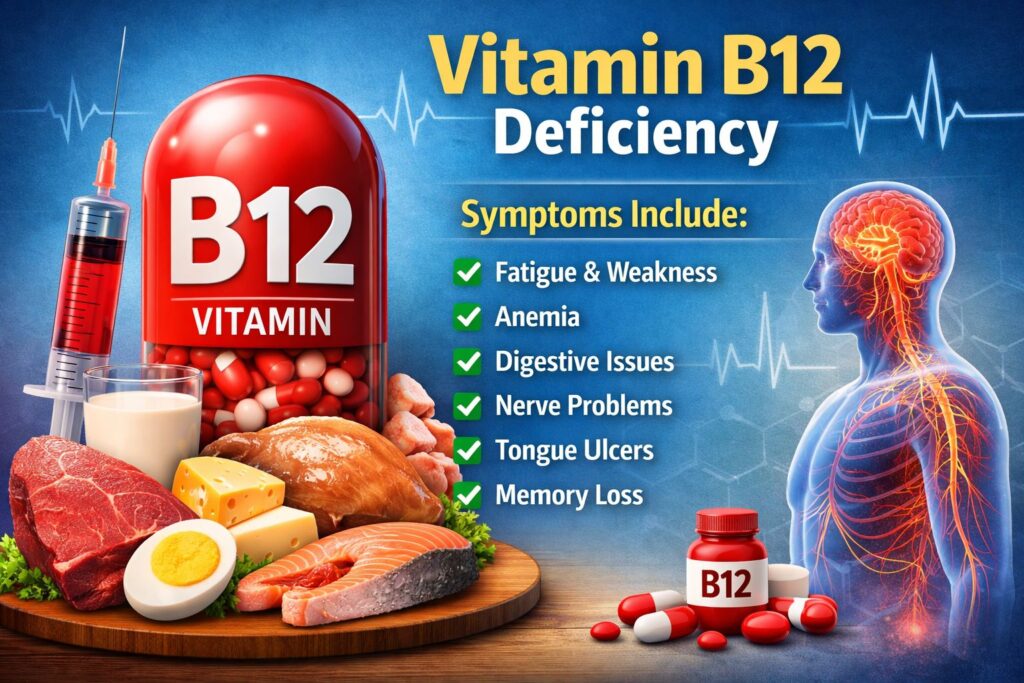
Information about Vitamin B12
Vitamin B12, also known as cobalamin, is an essential water-soluble vitamin required for proper functioning of the nervous system, formation of red blood cells, and DNA synthesis. It plays a crucial role in maintaining brain health, nerve strength, and energy levels. Deficiency of Vitamin B12 can lead to serious health complications affecting multiple organs of the body.
Vitamin B12 deficiency is common in people with poor diet, digestive disorders, elderly individuals, vegetarians, and those with absorption problems.
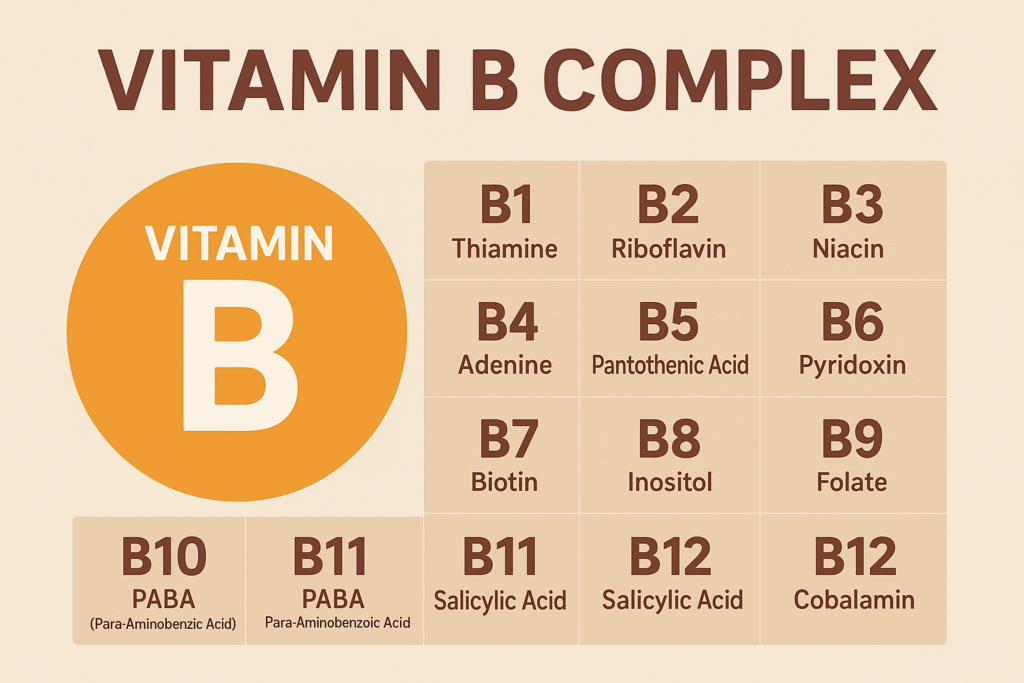
Also read this post :- Vitamin B Complex – Parts, Names, and Health Benefits
Functions of Vitamin B12 in the Body
Vitamin B12 performs several vital functions, including:
- Formation of healthy red blood cells
- Maintenance of nervous system health
- DNA synthesis and cell production
- Brain function and mental clarity
- Energy production and metabolism
- Support for heart health
- Proper functioning of liver and digestive system
Symptoms of Vitamin B12 Deficiency
Vitamin B12 deficiency can cause a wide range of symptoms, including:
General Symptoms
- Weakness and fatigue
- Loss of appetite
- Weight loss
- Pale or yellowish skin
- Dizziness and lightheadedness
Digestive Symptoms
- Constipation
- Diarrhea or frothy stools in children
- Indigestion and dyspepsia
- Gas and bloating
- Tongue ulcers and tongue swelling (Glossitis)
- Intestinal weakness
Nervous System Symptoms
- Nerve weakness
- Tingling or numbness in hands and feet
- Mental confusion
- Irritability
- Memory problems
- Difficulty concentrating
Blood-Related Symptoms
- Anemia
- Macrocytic anemia
- Pernicious anemia
- Blood disorders
Heart-Related Symptoms
- Heart palpitations
- Weakness of heart muscles
Reproductive and Hormonal Symptoms
- Premenstrual disorders
- Menstrual irregularities
- Reproductive organ dysfunction
- Pregnancy-related complications
- Postpartum mental confusion
Causes of Vitamin B12 Deficiency
Common causes include:
- Poor diet, especially vegetarian or vegan diet
- Malabsorption disorders
- Stomach or intestinal diseases
- Liver disorders
- Pernicious anemia
- Long-term use of certain medications
- Alcohol abuse
- Aging
- Gastrointestinal surgeries
Risk Factors
People at higher risk include:
- Vegetarians and vegans
- Elderly individuals
- Pregnant women
- People with digestive disorders
- Patients with chronic illnesses
- Individuals with liver disease
Diagnosis
Vitamin B12 deficiency is diagnosed through:
- Blood tests (Vitamin B12 level)
- Complete blood count (CBC)
- Homocysteine and methylmalonic acid tests
- Medical history and symptoms evaluation
Treatment of Vitamin B12 Deficiency
Treatment depends on the severity and cause.
Common treatments include:
- Vitamin B12 supplements
- Vitamin B12 injections (for severe deficiency)
- Dietary changes
- Treatment of underlying medical conditions
Symptoms often improve after proper treatment, but nerve damage may take longer to recover.
Also read this post :- What is vitamin B1 (thiamine hydrochloride)? Important facts about vitamin B1. Diseases caused by vitamin B1 deficiency.
Best Food Sources of Vitamin B12
Vitamin B12 is naturally found in animal-based foods such as:
- Milk and dairy products
- Eggs
- Fish
- Meat
- Chicken
- Liver
- Fortified cereals
Vegetarians may require supplements or fortified foods.
Prevention Tips
To prevent Vitamin B12 deficiency:
- Eat a balanced diet
- Include B12-rich foods regularly
- Take supplements if recommended by a doctor
- Monitor B12 levels if you are at risk
- Treat digestive disorders early
When to See a Doctor
Consult a doctor if you experience:
- Persistent fatigue
- Numbness or tingling
- Anemia symptoms
- Memory problems
- Digestive issues
Early diagnosis and treatment can prevent complications.
Conclusion
Vitamin B12 is essential for overall health, especially for the nervous system, blood formation, and energy production. Deficiency can lead to serious health problems, including anemia, nerve damage, and mental health issues. Early diagnosis, proper nutrition, and supplementation can effectively treat and prevent Vitamin B12 deficiency.
Also read this post :- Vitamin B2 (Riboflavin) Deficiency: Symptoms, Diseases, Sources & Treatment
FAQs
What happens when Vitamin B12 is low?
Low Vitamin B12 can cause anemia, fatigue, nerve damage, weakness, and mental confusion.
Who is at risk of Vitamin B12 deficiency?
Vegetarians, elderly people, pregnant women, and people with digestive disorders are at higher risk.
Can Vitamin B12 deficiency be cured?
Yes, it can be treated with supplements, injections, and proper diet.
How long does it take to recover from B12 deficiency?
Recovery may take a few weeks to months depending on severity.
Which food is richest in Vitamin B12?
Liver, fish, meat, eggs, and dairy products are rich sources.
Medical Disclaimer
This article is for informational purposes only and does not replace professional medical advice. Always consult a qualified healthcare provider for diagnosis and treatment.