Diabetes mellitus is a chronic metabolic disorder characterized by high blood glucose levels due to defects in insulin production, insulin action, or both. It is one of the most common lifestyle-related diseases worldwide. Based on cause, onset, and clinical features, diabetes mellitus is classified into several types.
Also read this post :- What Is Diabetes? Causes, Symptoms, and Long-Term Effects
Main Types of Diabetes Mellitus
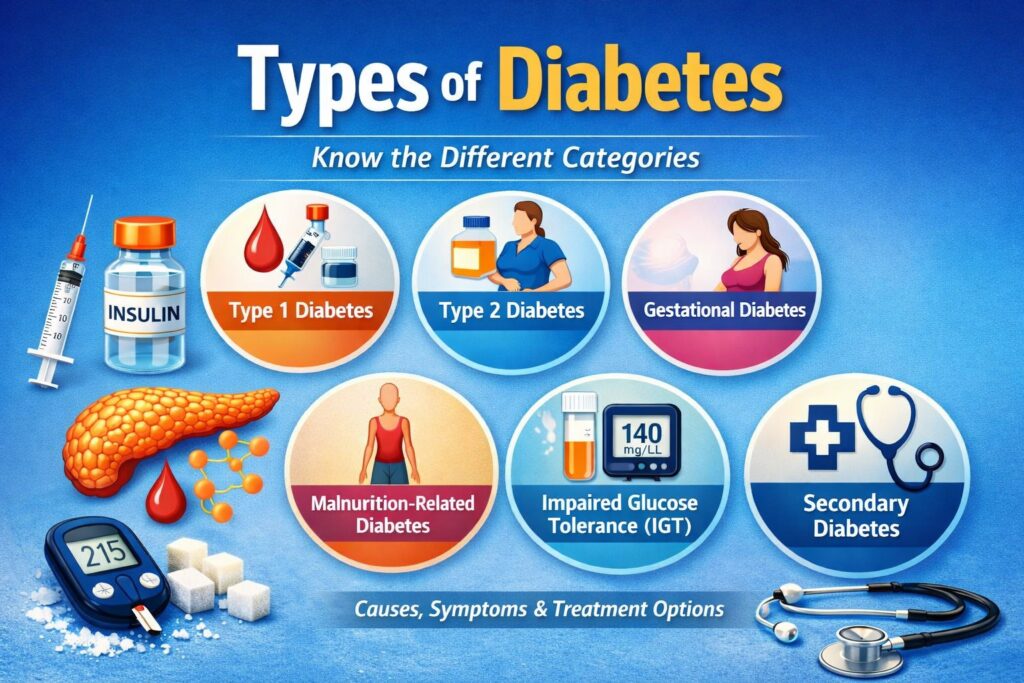
Diabetes mellitus can be broadly divided into the following categories:
- Type 1 Diabetes Mellitus (IDDM – Insulin-Dependent Diabetes Mellitus)
- Type 2 Diabetes Mellitus (NIDDM – Non-Insulin-Dependent Diabetes Mellitus)
- Malnutrition-Related Diabetes Mellitus (MRDM)
- Impaired Glucose Tolerance (IGT)
- Gestational Diabetes Mellitus (GDM)
- Secondary Diabetes Mellitus
1. Type 1 Diabetes Mellitus (IDDM)
Type 1 diabetes is an autoimmune disease in which the pancreas fails to produce insulin. As a result, glucose cannot enter the body’s cells to provide energy, leading to increased blood sugar levels.
Key Features:
- Usually occurs in children and adolescents
- Also called juvenile-onset diabetes
- Caused by autoimmune destruction of pancreatic beta cells
- Patients require lifelong insulin injections
- Sudden weight loss is common
- High risk of ketoacidosis if insulin is stopped
2. Type 2 Diabetes Mellitus (NIDDM)
Type 2 diabetes accounts for approximately 90% of all diabetes cases. In this condition, insulin is produced by the pancreas but either in insufficient amounts or the body becomes resistant to its action.
Key Features:
- Common in adults and obese individuals
- Strong genetic predisposition
- Gradual onset with mild or no early symptoms
- Associated with sedentary lifestyle and unhealthy diet
- Managed through weight loss, diet control, exercise, and oral medications
- Insulin therapy may be required in advanced stages
3. Malnutrition-Related Diabetes Mellitus (MRDM)
MRDM is commonly seen in developing countries like India, especially among malnourished adolescents and young adults aged 15–30 years.
Key Features:
- Associated with long-term malnutrition
- Inadequate insulin production by the pancreas
- Patients require insulin injections
- Unlike Type 1 diabetes, ketoacidosis is rare even if insulin is discontinued
4. Impaired Glucose Tolerance (IGT)
Impaired Glucose Tolerance is a pre-diabetic condition. When a person consumes 75 grams of oral glucose and the blood glucose level falls between normal and diabetic range, the condition is termed IGT.
Also read this post :- Tinea Cruris (Jock Itch): Causes, Symptoms, Diagnosis and Treatment
Key Features:
- No obvious symptoms of diabetes
- Increased risk of developing Type 2 diabetes in the future
- Can be reversed with lifestyle modifications
- Early diagnosis helps prevent diabetes
5. Gestational Diabetes Mellitus (GDM)
Gestational diabetes occurs during pregnancy and affects about 2–3% of pregnant women.
Key Features:
- Develops during pregnancy due to hormonal changes
- Increases risk of pregnancy complications
- Higher chance of mother developing Type 2 diabetes later
- Child may also have a higher risk of obesity and diabetes in the future
- Blood sugar usually returns to normal after delivery
6. Secondary Diabetes Mellitus
Secondary diabetes develops as a result of other medical conditions or medications that interfere with insulin production or action.
Causes of Secondary Diabetes:
(1) Pancreatic Diseases
- Chronic pancreatitis
- Pancreatic cancer
- Surgical removal of pancreas
(2) Endocrine Disorders
- Acromegaly
- Cushing’s syndrome
(3) Drug-Induced Diabetes
- Thiazide diuretics
- Glucocorticoid steroids
- Oral contraceptive pills
(4) Insulin Receptor Defects
- Presence of insulin receptor antibodies
(5) Insulin Secretion Abnormalities
- Defective or insufficient insulin release
Conclusion
Diabetes mellitus is a complex disease with multiple types and causes. Early diagnosis, lifestyle modification, and proper medical management play a crucial role in preventing complications. Understanding the different types of diabetes helps in choosing the right treatment and improving quality of life.
Also read this post :- Prescription Abbreviations: Weights, Measures & Common Medical Terms
FAQs: Types of Diabetes
What are the main types of diabetes?
The main types of diabetes include Type 1 Diabetes (insulin-dependent), Type 2 Diabetes (non-insulin-dependent), Gestational Diabetes (during pregnancy), Malnutrition-Related Diabetes (MRDM), Impaired Glucose Tolerance (IGT), and Secondary Diabetes caused by other medical conditions or medications.
What is the difference between Type 1 and Type 2 diabetes?
Type 1 diabetes occurs when the pancreas cannot produce insulin and usually starts in childhood or adolescence. Type 2 diabetes occurs when the body cannot use insulin effectively or produces insufficient insulin, often developing in adults with obesity or sedentary lifestyle.
What is gestational diabetes?
Gestational diabetes occurs during pregnancy due to hormonal changes. It affects 2–3% of pregnant women and increases the risk of complications for both mother and baby.
Can impaired glucose tolerance (IGT) lead to diabetes?
Yes, IGT is a pre-diabetic condition. Patients with IGT may develop Type 2 diabetes if lifestyle changes such as diet, exercise, and weight management are not implemented.
What is malnutrition-related diabetes (MRDM)?
MRDM is seen in malnourished adolescents and young adults, primarily in developing countries. The pancreas cannot produce enough insulin, and patients often require insulin therapy.
What causes secondary diabetes?
Secondary diabetes occurs due to other medical conditions or treatments, including pancreatic diseases, endocrine disorders (like Cushing’s syndrome), certain medications (steroids, birth control pills), or insulin receptor abnormalities.
How can diabetes be managed?
Diabetes management includes lifestyle changes such as a healthy diet, regular exercise, weight management, monitoring blood sugar levels, oral medications, and insulin therapy if required. Early detection helps prevent complications.
Are all types of diabetes hereditary?
Type 2 diabetes has a strong genetic component, while Type 1 diabetes may also have genetic and autoimmune causes. Gestational and secondary diabetes are usually not hereditary.