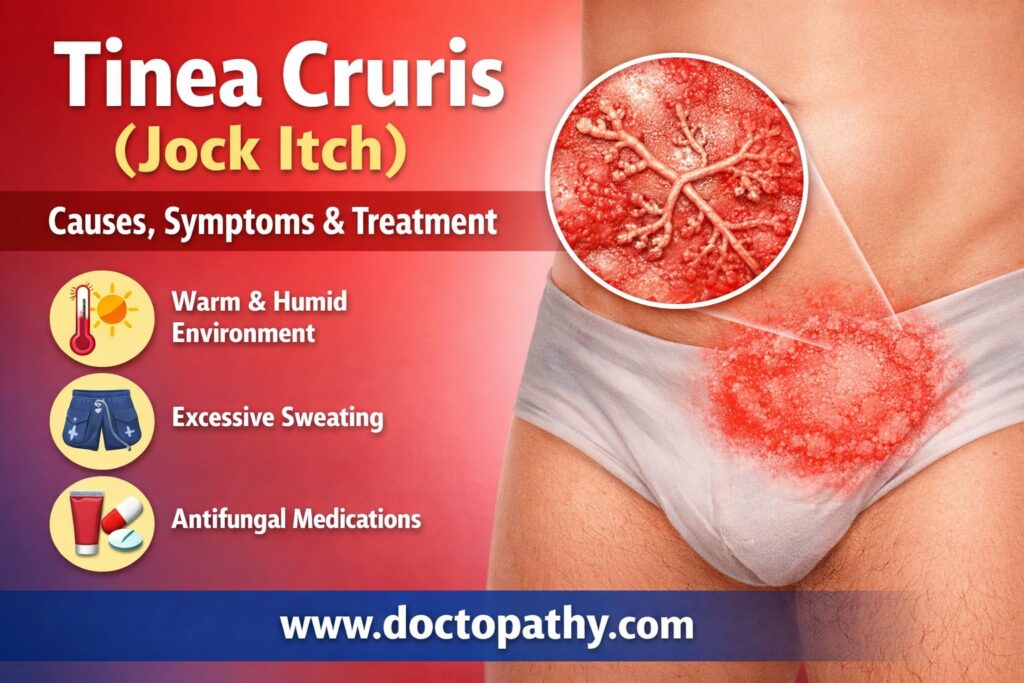
Tinea Cruris is a common fungal infection of the skin that mainly affects the groin area, buttocks, inner thighs, and private parts. It is commonly known as Jock Itch because it frequently occurs in people who sweat heavily, especially athletes.
This infection is caused by dermatophyte fungi that grow easily in warm, moist environments. Although it is not a life-threatening condition, it can cause severe itching, redness, and discomfort if left untreated.
Also read this post :- Axillary Abscess: Causes, Symptoms, Treatment, and Prevention
What is Tinea Cruris?
Tinea Cruris is a superficial fungal infection affecting the skin folds of the groin region. The fungus thrives in humid and sweaty conditions, making individuals who sweat excessively or are overweight more susceptible.
The infection usually begins as a small red patch and gradually spreads to form circular or ring-shaped rashes on the skin.
Symptoms of Tinea Cruris
The symptoms of Tinea Cruris may vary from mild to severe depending on the infection stage.
Common symptoms include:
- Red, circular rash in the groin area
- Severe itching in inner thighs or buttocks
- Burning sensation on affected skin
- Flaky or scaly skin
- Skin cracking or crust formation
- Rash spreading outward with clear center and raised borders
In many cases, symptoms worsen with sweating, tight clothing, or friction.
Also read this post :- Traumatic Rupture of Tympanic Membrane (Perforated Eardrum): Causes, Symptoms, and Treatment
Causes of Tinea Cruris
Tinea Cruris develops when fungi multiply in warm and moist skin areas. Several factors increase the risk of infection.
Main Causes
- Excessive sweating
- Staying in hot and humid environments
- Wearing tight or wet clothes
- Poor personal hygiene
- Obesity
- Weak immune system
Other Risk Factors
- Using someone else’s towel or clothing
- Frequent use of public bathrooms
- Contact with an infected person
- Contact with infected animals
- Wearing synthetic or low-quality fabrics
Diagnosis
Doctors usually diagnose Tinea Cruris through physical examination of the skin. In some cases, laboratory tests are recommended to confirm the infection.
Recommended Test
Fungal Culture Test
This test helps identify the type of fungus causing the infection so that appropriate treatment can be prescribed.
Treatment of Tinea Cruris
Tinea Cruris is usually treated with antifungal medications. Treatment may include topical creams or oral medicines depending on the severity.
Topical Antifungal Creams
Apply twice daily for 3–4 weeks:
- Clotrimazole 1% cream
- Miconazole 2% cream
- Ketoconazole 2% cream
Oral Antifungal Medicines
In severe or persistent cases:
- Terbinafine 250 mg tablet – once daily
- Griseofulvin 500 mg tablet – once daily
Always consult a qualified doctor before taking oral antifungal medicines.
Prevention Tips
You can reduce the risk of Tinea Cruris by following simple hygiene practices:
- Keep the groin area clean and dry
- Wear loose cotton clothing
- Change sweaty clothes immediately
- Avoid sharing towels, underwear, or clothing
- Maintain a healthy body weight
- Use antifungal powder if you sweat excessively
When to See a Doctor
Consult a doctor if:
- The rash spreads rapidly
- Symptoms persist for more than 2 weeks
- There is severe itching or pain
- Over-the-counter medicines do not work
Early treatment helps prevent the infection from spreading to other body parts.
Also read this post :- Treatment of Scabies with Homeopathic Medicine
Conclusion
Tinea Cruris (Jock Itch) is a common fungal infection that affects the groin, inner thighs, and surrounding skin areas. It mainly occurs in people who sweat excessively, live in hot and humid environments, or wear tight and damp clothing. Although it is not a serious disease, it can cause itching, redness, irritation, and discomfort if left untreated.
Early diagnosis and proper treatment with topical antifungal creams or oral antifungal medicines can effectively cure the infection within a few weeks. Maintaining good personal hygiene, keeping the affected area dry, and avoiding sharing personal items are important steps to prevent recurrence.
By following proper treatment and preventive measures, most cases of Tinea Cruris can be easily managed and prevented from spreading to other parts of the body.
Frequently Asked Questions (FAQs)
Is Tinea Cruris contagious?
Yes, it can spread through direct skin contact or sharing personal items like towels and clothes.
How long does Tinea Cruris take to heal?
With proper treatment, it usually heals within 2–4 weeks.
Can sweating cause Tinea Cruris?
Yes, excessive sweating creates a moist environment that allows fungi to grow.
Can Tinea Cruris come back?
Yes, recurrence is possible if hygiene is poor or the area remains moist.
Is Tinea Cruris a serious disease?
No, it is generally not dangerous, but it should be treated to prevent discomfort and spreading.
Medical Disclaimer:
The information provided on Doctopathy is for educational and informational purposes only. It is not intended as a substitute for professional medical advice, diagnosis, or treatment. Always consult a qualified healthcare professional or physician before starting any medication or treatment.