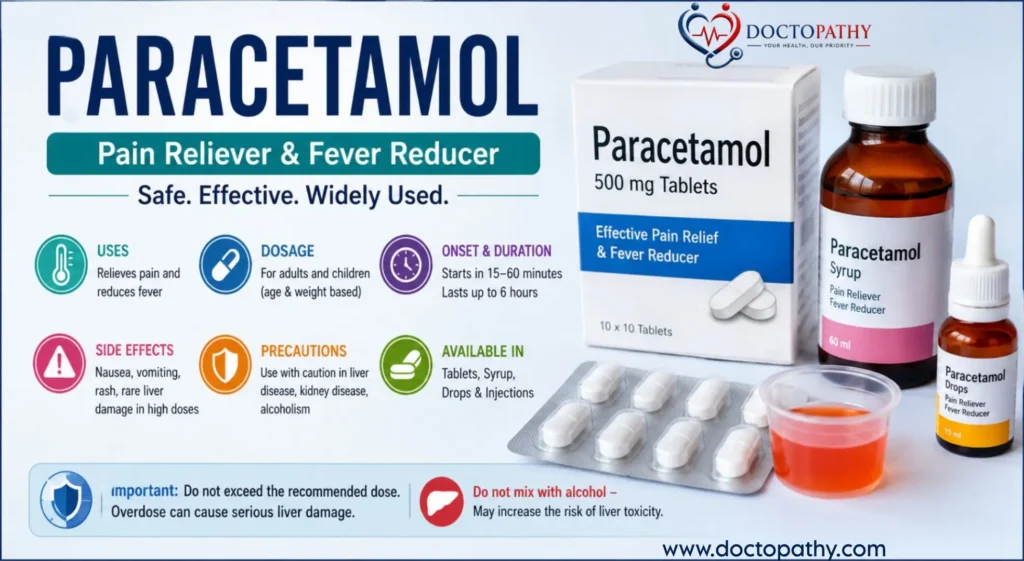
Paracetamol is one of the most commonly used medicines for relieving pain and reducing fever. It belongs to the class of medicines known as Non-Opioid Analgesics. It is widely used because it is generally safe and effective when taken in the recommended dose.
Uses of Paracetamol
Paracetamol is used for:
- Fever
- Headache
- Toothache
- Muscle pain
- Joint pain
- Body aches
- Mild to moderate pain
Who Should Avoid Paracetamol?
Paracetamol should not be used by people who have:
- Known hypersensitivity or allergy to paracetamol
- Severe liver disease unless advised by a doctor
Dosage of Paracetamol
Adults
- 500 mg to 1 gram per dose
- Maximum 4 grams (4000 mg) per day
Children
3 Months to 1 Year
- 60–120 mg per dose
1 to 5 Years
- 120–250 mg per dose
6 to 12 Years
- 250–500 mg per dose
Weight-Based Dose
- 10 mg per kg body weight
- Can be repeated every 4–6 hours if required
Important: Always follow a doctor’s advice when giving paracetamol to children.
How Quickly Does Paracetamol Work?
- Starts working within 15 to 60 minutes
- Effect lasts for about 6 hours
Available Forms of Paracetamol
Paracetamol is available as:
- Tablets
- Syrup
- Drops
- Injections
Side Effects of Paracetamol
Paracetamol is generally well tolerated and side effects are uncommon.
Possible side effects include:
- Nausea
- Vomiting
- Stomach pain
- Skin rash
- Leukopenia (reduced white blood cell count) in rare cases
Serious Side Effect
Taking very high doses of paracetamol can cause:
- Liver damage
- Hepatotoxicity
- Liver necrosis
- Liver failure
- Death in severe overdose cases
Special Precautions
Use paracetamol carefully in people with:
- Liver disease
- Kidney disease
- Chronic alcoholism
- Analgesic nephropathy
Patients with these conditions should consult a healthcare professional before using paracetamol.
Drug Interactions
Warfarin and Other Anticoagulants
Regular use of high doses of paracetamol may increase the effect of anticoagulants and raise the risk of bleeding.
Zidovudine
Using paracetamol with zidovudine may increase the risk of side effects.
Metoclopramide
Metoclopramide may increase the absorption of paracetamol and raise its blood levels.
Pethidine and Propantheline
These medicines may decrease the absorption of paracetamol.
Alcohol
Alcohol increases the risk of liver toxicity associated with paracetamol.
What to Do in Case of Paracetamol Overdose?
Paracetamol overdose is a medical emergency.
Treatment may include:
- Gastric lavage (stomach wash)
- Supportive and symptomatic treatment
- Intravenous (I.V.) Acetylcysteine
- Oral Methionine
Antidote
Acetylcysteine is the specific antidote for paracetamol poisoning and should ideally be given within 24 hours of overdose.
Use in Children
- Use with extreme caution in infants younger than 3 months.
- Small doses should be used in children up to 1 year of age.
- Always use the correct measuring device for syrups and drops.
Paracetamol During Breastfeeding
There is no evidence that paracetamol is harmful during breastfeeding when used in recommended doses.
Paracetamol During Pregnancy
Occasional use of paracetamol during pregnancy has not been shown to cause harm when taken as directed.
However, pregnant women should always consult a healthcare professional before taking any medication.
Alcohol and Paracetamol
Long-term excessive alcohol consumption increases the risk of liver injury from paracetamol.
Therefore:
- Avoid excessive alcohol intake while taking paracetamol.
- People who drink heavily should consult a doctor before using this medicine.
Key Takeaway
Paracetamol is a safe and effective medicine for fever and pain relief when used correctly. However, taking more than the recommended dose can lead to serious liver damage. Always follow the prescribed dosage, avoid excessive alcohol consumption and seek immediate medical help if an overdose is suspected.
Medical Disclaimer:
This article is for educational purposes only and should not replace professional medical advice. Always consult a qualified healthcare provider before starting or changing any medication.