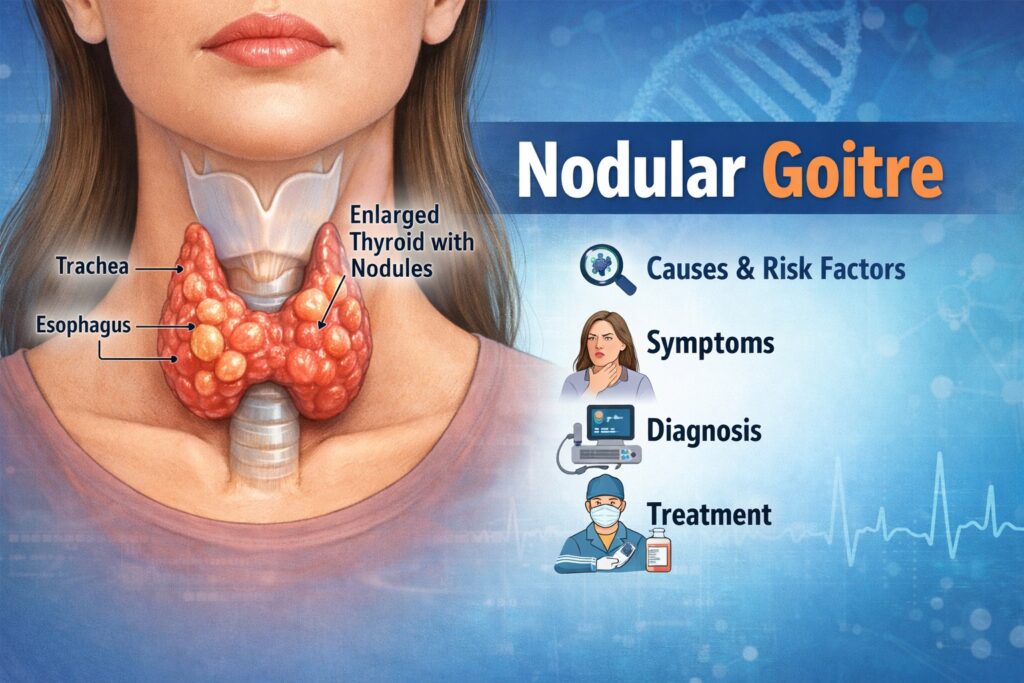
Nodular goitre is a thyroid-related condition in which the thyroid gland enlarges and develops one or more lumps (nodules). The thyroid gland is located in the front of the neck and plays an essential role in regulating metabolism by producing thyroid hormones. When the gland enlarges, it can cause visible swelling in the neck and may lead to breathing or swallowing difficulties.
Goitre is also known as Galangand, and the most common cause is iodine deficiency. However, hormonal imbalance, thyroid disorders, and abnormal tissue growth can also cause nodular goitre.
Also read this post :- Hoarseness of Voice: Symptoms, Causes, and Treatment
What is Nodular Goitre?
Nodular goitre is a condition characterized by enlargement of the thyroid gland along with the formation of nodules or lumps. These nodules may be:
- Single (Solitary nodule)
- Multiple (Multinodular goitre)
Some nodules produce excess thyroid hormone, while others do not affect hormone levels.
As the thyroid enlarges, it can press against nearby structures such as:
- Windpipe (trachea)
- Food pipe (esophagus)
- Nerves in the neck
This pressure can cause discomfort and functional problems.
Causes of Nodular Goitre
Several factors can contribute to nodular goitre, including:
1. Iodine Deficiency
Iodine is essential for thyroid hormone production. When iodine is deficient, the thyroid enlarges to compensate.
2. Thyroid Hormone Imbalance
Both excess and deficiency of thyroid hormones can cause thyroid enlargement.
3. Aging
The risk increases with age, especially in people over 50.
4. Genetic Factors
Family history of thyroid disorders increases risk.
5. Thyroid Nodules
Abnormal tissue growth may form nodules.
6. Autoimmune Disorders
Conditions such as Graves’ disease or Hashimoto’s thyroiditis can cause goitre.
7. Hormonal Changes
Women are more likely to develop goitre due to hormonal fluctuations.
Symptoms of Nodular Goitre
Symptoms depend on the size and type of goitre. Common symptoms include:
- Swelling in the front of the neck
- Visible lump in the throat
- Difficulty swallowing
- Difficulty breathing
- Coughing
- Hoarseness of voice
- Wheezing sound while breathing
- Tightness in the throat
If nodules produce excess thyroid hormone, symptoms may include:
- Weight loss
- Rapid heartbeat
- Anxiety
- Sweating
- Tremors
Types of Goitre
1. Simple Goitre
This is caused mainly by iodine deficiency. The thyroid enlarges but is not cancerous.
2. Diffuse Toxic Goitre
The thyroid enlarges and produces excessive hormones. It may cause heart problems, anxiety, and weight loss. Treatment may include medication, radioactive iodine therapy, or surgery.
3. Non-Toxic Goitre
The thyroid gland enlarges without affecting hormone levels. It is not caused by inflammation or cancer.
4. Toxic Nodular Goitre
This type develops from long-standing goitre. Nodules begin producing excess thyroid hormone. It is more common in women over 55 years.
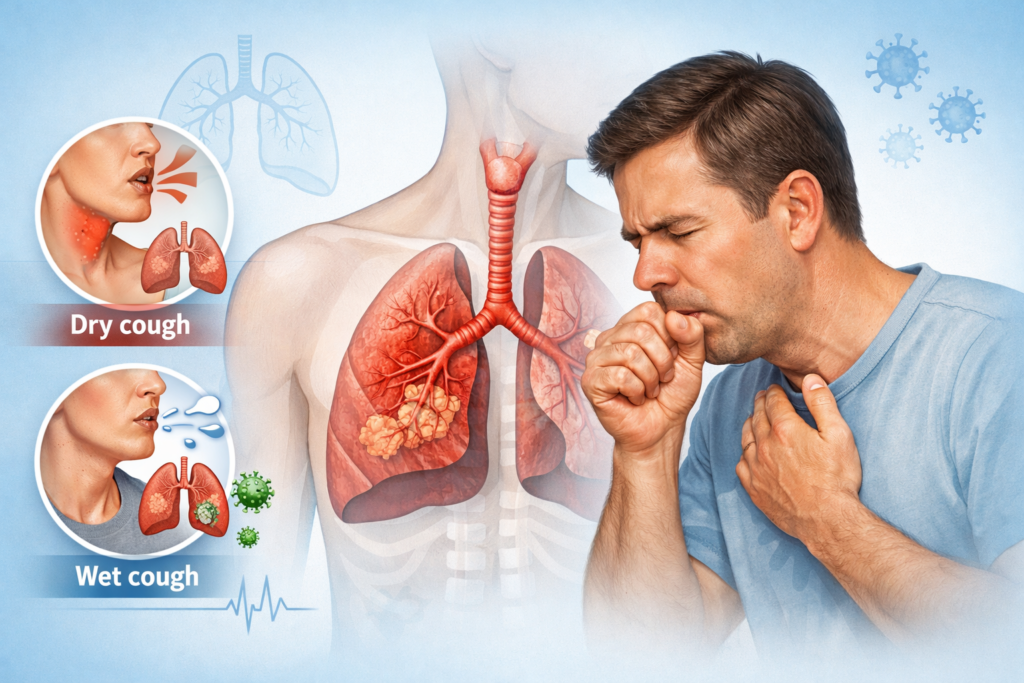
Also read this post :- Cough: Causes, Types, Symptoms & Treatment Guide
Diagnosis of Nodular Goitre
Doctors diagnose nodular goitre using the following tests:
- Physical examination of the neck
- Thyroid function blood tests (TSH, T3, T4)
- Ultrasound scan
- Thyroid scan
- Fine Needle Aspiration (FNA) biopsy
- CT scan or MRI (in severe cases)
Treatment of Nodular Goitre
Treatment depends on the cause, size, and hormone activity.
1. Observation
Small goitres without symptoms may only require monitoring.
2. Medications
Doctors may prescribe medicines to regulate thyroid hormone levels.
3. Iodine Supplements
Used when iodine deficiency is the cause.
4. Radioactive Iodine Therapy
Helps shrink the thyroid gland.
5. Surgery (Thyroidectomy)
Recommended if:
- Goitre is large
- Causes breathing difficulty
- Cancer is suspected
- Severe hormone imbalance exists
Risk Factors
People at higher risk include:
- Women
- People over age 40
- People with iodine deficiency
- Family history of thyroid disease
- Individuals with autoimmune disorders
Prevention
You can reduce the risk by:
- Using iodized salt
- Maintaining a balanced diet
- Regular health checkups
- Early treatment of thyroid disorders
When to See a Doctor
Consult a doctor if you notice:
- Neck swelling
- Difficulty breathing
- Difficulty swallowing
- Rapid heartbeat
- Sudden weight changes
Early diagnosis prevents complications.
Conclusion
Nodular goitre is a common thyroid condition caused mainly by iodine deficiency and hormonal imbalance. While many cases are harmless, some may cause serious complications if untreated. Early diagnosis, proper treatment, and regular monitoring help manage the condition effectively and prevent health risks.
Also read this post :- Bell’s Palsy (Facial Paralysis): Causes, Symptoms, Treatment, and Recovery
FAQ (Frequently Asked Questions)
What is nodular goitre?
Nodular goitre is enlargement of the thyroid gland with lumps or nodules.
Is nodular goitre dangerous?
Most cases are harmless, but some may cause hormone imbalance or rarely cancer.
What is the main cause of goitre?
The most common cause is iodine deficiency.
Can nodular goitre be cured?
Yes, with proper treatment such as medication, iodine therapy, or surgery.
Who is at higher risk?
Women, older adults, and people with iodine deficiency are at higher risk.
Medical Disclaimer
This article is for educational purposes only and is not a substitute for professional medical advice, diagnosis, or treatment. Always consult a qualified healthcare provider for medical concerns.