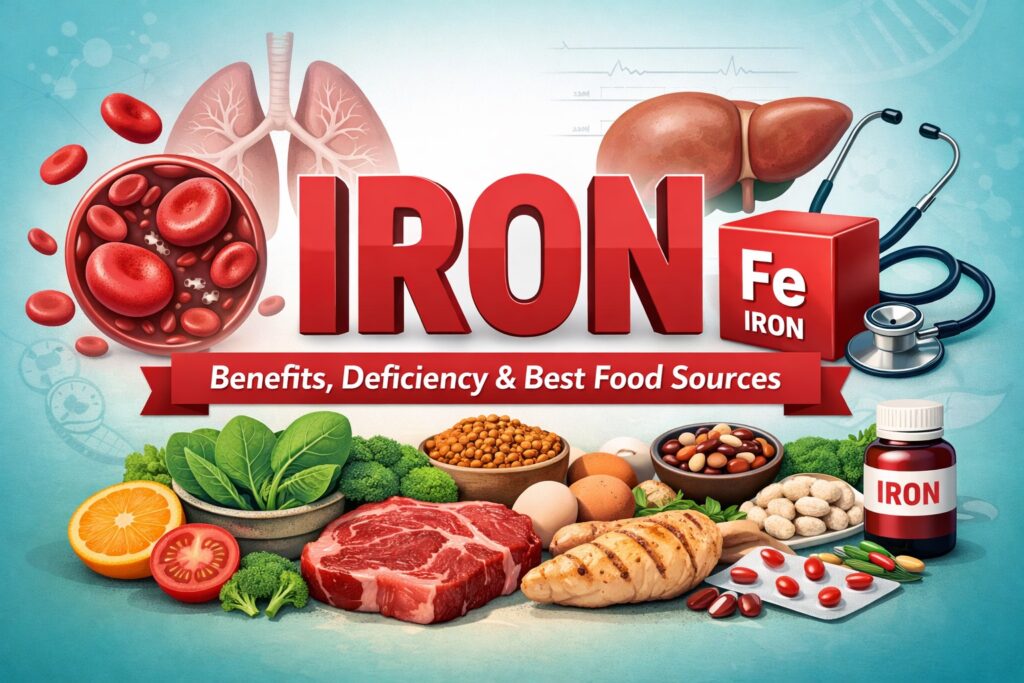
Iron health and nutrition essentials
Iron is an essential mineral required for many vital functions in the human body. Its primary role is to help form hemoglobin, a protein in red blood cells that carries oxygen from the lungs to all parts of the body. Iron also supports energy production, brain function, immune health, and overall growth and development.
The body stores iron mainly in the liver, spleen, and bone marrow. Maintaining proper iron levels is essential because both iron deficiency and excess iron can lead to serious health problems.
Also read this post :- Phosphorus: Importance, Benefits, Sources, and Deficiency
Functions and Benefits of Iron
1. Formation of Hemoglobin
Iron is necessary for the production of hemoglobin, which transports oxygen to tissues and organs. Without sufficient iron, oxygen delivery becomes impaired.
2. Energy Production
Iron helps cells produce energy. Low iron levels often result in fatigue, weakness, and reduced physical performance.
3. Supports Brain Development
Iron is essential for proper brain function. Even mild iron deficiency in infants and children can affect cognitive development and learning ability.
4. Supports Immune System
Iron plays a role in maintaining a healthy immune system, helping the body fight infections.
5. Helps Vitamin Metabolism
Iron is involved in the metabolism and utilization of several vitamins, including Vitamin B complex.
Daily Iron Requirement
The amount of iron needed depends on age, gender, and health condition.
- Adult men: 12 mg per day
- Adult women: 15–24 mg per day
- Pregnant women: 27 mg per day
- Children: 7–15 mg per day
Only about 5–10% of dietary iron is absorbed by the body, so adequate intake is necessary.
Also read this post :- Magnesium: Benefits, Deficiency Symptoms, Food Sources, and Importance for Health
Iron Deficiency
Iron deficiency is one of the most common nutritional deficiencies worldwide. It can lead to iron deficiency anemia, a condition where the body cannot produce enough healthy red blood cells.
Causes of Iron Deficiency
- Poor diet lacking iron-rich foods
- Blood loss (menstruation, injury, ulcers)
- Pregnancy
- Rapid growth in children
- Heavy exercise
- Alcohol consumption
- Poor iron absorption
Infants are born with limited iron stores, which usually last for about four months. After this period, dietary iron becomes essential.
Symptoms of Iron Deficiency
Common symptoms include:
- Fatigue and weakness
- Shortness of breath
- Pale skin
- Dizziness
- Headache
- Cold hands and feet
- Poor concentration
- Rapid heartbeat
Severe deficiency may result in iron deficiency anemia.
Best Iron-Rich Foods
Plant Sources
- Spinach
- Fenugreek leaves
- Broccoli
- Lentils
- Beans
- Soybeans
- Nuts and seeds
- Whole grains
Animal Sources
- Liver
- Red meat
- Chicken
- Fish
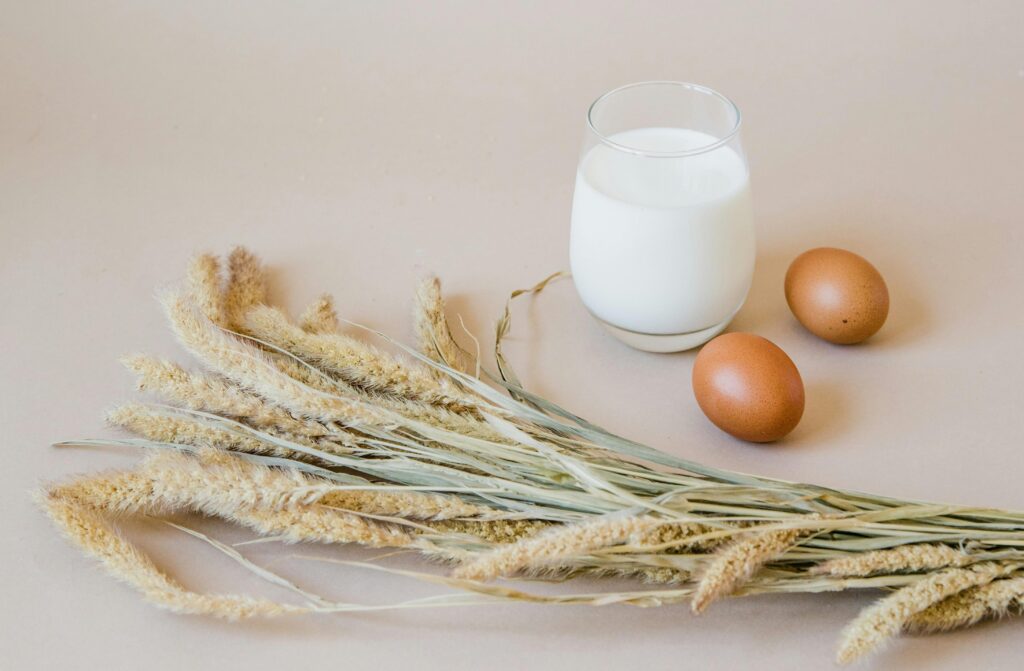
- Eggs
Iron-Fortified Foods
- Fortified cereals
- Fortified flour
- Iron supplements (if prescribed)
Tips to Improve Iron Absorption
- Consume Vitamin C-rich foods (lemon, oranges, tomatoes) with iron-rich foods
- Avoid tea or coffee immediately after meals
- Include a balanced diet
- Use iron supplements only when prescribed
Risks of Excess Iron
Too much iron can also be harmful and may cause:
- Liver damage
- Stomach pain
- Nausea
- Organ damage in severe cases
Iron supplements should only be taken under medical supervision.
Prevention of Iron Deficiency
- Eat a balanced diet with iron-rich foods
- Include green leafy vegetables regularly
- Monitor iron levels during pregnancy
- Take supplements only if recommended
Also read this post :- Copper: Benefits, Deficiency Symptoms, Sources, and Importance for Health
Conclusion
Iron is essential for oxygen transport, energy production, and overall health. Iron deficiency can lead to anemia, fatigue, and impaired brain function. Maintaining a balanced diet with iron-rich foods and proper nutrition can help prevent deficiency and promote good health.
FAQs
What is iron and why is it important?
Iron is a mineral needed to produce hemoglobin, which carries oxygen throughout the body.
What causes iron deficiency?
Poor diet, blood loss, pregnancy, and poor absorption are common causes.
What are the symptoms of iron deficiency?
Fatigue, weakness, pale skin, dizziness, and shortness of breath.
Which foods are rich in iron?
Spinach, lentils, red meat, liver, beans, and fortified cereals.
Can iron deficiency be cured?
Yes, it can be treated with proper diet, supplements, and medical care.
Medical Disclaimer:
This article is for informational purposes only and should not be considered medical advice. Always consult a qualified healthcare professional before starting any supplements or treatment.