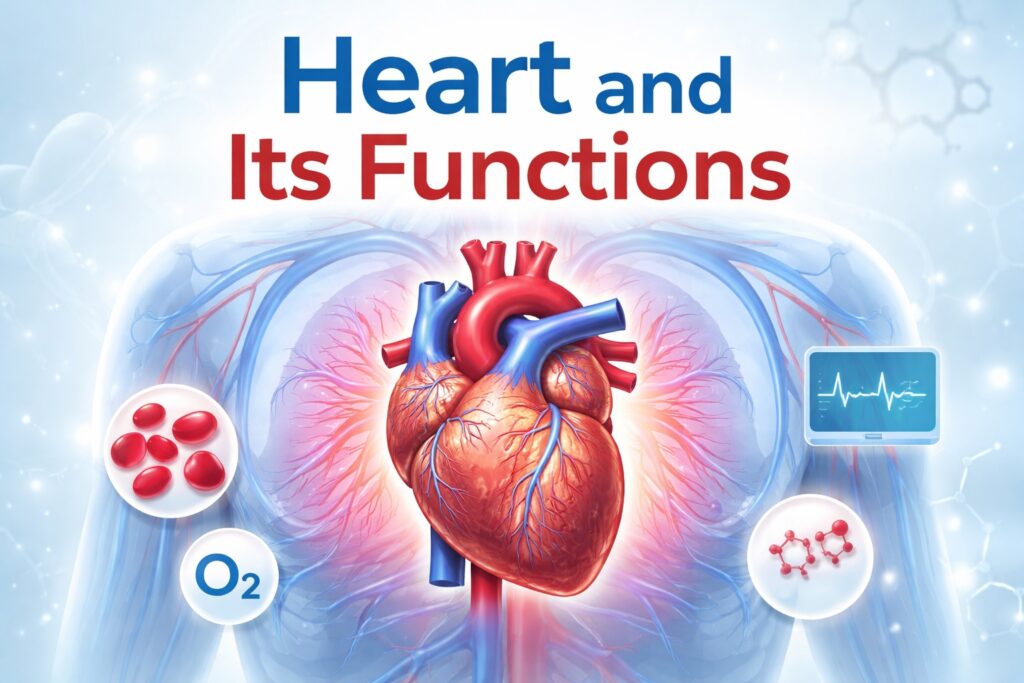
The human heart is one of the most vital organs of the body. It is located slightly to the left side of the chest, behind the breastbone, and is well protected by the rib cage. The heart is about the size of a clenched fist and weighs approximately 300–350 grams in an adult. Despite its small size, it performs an extraordinary amount of work throughout a person’s lifetime.
Also read this post :- Stroke: Types, Causes, Symptoms, and Prevention Guide
How Does the Heart Work?
The heart is made primarily of a strong muscular tissue called the myocardium. It functions like a powerful pump, working continuously day and night, without rest, from birth until death.
On average, a healthy human heart beats about 72 times per minute. Over a lifespan of nearly 70 years, this equals roughly 2.5 billion heartbeats. Each minute, the heart pumps around 5 liters of blood, which means that during a normal lifetime, it circulates approximately 700 million liters of blood throughout the body.
During physical exercise, emotional stress, or illness, the heart’s workload can increase up to six times its normal output. Despite modern medical advancements, scientists have not yet been able to create an artificial pump that can match the efficiency and durability of the human heart.
Structure of the Heart
Internally, the heart is divided into four chambers and contains four valves that ensure blood flows in the correct direction.
- Upper chambers: Right atrium and left atrium
- Lower chambers: Right ventricle and left ventricle
Blood Circulation Process
- The right atrium receives impure (deoxygenated) blood from the body through veins.
- This blood flows into the right ventricle, which pumps it to the lungs through the pulmonary artery.
- In the lungs, the blood is oxygenated (purified).
- Oxygen-rich blood returns to the left atrium via pulmonary veins.
- The blood then moves into the left ventricle, which pumps it throughout the entire body to supply oxygen and nutrients to tissues and organs.
This continuous circulation keeps all body systems functioning properly.
Also read this post :- Vitamin B Complex – Parts, Names, and Health Benefits
Functions of the Heart
The heart plays a central role in maintaining life. Its main functions include:
1. Blood Circulation
The heart continuously circulates blood throughout the body, ensuring that all organs and tissues receive what they need to function.
2. Oxygen Supply
It delivers oxygen to every cell in the body, which is essential for energy production and survival.
3. Nutrient Transport
The heart helps transport vital nutrients, including vitamins and minerals, to body cells.
4. Oxygenation of Blood
It sends deoxygenated blood to the lungs for purification and oxygenation.
5. Hormone and Chemical Transport
The heart aids in the circulation of hormones and nerve chemicals from one part of the body to another.
6. Removal of Waste Products
It supports organs like the liver and kidneys by transporting metabolic waste products so they can be filtered and removed from the body.
7. Temperature Regulation
By controlling blood flow, the heart helps regulate internal body temperature.
Conclusion
The heart is an incredibly efficient and indispensable organ that sustains life by continuously pumping blood, oxygen, and nutrients throughout the body. Proper heart function is essential for overall health, and maintaining a healthy lifestyle—through balanced nutrition, regular exercise, and stress management—plays a crucial role in keeping the heart strong and functional.
Also read this post :- Vitamin A or ( Retinoic Acid, Retinol ). Diseases caused by Vitamin A deficiency and sources of Vitamin A.
Frequently Asked Questions (FAQs)
What is the main function of the heart?
The main function of the heart is to pump blood throughout the body, supplying oxygen and nutrients to cells and removing waste products.
Where is the human heart located?
The human heart is located in the center of the chest, slightly tilted to the left side, behind the breastbone and protected by the rib cage.
How many times does the heart beat in a day?
On average, the heart beats about 100,000 times per day and around 2.5 billion times in a 70-year lifespan.
How many chambers are there in the heart?
The heart has four chambers:
• Right atrium
• Left atrium
• Right ventricle
• Left ventricle
What is the role of heart valves?
Heart valves ensure that blood flows in one direction only and prevent backward flow during circulation.
What is oxygenated and deoxygenated blood?
• Deoxygenated blood is blood low in oxygen and high in carbon dioxide.
• Oxygenated blood is blood rich in oxygen, supplied to body tissues.
How does the heart help in blood purification?
The heart sends blood to organs like the lungs, kidneys, and liver, where oxygen is added and waste substances are filtered and removed.
Can the heart change its working speed?
Yes, during exercise, stress, or illness, the heart can increase its pumping capacity up to six times to meet the body’s needs.
Why is the heart important for survival?
Without the heart pumping blood, oxygen and nutrients cannot reach body cells, making survival impossible even for a few minutes.
How can we keep our heart healthy?
A healthy heart can be maintained by:
• Regular physical exercise
• Balanced diet
• Avoiding smoking and excessive alcohol
• Managing stress
• Regular health checkups