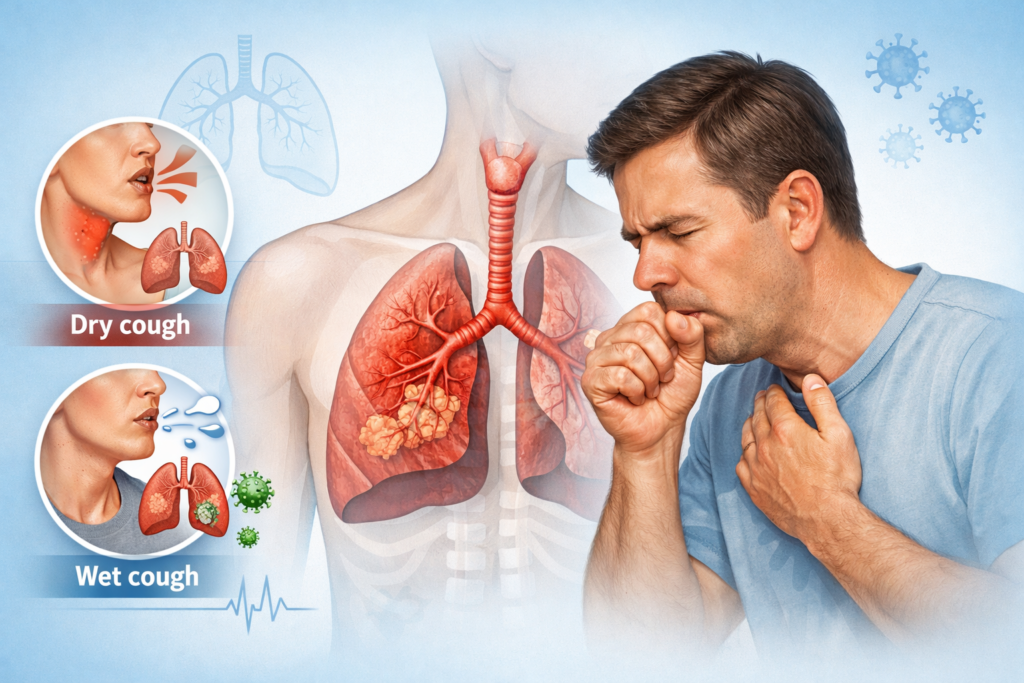
Cough is one of the most common symptoms of respiratory system disorders. It is not a disease itself, but a protective reflex of the body that helps clear the airways of mucus, irritants, or foreign particles.
Cough is frequently associated with conditions like bronchitis, asthma, pneumonia, tuberculosis, common cold, allergies, and throat infections. It may also occur in heart failure, hypertension, and mediastinal tumors.
Also read this post :- Hoarseness of Voice: Symptoms, Causes, and Treatment
What Is a Cough?
A cough is a forceful expulsion of air against a closed larynx, triggered by irritation of the respiratory tract.
It is controlled by a cough center located in the spinal cord and acts as a natural defense mechanism.
Causes of Cough (Etiology)
1. Respiratory Irritation
- Dust, smoke, cold air
- Foreign bodies (food particles, hair, etc.)
- Tuberculosis, pneumonia, bronchitis
- Asthma, laryngitis, croup
2. Infections
- Common cold
- Whooping cough
- Pleurisy
- Upper & lower respiratory tract infections
3. Other Causes
- Weather changes
- Vagal nerve irritation
- Liver disorders
- Smoking (Smoker’s cough)
- Allergies
Types of Cough
1. Dry Cough
- No mucus or very little sputum
- Harsh, repeated coughing
- Chest tightness and head pain
- Seen in early stages of:
- Pneumonia
- Asthma
- Tuberculosis
- Bronchitis
- Pleurisy
Common Triggers: cold air, dust, smoke, irritation of vocal cords
2. Wet (Productive) Cough
- Produces mucus (mucoid, purulent, or mucopurulent)
- Relief after expectoration
- Seen in:
- Chronic bronchitis
- Bronchiectasis
- Lung infections
3. Paroxysmal (Fits of Cough)
- Sudden, violent coughing episodes
- More common at night
- Face turns red, body stiffens
- Often associated with:
- Whooping cough (especially in children)
- Mild fever
Important Points to Assess in Cough
- Dry or productive?
- Severity and frequency
- Worse at night or morning?
- Seasonal relation
- Vomiting with cough
- Change in voice
Also read this post :- Nodular Goitre: Causes, Symptoms, Types, Diagnosis and Treatment
General Treatment of Cough
Lifestyle & Home Care
- Adequate rest
- Warm fluids
- Avoid cold exposure
- Quit smoking
- Nutritious, non-spicy food
- Steam inhalation
Medical Treatment (Overview)
⚠️ Medicines should only be taken after consulting a doctor
Dry Cough Treatment
- Cough suppressants
- Antihistamines
- Warm gargles
- Lozenges
Wet Cough Treatment
- Expectorants
- Mucolytics
- Hydration
- Steam therapy
Chronic Cough
- Requires medical evaluation
- May need antibiotics or allergy treatment
- Long-term cough should never be ignored
When to See a Doctor?
- Cough lasting more than 3 weeks
- Blood in sputum
- High fever
- Chest pain
- Breathlessness
- Night sweats or weight loss
Prevention Tips
- Avoid smoking
- Maintain hygiene
- Use mask in polluted areas
- Treat cold and allergies early
- Strengthen immunity
Medicines for Cough Treatment
⚠️ Important: Cough medicines should be chosen based on the type of cough. Self-medication, especially in children and elderly, should be avoided.
1. Medicines for Dry Cough (Non-productive Cough)
(Used to suppress cough reflex)
Common Medicines
- Dextromethorphan
- Codeine / Pholcodine (Prescription only)
- Noscapine
- Levodropropizine
Popular Syrups
- Benadryl DR
- Phensedyl (Rx)
- Corex (Rx)
- Tixylix
- Noscopex
Tablets
- Codeine sulphate (Rx)
- Dextromethorphan tablets
✔ Best for: Dry, irritating, night-time cough
❌ Not for: Cough with mucus
2. Medicines for Wet / Productive Cough
(Help loosen and expel mucus)
Expectorants & Mucolytics
- Guaifenesin
- Bromhexine
- Ambroxol
- Acetylcysteine
Popular Syrups
- Benadryl Expectorant
- Glycodine Terp-Vasaka
- Cheston
- Vicks Cough Syrup
- Ascoril (with bronchodilator)
✔ Best for: Chest congestion, phlegm cough
3. Medicines for Allergic Cough
Antihistamines
- Cetirizine
- Loratadine
- Chlorpheniramine
- Fexofenadine
Combination Syrups
- Avil Expectorant
- Piriton Expectorant
- Zeet / Dilosyn
✔ Best for: Dust, pollen, seasonal allergy cough
4. Medicines for Cough with Cold & Fever
- Paracetamol (for fever)
- Antihistamine + decongestant combinations
- Steam inhalation + rest
⚠️ Antibiotics only if prescribed by a doctor.
5. Medicines for Chronic or Severe Cough
Used when cough lasts more than 3 weeks:
- Inhalers (if asthma related)
- Acid-reducing medicines (GERD cough)
- Antibiotics (only if infection confirmed)
➡ Requires medical evaluation
Supportive Home Measures
- Warm water and fluids
- Steam inhalation
- Salt water gargles
- Avoid smoking and cold air
When to See a Doctor Immediately
- Cough lasting > 3 weeks
- Blood in sputum
- High fever
- Breathlessness
- Weight loss or night sweats
Also read this post :- Dengue Fever: Causes, Symptoms, Types, and Treatment Protocol
Conclusion
Cough is a warning signal of underlying health issues. Understanding its type, cause, and duration is essential for effective treatment. Early diagnosis and proper care help prevent complications.
Frequently Asked Questions (FAQs)
Is cough a disease?
No, cough is a symptom, not a disease.
What causes chronic cough?
Smoking, allergies, asthma, GERD, tuberculosis, and chronic bronchitis.
Is dry cough dangerous?
Occasional dry cough is harmless, but persistent dry cough needs evaluation.
Can cough be treated at home?
Mild cough can be managed with warm fluids, steam inhalation, and rest.
Medical Disclaimer
This content is for educational purposes only. Do not self-medicate. Always consult a qualified healthcare professional before taking any medication.