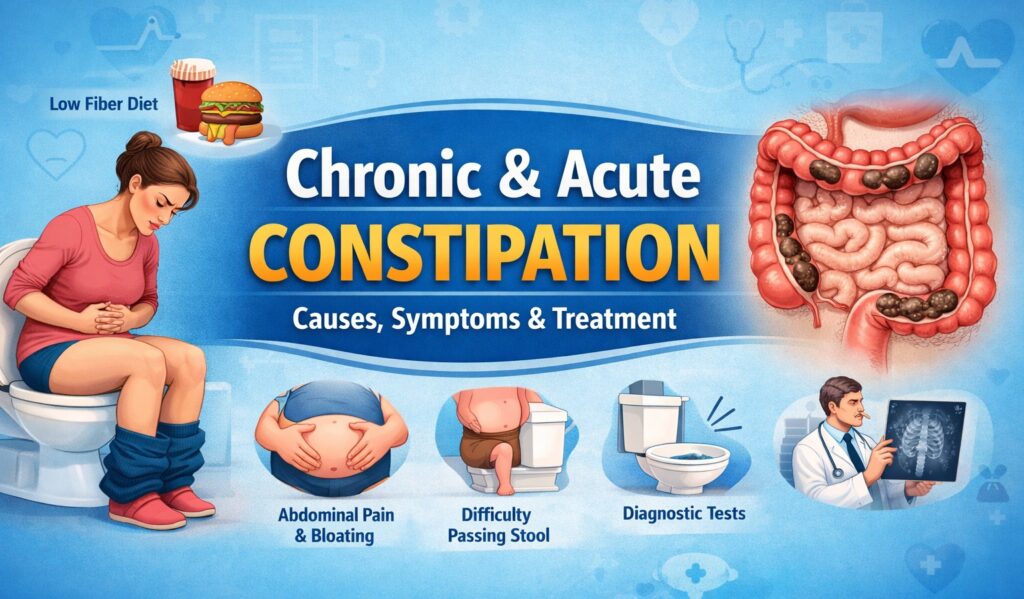
Constipation is generally defined as having fewer than three bowel movements per week. It can also mean difficulty passing stool or feeling that the bowels are not completely empty after going to the toilet.
Constipation may be:
- Acute Constipation – Short-term and usually caused by diet changes, travel, stress, or temporary illness.
- Chronic Constipation – Long-term condition lasting for several weeks or months and may significantly affect quality of life.
Constipation is common in all age groups but is more frequent in older adults, pregnant women, and individuals with sedentary lifestyles.
Also read this post :- Prescription Abbreviations: Weights, Measures & Common Medical Terms
How Constipation Develops
The colon (large intestine) absorbs water from food waste. If stool remains in the colon for too long, excessive water is absorbed, making the stool hard, dry, and difficult to pass.
Proper bowel function depends on:
- Adequate fiber intake
- Proper hydration
- Healthy colon muscle contractions
- Regular bowel habits
Symptoms of Constipation
Common symptoms include:
- Fewer than three bowel movements per week
- Hard, dry, or lumpy stool
- Straining during bowel movement
- Feeling of incomplete evacuation
- Abdominal bloating
- Abdominal pain or discomfort
- Loss of appetite
- Nausea or occasional vomiting
- Bad breath
- White or coated tongue
In severe cases, constipation may cause significant discomfort and reduced quality of life.
Causes of Chronic and Acute Constipation
1. Dietary Causes
- Low-fiber diet
- Excessive meat, dairy, or cheese consumption
- Inadequate water intake (dehydration)
2. Lifestyle Factors
- Lack of physical activity
- Frequently delaying bowel movements
- Travel or change in daily routine
- Stress
3. Medical Conditions
- Hypothyroidism (underactive thyroid)
- Diabetes
- Stroke
- Parkinson’s disease
- Irritable Bowel Syndrome (IBS)
- Intestinal obstruction
- Diverticulosis
4. Medications
- Antacids (especially calcium-based)
- Painkillers (opioids)
- Iron supplements
- Certain antidepressants
5. Hormonal & Pregnancy-Related Causes
- Pregnancy
- Thyroid hormone imbalance
Also read this post :- Tinea Cruris (Jock Itch): Causes, Symptoms, Diagnosis and Treatment
Types of Fiber and Their Role
Fiber plays a crucial role in preventing constipation:
Soluble Fiber
- Dissolves in water
- Forms a gel-like substance
- Softens stool
Insoluble Fiber
- Adds bulk to stool
- Helps stool move quickly through intestines
Sources of Fiber:
Fruits, vegetables, whole grains, legumes, seeds, and nuts.
Diagnostic Tests for Constipation
If constipation does not improve with lifestyle changes, further testing may be required.
1. Physical Examination
Helps identify abdominal tenderness, rectal blockage, or other underlying issues.
2. Blood Tests
- Thyroid hormone levels
- Calcium levels
- Blood sugar levels
3. Abdominal X-ray
Shows stool accumulation and severity of constipation.
4. Barium Enema
Evaluates bowel and rectum function.
5. Colonic Transit Study
Measures how long food takes to move through the colon.
6. Defecography
Special imaging test to evaluate rectal function.
7. Anorectal Motility Studies
Assesses nerve and muscle function of the rectum and colon.
8. MRI Defecography
Advanced imaging for studying bowel movement mechanics.
Treatment for Chronic Constipation
Treatment depends on the underlying cause.
1. Lifestyle Changes (First-Line Treatment)
- Increase fiber intake gradually
- Drink 8–10 glasses of water daily
- Regular physical exercise
- Establish a consistent toilet routine
- Avoid ignoring the urge to pass stool
2. Medical Treatment
- Bulk-forming laxatives
- Stool softeners
- Osmotic laxatives
- Prescription medications (if needed)
⚠️ Avoid overuse of laxatives, as this can worsen constipation over time.
Home Remedies for Constipation
- Warm water in the morning
- Soaked raisins or prunes
- Isabgol (psyllium husk)
- High-fiber breakfast (oats, fruits)
- Gentle abdominal massage
When to See a Doctor
Seek medical attention if you experience:
- Constipation lasting more than 3 weeks
- Severe abdominal pain
- Blood in stool
- Unexplained weight loss
- Persistent vomiting
Also read this post :- Causes and treatment of bedwetting in children at night.
FAQs About Constipation
What is the difference between acute and chronic constipation?
Acute constipation is short-term, while chronic constipation persists for weeks or months.
How much fiber should I consume daily?
Adults should aim for 25–35 grams of fiber per day.
Can stress cause constipation?
Yes, stress can slow colon muscle contractions and affect bowel habits.
Is constipation dangerous?
Occasional constipation is common, but chronic constipation may lead to complications like hemorrhoids or anal fissures.
Conclusion
Chronic and acute constipation are common digestive problems but can usually be managed effectively with dietary changes, hydration, and lifestyle improvements. Persistent constipation should not be ignored, as it may indicate an underlying medical condition.