Many people believe that taking extra vitamins can improve health and prevent diseases. While vitamins are essential for the body, taking them in excessive amounts can sometimes do more harm than good.
Most vitamins are easily available in the form of tablets, capsules and syrups. Because of this, many people start using them without medical advice. However, vitamins should be taken only when needed and in the correct dosage.
In this article, we explain the risks of excessive vitamin intake, possible side effects, and important precautions in simple English.
Why Are Vitamins Important?
Vitamins help the body grow, repair tissues, support immunity and maintain overall health. A balanced diet usually provides all the vitamins that a healthy person needs.
Problems may occur when vitamin supplements are taken unnecessarily or in very high doses for a long period.
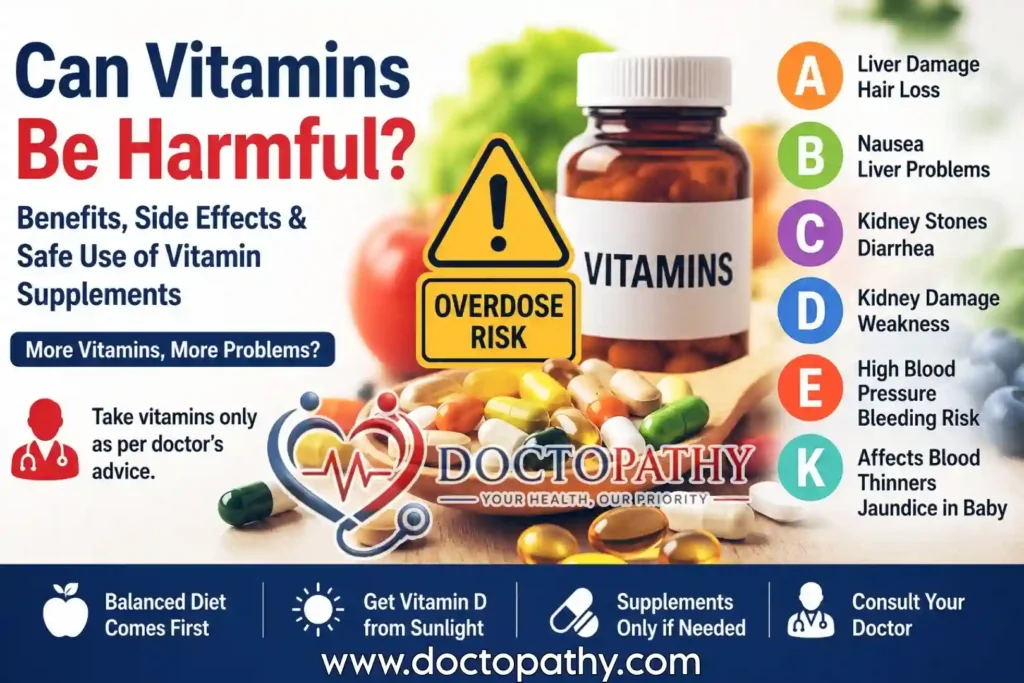
Side Effects of Excess Vitamin A
Vitamin A is important for healthy eyes, skin and immunity. However, excessive intake can cause:
- Hair loss
- Headache
- Nausea and vomiting
- Loss of appetite
- Irritability
- Fatigue and weakness
- Dry or damaged skin
- Joint and muscle pain
- Enlarged liver
- Liver damage in severe cases
Taking very high amounts of beta-carotene or Vitamin A supplements may also negatively affect vision instead of improving it.
Side Effects of Excess Vitamin B
Too much Vitamin B can lead to:
- Tissue damage
- Slow heartbeat
- Nausea
- Facial redness (flushing)
- Liver problems in some cases
Risks of Taking Too Much Vitamin B-Complex
Many people regularly use Vitamin B-complex tablets. Long-term excessive use may cause:
- Liver disorders
- Intestinal ulcers
- Skin problems
- Kidney-related complications
Vitamin B-complex should only be used when recommended by a healthcare professional.
Side Effects of Excess Vitamin C
Vitamin C is commonly used during colds and flu. However, the body only needs a limited amount daily.
Too much Vitamin C may cause:
- Kidney stones
- Stomach pain
- Diarrhea
- Increased menstrual bleeding
- Joint pain
- Digestive discomfort
- Reduced absorption of certain nutrients
People with existing kidney stones should be especially careful with high-dose Vitamin C supplements.
Side Effects of Excess Vitamin D
Vitamin D helps the body absorb calcium and maintain strong bones. Sunlight is a natural source of Vitamin D.
Excessive Vitamin D intake can cause:
- Nausea and vomiting
- Loss of appetite
- Weakness and fatigue
- Sleep problems
- Diarrhea
- Kidney damage
- Excess calcium in the blood
- Muscle weakness
- Heart-related complications
Vitamin D supplements should only be taken according to medical advice and test results.
Side Effects of Excess Vitamin E
Taking too much Vitamin E may lead to:
- Headache
- Nausea
- Stomach upset
- High blood pressure
- Dizziness
- Blurred vision
- Increased risk of bleeding
- Reduced sexual desire in some people
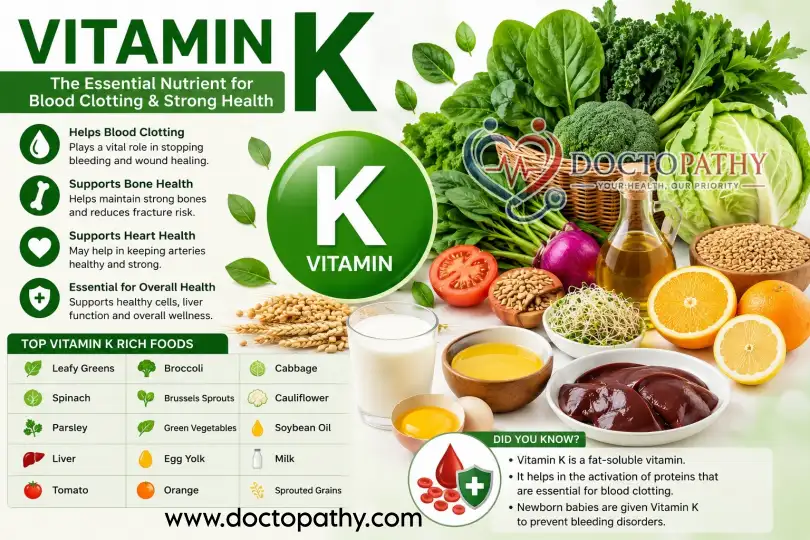
Side Effects of Excess Vitamin K
Vitamin K is important for blood clotting. However, excessive amounts may:
- Reduce the effectiveness of blood-thinning medicines
- Increase the risk of complications during pregnancy
- Cause jaundice in newborn babies if taken excessively during pregnancy
Niacin (Vitamin B3) and Its Risks
High doses of Niacin are sometimes prescribed to help manage cholesterol levels.
Excessive use may result in:
- Liver damage
- Jaundice
- Skin flushing
- Digestive problems
Niacin should only be taken under medical supervision.
Important Precautions While Taking Vitamins
1. More Is Not Always Better
Taking large amounts of vitamins does not provide extra health benefits. In fact, excessive intake may cause serious side effects.
2. One Vitamin Can Affect Another
Too much of one vitamin may interfere with the absorption or function of another vitamin.
3. Get Vitamin D Naturally
Sunlight is one of the best natural sources of Vitamin D. Regular exposure to sunlight can help maintain healthy Vitamin D levels.
4. Balanced Diet Comes First
Most people can get sufficient vitamins from:
- Fruits
- Vegetables
- Whole grains
- Milk and dairy products
- Eggs
- Fish
- Nuts and seeds
5. Food Sources Are Better
Vitamins obtained from natural foods are generally better absorbed and utilized by the body than unnecessary supplements.
6. Take Supplements Only When Needed
Vitamin supplements are useful in certain conditions such as:
- Vitamin deficiencies
- Pregnancy
- Night blindness
- Rickets
- Scurvy
- Certain medical conditions
However, they should be taken only after consulting a qualified healthcare professional.
Conclusion
Vitamins are essential for good health, but excessive use can be harmful. Many people take vitamin supplements without understanding the risks of overdose. High doses of Vitamins A, B, C, D, E and K may cause serious health problems, including liver damage, kidney issues, digestive disorders, and other complications.
The safest approach is to maintain a balanced diet and use vitamin supplements only when recommended by a healthcare professional. Remember, the right amount of vitamins supports health, but too much can be dangerous.
Frequently Asked Questions (FAQs)
Yes. Excessive vitamin intake can lead to side effects such as liver damage, kidney stones, digestive problems and other health complications.
Only if they are recommended by a healthcare professional or prescribed for a deficiency.
Fat-soluble vitamins such as Vitamin A and Vitamin D are more likely to cause toxicity because they can accumulate in the body.
In most cases, yes. A balanced diet provides all the essential vitamins needed for good health.
Consult a doctor or healthcare professional to determine whether you actually need supplements and what dosage is safe.
Medical Disclaimer :
This article is for educational purposes only and does not replace professional medical advice.