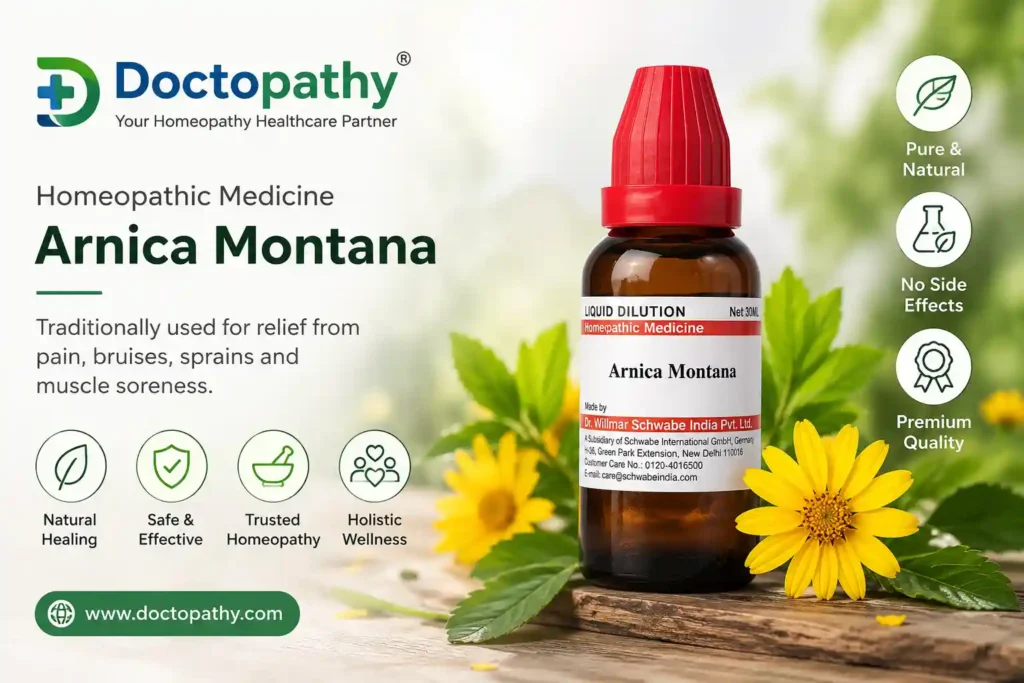
Arnica montana is one of the most commonly used homeopathic medicines for injuries, bruises, pain, and body soreness.
Homeopathic practitioners often use Arnica after falls, accidents, surgery, muscle strain or physical shock. It is especially popular for conditions where the body feels sore, bruised or sensitive to touch.
Arnica is also known as the “injury remedy” in homeopathy.
Mental and Emotional Symptoms
People who need Arnica may show certain mental and emotional symptoms.
Common Mental Symptoms
- Irritability
- Fear after injury or accident
- Desire to stay alone
- Avoiding conversation
- Frightening dreams at night
- Anxiety about health problems
Some people may wake up at night feeling frightened or restless after physical trauma.
Main Physical Symptoms of Arnica
The most important Arnica symptom is a bruised and sore feeling throughout the body.
Key Physical Signs
- The body feels beaten or crushed
- Pain increases when touched
- Swelling after injury
- Bruises or black-blue marks
- Muscle soreness
- Weakness after physical strain
In many cases, the body feels cold while the head feels warm.
Arnica for Injuries
Arnica is widely used after physical injuries.
Conditions Where Arnica May Help
- Falls and accidents
- Sprains and strains
- Muscle injury
- Bruises
- Bone injuries
- Joint pain after trauma
- Swelling after injury
Many practitioners also use Arnica after sports injuries and heavy physical work.
Arnica for Bone and Joint Pain
Arnica may help when joints and muscles feel painful and sensitive.
Common Uses
- Arthritis with soreness
- Gout pain
- Pain after lifting heavy objects
- Back strain
- Pain after overexertion
People who need Arnica often dislike being touched because even gentle pressure increases pain.
Arnica During Pregnancy and After Delivery
Some homeopathic practitioners use Arnica during pregnancy and after childbirth.
Possible Uses
- Body soreness after delivery
- Uterine pain after childbirth
- Breast tenderness due to injury
- Physical exhaustion after labor
Arnica may also support recovery after difficult delivery. However, pregnant lady should only take medicines under professional guidance.
Arnica After Surgery
Many homeopaths use Arnica after surgery to support recovery.
Benefits After Surgery
- Helps reduce bruising
- May reduce swelling
- Supports healing after trauma
- Helps body soreness after operations
However, Arnica should never replace proper medical treatment.
Arnica for Fever and Infection-Related Weakness
Some practitioners use Arnica in fevers where the body feels extremely sore and weak.
Common Symptoms
- Body pain with fever
- Feeling that the bed feels too hard
- Restlessness due to soreness
- Weakness and tiredness
In addition, the person may feel worse from staying still for long periods.
Arnica for Bleeding and Injury to Soft Tissues
Arnica may help minor bleeding and tissue injury caused by trauma.
Common Uses
- Nosebleeds after injury
- Bruising around the eyes
- Muscle bleeding after trauma
- Swelling after impact
Arnica for Digestive Problems
Some people needing Arnica may develop digestive complaints.
Digestive Symptoms
- Indigestion
- Bad-smelling belching
- Gas and bloating
- Loss of appetite
They may also dislike milk, meat or fatty foods.
Arnica for Cough
Homeopathic practitioners sometimes use Arnica in whooping cough when coughing causes chest soreness and pain.
Children may cry before coughing because they fear the pain caused by the cough.
Other Homeopathic Remedies Compared with Arnica
Several remedies have symptoms similar to Arnica.
Related Remedies
- Rhus toxicodendron – useful for ligament and joint injuries
- Ruta graveolens – often used for bone and tendon pain
- Hypericum perforatum – useful for nerve injuries
- Calendula officinalis – supports wound healing
- Ledum palustre – commonly used for puncture wounds
- Staphysagria – useful for clean cuts from sharp instruments
Factors That Worsen Symptoms
Symptoms may become worse from:
- Touch
- Pressure
- Standing still
- Alcohol
- Lying in one position for long periods
Factors That Improve Symptoms
Some people feel better from:
- Gentle movement
- Changing position
- Light activity
Arnica Dosage
Homeopathic practitioners use Arnica in different potencies depending on the condition.
Common Potencies
- 3C
- 6C
- 30C
- 200C
- Higher potencies in special cases
Mother tincture may be used externally in diluted form under professional guidance.
Do not apply concentrated tincture directly to open wounds.
Important Note
Always take homeopathic medicines under the advice of a qualified healthcare professional or homeopathic doctor.
Avoid self-medication, especially in serious injuries, fractures, infections or medical emergencies.
Conclusion
Arnica Montana is one of the most important homeopathic remedies for injuries, bruising, soreness and physical trauma. It may help reduce pain, swelling and body soreness after accidents or strain.
Homeopathy selects remedies according to individual symptoms. Therefore, proper professional guidance is important for safe and effective treatment.
Arnica Montana is commonly used in homeopathy for injuries, bruises, muscle soreness and swelling after trauma.
Many practitioners use Arnica to support recovery after surgery and reduce bruising and soreness.
Arnica may help joint and muscle pain, especially after injury or physical strain.
Pregnant lady should only use Arnica under medical or professional homeopathic supervision.
Minor conditions may improve with proper use, but serious injuries and medical problems require professional care.
Medical Disclaimer
This article is for educational purposes only and does not replace professional medical advice. Always consult a qualified healthcare provider before taking any medicine or treatment.