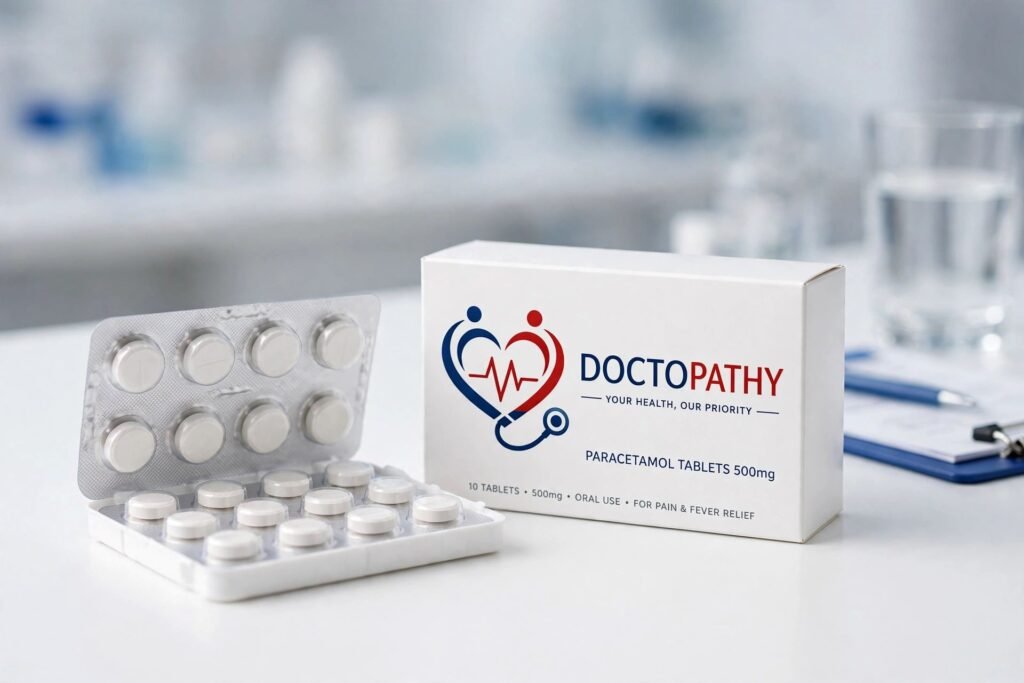
Paracetamol, also globally known as Acetaminophen, is one of the most widely used medicines for managing everyday health issues. It is the first line of defense for reducing fever and managing mild-to-moderate body pain. While it is safely available as an Over-The-Counter (OTC) drug without a strict prescription, improper use can lead to serious health complications, making correct awareness absolutely essential.
How Does Paracetamol Work? (Mechanism of Action)
Paracetamol works primarily in the central nervous system (the brain and spinal cord) to deliver its therapeutic effects:
- Antipyretic Effect (Fever Reduction): It acts directly on the hypothalamus, which is the body’s natural thermostat in the brain. It instructs the hypothalamus to lower the body’s temperature set-point, promoting sweating and blood flow to peripheral tissues to release heat.
- Analgesic Effect (Pain Relief): It elevates the body’s overall pain threshold by inhibiting the synthesis of prostaglandins (chemical messengers that signal pain) in the brain. Unlike NSAIDs (like Ibuprofen), Paracetamol has very minimal anti-inflammatory action in peripheral body tissues.
Common Clinical Uses of Paracetamol
Medical guidelines widely support the use of Paracetamol for a broad range of everyday and clinical conditions:
- Fever Management: Quickly and effectively controls high body temperature resulting from viral infections, common colds, flu or post-vaccination reactions.
- Headaches and Migraines: Provides fast relief from tension headaches, everyday fatigue aches and mild migraines.
- Dental Pain: Frequently used to manage structural toothaches or post-dental procedure soreness.
- Musculoskeletal Pain: Alleviates mild backaches, muscle strains, neural aches and joint discomfort caused by early-stage Osteoarthritis.
- Menstrual Cramps: Helps soothe mild pelvic or abdominal cramps during menstrual periods.
Standard Adult Dosage Guidelines
To ensure patient safety, Paracetamol dosages must be calculated carefully to prevent accidental overloading of the digestive system:
- Standard Dosage Range: The usual oral dose for healthy adults is 500 mg to 650 mg taken every 4 to 6 hours as needed.
- Maximum Daily Limit: A healthy adult must never exceed 4000 mg (4 grams) within any 24-hour window. This is equivalent to a maximum of six 650 mg tablets or eight 500 mg tablets in one single day.
- Administration Tip: Paracetamol is very gentle on the stomach lining compared to standard painkillers. It can be safely taken either with or without food.
Note: Pediatric forms (drops or syrups) for infants and growing children must be calculated strictly based on the child’s body weight in kilograms, never by pure age guesswork. Always consult a registered pediatrician for child dosages.
Common and Serious Side Effects
When taken within the recommended limits, Paracetamol is exceptionally safe. However, negligence or an overdose can lead to critical reactions:
1. Rare but Possible Common Side Effects:
- Mild nausea, dizziness or lightheadedness.
- Slight skin flushing or minor digestive changes.
2. Serious Adverse Risks (Severe Abuse or Overdose):
- Acute Liver Failure (Hepatotoxicity): The liver processes Paracetamol. Taking a massive dose or combining it with frequent alcohol completely exhausts liver enzymes, leading to irreversible liver cell damage.
- Severe Allergic Reactions: In rare cases, individuals may experience severe skin rashes, peeling or a dangerous allergic condition known as Stevens-Johnson Syndrome (SJS).
- Hematological Variations: Prolonged, daily high-dose abuse can occasionally alter natural blood counts.
Crucial Precautions & Contraindications
Extreme caution must be exercised by individuals matching the following criteria:
- Pre-existing Liver Disease: Patients with liver cirrhosis, hepatitis or heavy alcohol dependence face a significantly higher risk of toxic liver injury and must use it only under strict medical supervision.
- Chronic Kidney Impairment: Severe stages of renal disease require spaced-out dosing intervals.
- Hidden Double-Dosing: Many cold, cough and sinus syrups already contain hidden Paracetamol. Taking tablets alongside these syrups can lead to an accidental overdose. Always check the ingredients on all labels.
Important Medical Disclaimer
This article is for educational purposes only and is not a substitute for professional medical advice, diagnosis or treatment. Always consult a qualified healthcare practitioner before starting any medication or treatment.