Teething, also known as dentition, is a natural developmental stage in infants when their first set of teeth (milk teeth) begins to emerge through the gums. Most babies start teething between six and ten months of age and by the age of three years, almost all the primary teeth have erupted.
Generally, the two lower front teeth appear first, followed by the two upper front teeth, after which the remaining teeth gradually emerge. During this period, babies may experience several discomforting symptoms such as irritability, fever, digestive disturbances and sleep problems.
In homeopathy, teething discomfort can be managed using remedies based on the principles developed by Samuel Hahnemann, where medicines are selected according to the similarity of symptoms.
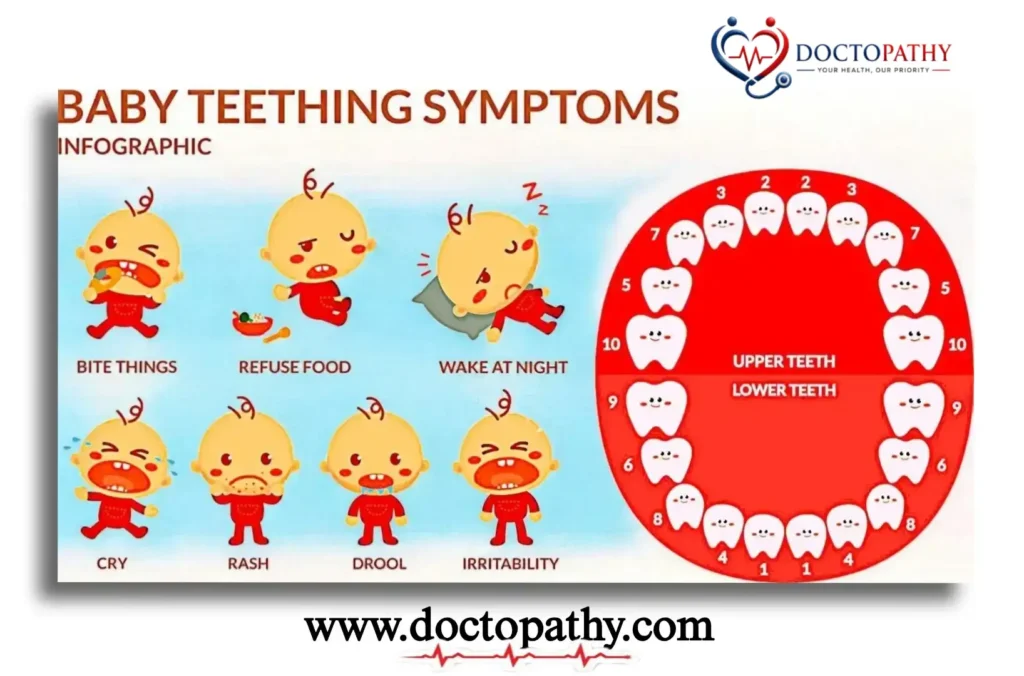
Common Symptoms During Teething
While teething is a normal process, it may cause temporary discomfort in many children. Common symptoms include:
- Fever or mild temperature rise
- Irritability and excessive crying
- Sleeplessness or disturbed sleep
- Constipation or diarrhea
- Vomiting or nausea
- Convulsions in rare cases
- Increased drooling
- Desire to bite hard objects
- Loss of appetite
Proper care and appropriate homeopathic remedies can help relieve these symptoms and make the teething process easier for the child.
Adjuvant Biochemic Treatment
Biochemic tissue salts can support healthy tooth eruption and reduce discomfort. The following tissue salts may be used together in 6X potency:
- Natrum Phosphoricum (Nat. Phos.) 6X
- Kali Phosphoricum (Kali Phos.) 6X
- Ferrum Phosphoricum (Ferrum Phos.) 6X
- Calcarea Phosphorica (Calc. Phos.) 6X
- Silicea 6X
Dosage:
Mix these salts and give three doses daily with warm water. This combination helps support healthy dentition and allows teeth to erupt with minimal discomfort.
Important Homeopathic Medicines for Teething
Chamomilla
One of the most commonly used remedies for teething discomfort. It is helpful when the child becomes extremely irritable, restless and cries continuously. It is also useful when there is greenish-yellow diarrhea and fever during teething.
Aethusa cynapium (Aethusa) – 3, 6, 30
Useful when teething causes vomiting, diarrhea, stiffness or convulsive movements. A characteristic symptom is the thumb clenched tightly in the fist during stiffness.
Calcarea carbonica – 30, 200
Indicated when the child passes sour-smelling stools and may also experience vomiting during teething. Often useful for children with slow or difficult dentition.
Ipecacuanha – 3X, 3, 6
Helpful when severe nausea or persistent vomiting occurs during the teething period.
Arundo mauritanica – 3, 6
Recommended for milk-fed babies who develop loose stools or frequent diarrhea during teething.
Coccinella indica – Q, 30
Useful when children experience nervous excitement, restlessness and irritability during dentition.
Magnesia muriatica – 6, 30, 200
Beneficial in digestive disturbances, dyspepsia and diarrhea that occur during painful teething.
Podophyllum peltatum – 6, 200
Indicated when children have frequent, large, watery, painless stools, often hot and profuse during teething.
Phytolacca – 2X, 30
Useful when the child constantly bites hard objects or presses the gums due to irritation and pain.
Kreosotum – 3X, 1M
Helpful in cases of very painful dentition, where the child is extremely restless and cries continuously due to gum discomfort.
General Care Tips for Teething Babies
Along with homeopathic remedies, some simple care measures can help reduce discomfort:
- Give the baby a clean teething ring to chew on
- Gently massage the gums with a clean finger
- Keep the baby well hydrated
- Maintain proper oral hygiene
- Provide soft and easily digestible foods
These supportive measures help ease the teething process and comfort the child.
Summary
Teething is a natural milestone in a child’s development, but it can sometimes cause discomfort and digestive disturbances. Homeopathic and biochemic remedies can provide gentle relief when chosen according to the child’s symptoms.
With proper care, nutrition and suitable remedies, most babies pass through the dentition period smoothly and comfortably.
FAQs
Most babies begin teething between 6 and 10 months of age, although it can vary from child to child.
Common symptoms include irritability, drooling, mild fever, diarrhea, chewing on objects and disturbed sleep.
Chamomilla is one of the most frequently used remedies for irritability, crying and discomfort during teething.