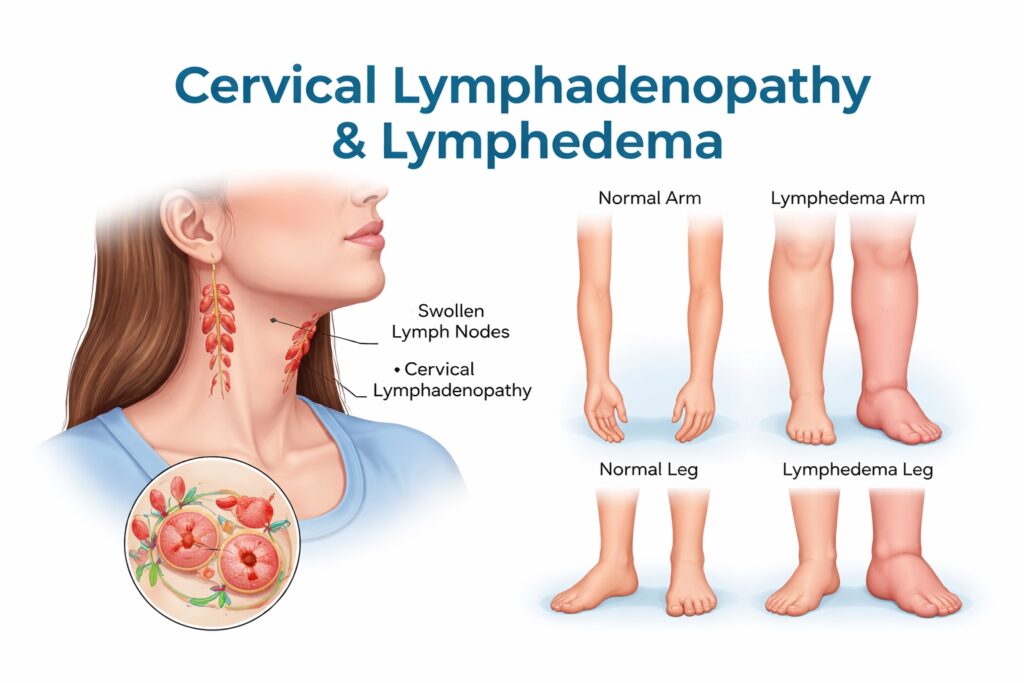
Cervical lymphadenopathy refers to swelling of lymph nodes in the neck, while lymphedema is a condition where lymph fluid accumulates, causing swelling—usually in the arms or legs. Both conditions are related to the lymphatic system and may indicate underlying infections, inflammation, or more serious health issues.
What is Lymphedema?
Lymphedema occurs when the lymphatic system is blocked or damaged, preventing proper drainage of lymph fluid. This results in noticeable swelling, most commonly in one arm or leg, but sometimes both.
Also read this post :- Gout (Monosodium Urate Crystal Disorder): Causes, Symptoms, Treatment, and Prevention
What is Cervical Lymphadenopathy?
Cervical lymphadenopathy is the enlargement of lymph nodes in the neck region. It is often a response to:
- Infection
- Inflammation
- Immune system disorders
- Cancer (in some cases)
Causes of Lymphedema & Lymph Node Swelling
1. Surgical Causes
- Removal of lymph nodes during cancer surgery
- Damage to lymph vessels during operations
2. Radiation Therapy
- Radiation used in cancer treatment can damage lymph nodes
- Leads to fluid accumulation and swelling
3. Cancer
- Tumors may block lymph vessels
- Common in breast, head, and neck cancers
4. Infections
- Bacterial infections of lymph nodes
- Parasitic infections (common in tropical countries like India)
5. Other Risk Factors
- Obesity
- Chronic inflammation
- Poor immune health
Symptoms of Lymphedema
- Swelling in arm or leg (including fingers/toes)
- Feeling of heaviness or tightness
- Reduced mobility in affected area
- Recurrent infections
- Skin thickening (fibrosis)
- Pain or discomfort
- Restlessness
Diagnosis
Doctors may diagnose the condition through:
- Physical examination
- Ultrasound or CT scan
- Lymphoscintigraphy
- Blood tests (to detect infection)
Treatment Protocol
⚠️ Note: Always consult a qualified doctor before starting any medication.
Medicines (As per protocol)
- Ciprofloxacin 500 mg – Twice daily for 7 days
- Omeprazole 20 mg – Twice daily (30 minutes before meals)
- Chlorpheniramine 4 mg – Twice daily
- Diazepam 5 mg – Once daily
- Paracetamol 500 mg – Twice daily
Other Treatment Options
1. Compression Therapy
- Compression garments help reduce swelling
2. Physiotherapy
- Special exercises improve lymph flow
3. Manual Lymph Drainage
- Gentle massage technique
4. Lifestyle Changes
- Maintain healthy weight
- Avoid infections
- Keep skin clean and moisturized
Prevention Tips
- Avoid injury or cuts in affected area
- Maintain proper hygiene
- Exercise regularly
- Avoid tight clothing
- Elevate swollen limbs
When to See a Doctor?
Seek medical help if:
- Swelling persists or worsens
- Pain becomes severe
- Frequent infections occur
- Skin becomes hard or thick
Also read this post :- Nodular Goitre: Causes, Symptoms, Types, Diagnosis and Treatment
FAQs
What is the main cause of cervical lymphadenopathy?
The most common cause is infection, but it can also result from inflammation or cancer.
Is lymphedema permanent?
Lymphedema is usually a chronic condition but can be managed effectively with treatment.
Can lymphedema be cured completely?
There is no permanent cure, but symptoms can be controlled with proper care.
Is swelling in lymph nodes dangerous?
Not always, but persistent swelling should be evaluated by a doctor.
How can I reduce swelling naturally?
Compression, exercise, elevation, and proper skin care can help reduce swelling.
Medical Disclaimer
This content is for informational purposes only and should not be considered medical advice. Always consult a qualified healthcare professional before starting any treatment.