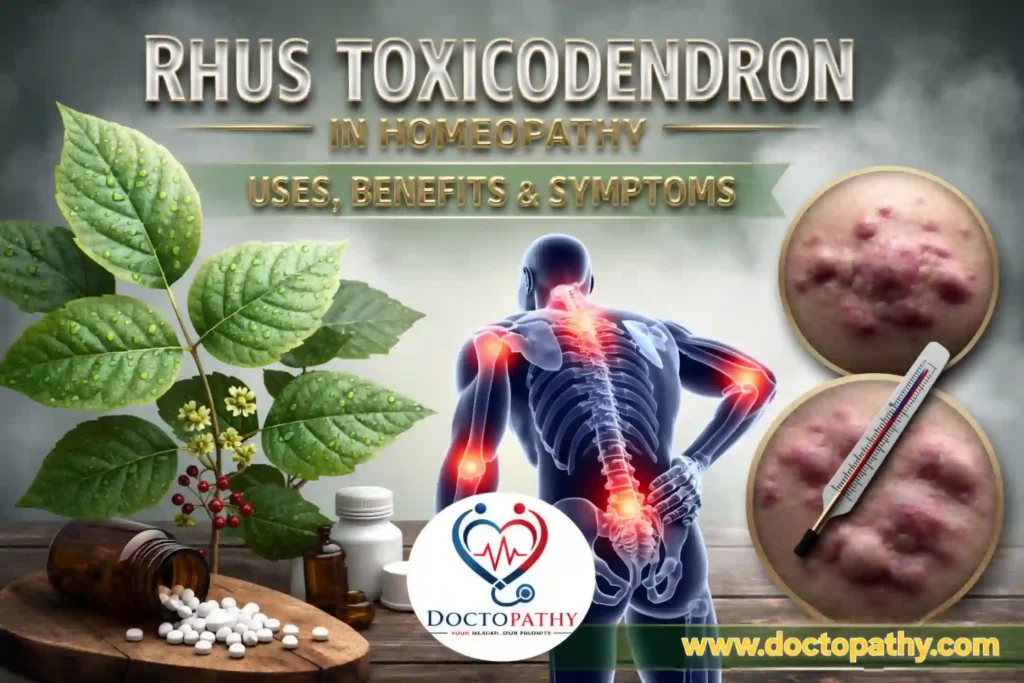
Rhus Toxicodendron is one of the most widely used remedies in homeopathy. It is prepared from the plant commonly known as poison ivy. In homeopathic medicine, Rhus tox is highly valued for treating joint pain, skin disorders, rheumatism, ligament injuries and fever conditions such as typhoid.
This remedy primarily acts on the fibrous tissues, joints, tendons, ligaments and mucous membranes. A key characteristic of Rhus tox is that pain and stiffness improve with movement but worsen during rest or cold weather.
It is often prescribed for people suffering from sprains, strains, overexertion injuries and inflammatory skin conditions.
Key Indications of Rhus Toxicodendron
1. Rheumatic and Joint Pain
Rhus tox is especially effective for rheumatic pains affecting joints and muscles.
Common symptoms include:
- Severe stiffness in joints
- Pain worse during rest
- Pain better with movement
- Sprains and strains from lifting heavy objects
- Pain caused by overexertion or physical strain
It is frequently used in cases of:
- Rheumatoid pain
- Muscle stiffness
- Ligament injuries
- Tendon inflammation
2. Skin Disorders
Rhus tox is widely used in various skin diseases, especially those involving itching and inflammation.
Common skin conditions treated:
- Eczema
- Blisters and rashes
- Carbuncles and boils
- Poison ivy reactions
- Urticaria (hives)
- Burning and itchy skin eruptions
The skin may appear:
- Red
- Inflamed
- Intensely itchy
- Covered with fluid-filled blisters
3. Post-Operative Complications
This remedy is helpful for pain and inflammation after surgery.
It may relieve:
- Tissue inflammation
- Muscular strain after surgery
- Pain in ligaments and joints
- Slow recovery from physical trauma
Mental and Emotional Symptoms
The mental state of a patient needing Rhus tox often includes:
- Restlessness
- Constant desire to move
- Anxiety and fear
- Suspicion that someone might poison them
- Fear at night
- Difficulty staying alone
Patients may feel mentally and physically restless, often changing positions frequently.
Head Symptoms
Common head symptoms include:
- Headache as if a tight band is tied around the forehead
- Dizziness and heaviness in the head
- Pain spreading from the forehead to the back of the head
- Sensation as if the brain is striking the skull while walking
- Pain worsens when lying on the affected side
Itching eruptions may also appear on the scalp.
Eye Symptoms
Rhus tox may help in inflammatory eye conditions such as:
- Red, swollen eyes
- Watery discharge
- Yellow pus from the eyes
- Eyelid eczema
- Blister-like inflammation of eyelids
Patients may experience burning tears and severe eye irritation.
Nose and Face Symptoms
Symptoms affecting the nose and face include:
- Frequent sneezing
- Cold with a red and sore nose
- Nosebleeds
- Swelling of the face
- Pain in facial muscles
- Swollen cheekbones
In some cases, the jaw may make a cracking sound while chewing.
Mouth and Throat Symptoms
Rhus tox may help relieve:
- Loose or elongated feeling in teeth
- Painful gums
- Red, cracked tongue
- Fever blisters around the mouth
- Severe sore throat
- Swollen glands in the throat
- Sharp pain when swallowing
Digestive Symptoms
Digestive complaints treated with Rhus tox include:
- Loss of appetite
- Excessive thirst
- Bitter taste in the mouth
- Nausea and vomiting
- Abdominal heaviness after eating
- Liver gland inflammation
- Gas and rumbling in the stomach
Diarrhea may be:
- Watery
- Foul smelling
- Sometimes mixed with blood.
Urinary Symptoms
Urinary problems associated with Rhus tox include:
- Dark urine
- Scanty urine
- Burning and pain during urination
- Blood-mixed urine
Respiratory Symptoms
Rhus tox is sometimes prescribed for respiratory conditions such as:
- Dry irritating cough
- Cough worse at night
- Influenza with body pain
- Tickling sensation in the chest
- Breathlessness with sharp chest pain
Cough may worsen from midnight until morning.
Heart Symptoms
Heart symptoms include:
- Rapid pulse
- Weak or irregular heartbeat
- Numbness in the left arm
- Palpitations during rest
These symptoms often appear after excessive physical exertion.
Back, Limbs and Joint Symptoms
Rhus tox strongly affects the musculoskeletal system.
Typical symptoms include:
- Severe stiffness in joints
- Tearing pain in muscles
- Pain relieved by movement
- Weakness in knees and limbs
- Numbness in fingers and toes
- Tingling sensation like ants crawling
- Paralysis after overwork
Cold weather often worsens these symptoms.
Fever Symptoms
Rhus tox is used in certain fever conditions such as:
- Typhoid-like fever
- Fever with restlessness
- Dry tongue with brown coating
- Vomiting with fever
- Body pain and weakness
Skin eruptions such as hives, blisters and itchy pimples may appear during fever.
Modalities (Conditions Affecting Symptoms)
Symptoms Worsen From
- Cold weather
- Rainy or damp climate
- Rest or inactivity
- Night time
- Getting wet
- Sleeping
Symptoms Improve With
- Movement
- Warmth
- Massage
- Dry weather
- Heat applications
Common Potencies Used
Rhus Toxicodendron is commonly used in the following potencies:
- 6C
- 30C
- 200C
- Higher potencies depending on the case.
The correct potency should be selected by a qualified homeopathic practitioner.
Complementary and Related Remedies
Homeopathic remedies often used alongside Rhus tox include:
- Arnica
- Arsenicum album
- Baptisia
- Hyoscyamus
- Lachesis
- Opium
An important remedy that may counteract Rhus tox is Apis mellifica.
Conclusion:
Rhus Toxicodendron is a powerful homeopathic remedy particularly useful for rheumatic pain, ligament injuries, skin diseases and inflammatory conditions. Its most distinctive feature is that pain improves with movement and worsens during rest or cold weather.
When used appropriately under professional guidance, Rhus tox can provide significant relief in musculoskeletal disorders, skin eruptions, respiratory problems and fever conditions.
FAQs:- Rhus Toxicodendron
Rhus Toxicodendron is commonly used in homeopathy for joint pain, rheumatism, muscle stiffness, sprains and skin diseases such as eczema and rashes. It is especially helpful when pain and stiffness improve with movement but worsen during rest or cold weather.
Yes, Rhus tox is widely used for arthritis, ligament injuries and rheumatic pain. It helps reduce stiffness, inflammation and muscle soreness, particularly when symptoms are worse after rest and improve with gentle movement.
Yes. Rhus Toxicodendron is often recommended for skin conditions with redness, itching, blisters and burning, such as eczema, hives, poison ivy rash and inflammatory skin eruptions.
The commonly used potencies of Rhus Toxicodendron include 6C, 30C, and 200C. The correct potency and dosage depend on the patient’s symptoms and the severity of the condition, so it should be taken under professional guidance.
Typical symptoms indicating the need for Rhus Toxicodendron include:
Restlessness and constant need to move
Severe stiffness in joints
Pain relieved by movement
Symptoms worse in cold or damp weather
Skin eruptions with itching and blisters
Medical Disclaimer
The information provided on www.doctopathy.com is for educational and informational purposes only and is not intended as medical advice, diagnosis or treatment. Homeopathic medicines should be used under the guidance of a qualified healthcare professional. Do not ignore professional medical advice or delay seeking treatment because of something you read on this website. Always consult a licensed doctor or healthcare provider regarding any medical condition or treatment.