Manganese is an essential trace mineral that the body needs in small amounts. Even though the body requires only a little manganese, it plays an important role in many body functions. It helps support metabolism, bone health, digestion and antioxidant protection.
Manganese is naturally present in foods such as whole grains, nuts, seeds, fruits and tea. Therefore, most people get enough manganese from a balanced diet.
However, both low and excessive manganese levels may affect health. For this reason, maintaining the right balance is important.
What is Manganese?
Manganese is a mineral that helps the body function properly. It supports many enzymes that take part in important chemical reactions inside the body.
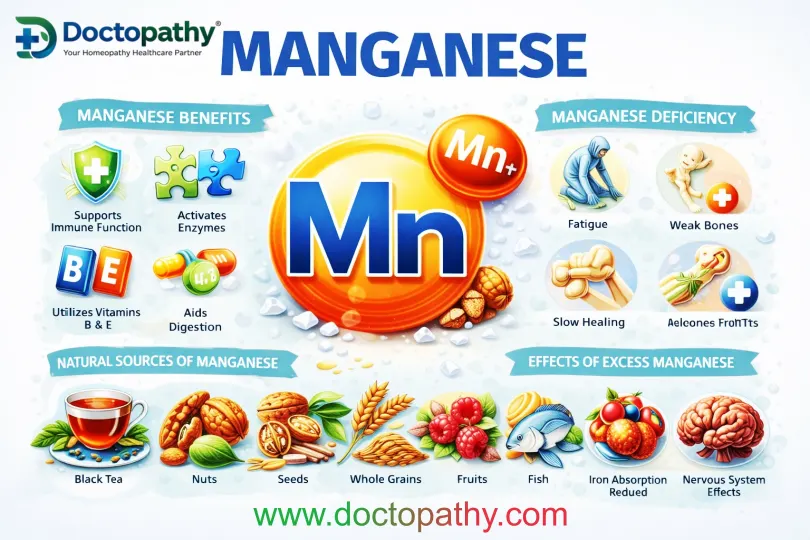
In addition, manganese helps the body use vitamins such as vitamin B and vitamin E. It also supports healthy bones, energy production and protection against cell damage.
Although the body needs only small amounts of manganese, it is necessary for overall health.
Functions of Manganese in the Body
Manganese supports several important body functions.
1. Supports Antioxidant Protection
Manganese helps produce antioxidant enzymes. These enzymes protect the body from harmful free radicals.
As a result, manganese helps reduce oxidative stress and keeps cells healthy.
2. Helps Activate Enzymes
Manganese activates enzymes that break down carbohydrates, proteins and fats.
Therefore, the body can convert food into energy more efficiently.
3. Helps the Body Use Vitamins
This mineral supports the proper use of vitamin B and vitamin E.
These vitamins are important for immunity, energy and healthy tissues.
4. Supports Digestion
Manganese helps digestive enzymes work properly.
Because of this, the body can digest food and absorb nutrients more effectively.
5. Helps Blood Clotting
Manganese supports normal blood clotting.
As a result, it helps prevent excessive bleeding after injuries.
6. Reduces Fatigue
Manganese supports energy production in the body.
Therefore, it may help reduce tiredness and improve energy levels.
7. Supports Lactation
Manganese may help support milk production in lactating people by supporting metabolic functions.
8. Helps Control Blood Sugar
Manganese may help improve glucose tolerance.
Therefore, it can support healthy blood sugar control in people with diabetes.
Health Benefits of Manganese
Getting enough manganese may provide several health benefits.
1. Supports Bone Health
Manganese helps in bone formation and supports strong bones.
In addition, it helps maintain healthy connective tissues.
2. Supports Brain Function
This mineral supports normal nerve and brain function.
As a result, it may help maintain healthy cognitive function.
3. Improves Metabolism
Manganese helps the body process carbohydrates, proteins and fats.
Therefore, it supports healthy metabolism and energy production.
4. Supports the Immune System
Manganese helps antioxidant enzymes protect the body’s cells.
Because of this, it supports the immune system and overall health.
Manganese Deficiency
Manganese deficiency is uncommon because many foods naturally contain this mineral.
However, poor nutrition or certain medical conditions may lower manganese levels.
Symptoms of Manganese Deficiency
Low manganese levels may cause:
- Weak bones
- Fatigue
- Poor growth
- Slow wound healing
- Metabolism problems
Usually, a balanced diet can help prevent deficiency.
Risks of Too Much Manganese
Although manganese is important, excessive intake may be harmful.
Too much manganese may reduce iron absorption in the body. As a result, iron deficiency may develop.
In rare cases, very high manganese levels may affect the nervous system.
Therefore, people should avoid taking unnecessary supplements.
Recommended Daily Intake
The daily manganese requirement depends on age and gender.
General recommendations include:
- Adult men: about 2.3 mg daily
- Adult women: about 1.8 mg daily
Most people can meet these needs through food.
Best Food Sources of Manganese
Manganese is present in many healthy foods.
1. Whole Grains
Good sources include:
- Brown rice
- Oats
- Whole wheat products
2. Nuts and Seeds
Many nuts and seeds contain manganese, such as:
- Almonds
- Walnuts
- Pumpkin seeds
- Sunflower seeds
3. Fruits
Some fruits also provide manganese along with other nutrients.
4. Black Tea
Black tea is a simple and good source of manganese.
5. Bran
Bran products contain high amounts of manganese because they come from whole grains.
6. Fish and Meat
Fish and meat contain smaller amounts of manganese.
Tips to Maintain Healthy Manganese Levels
1. Eat a Balanced Diet
Include whole grains, nuts, seeds and fruits in daily meals.
2. Avoid Unnecessary Supplements
Take manganese supplements only if a healthcare professional recommends them.
3. Maintain Proper Iron Levels
Adequate iron intake may help prevent mineral imbalance.
4. Choose Natural Foods
Natural and less processed foods usually provide enough manganese for the body.
Conclusion
Manganese is an important trace mineral that supports many body functions. It helps with metabolism, digestion, bone health, antioxidant protection and energy production.
Although manganese deficiency is rare, both low and excessive intake may affect health. Therefore, maintaining balanced levels is important.
Most people can get enough manganese through a healthy diet that includes whole grains, nuts, seeds, fruits and tea.
Medical Disclaimer :
This article is for informational and educational purposes only. It should not replace medical advice, diagnosis, or treatment. Always consult a qualified healthcare professional for health concerns or before taking supplements.