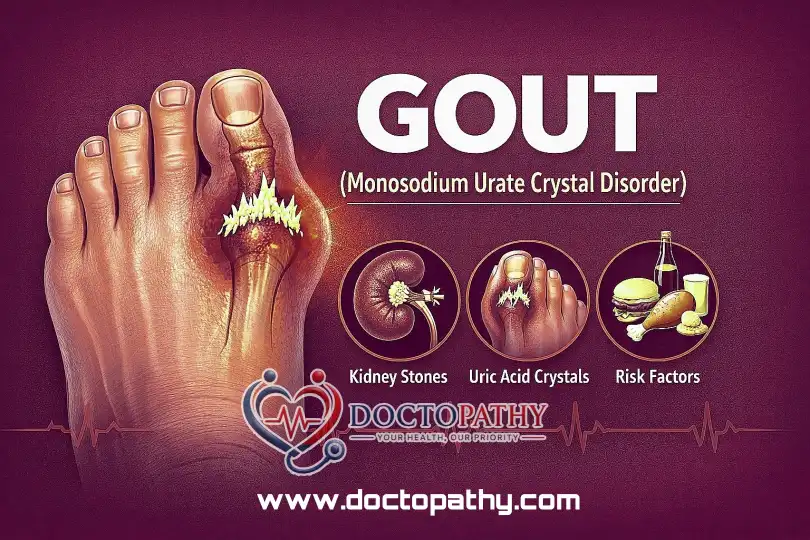
Gout, medically known as Monosodium Urate Crystal Disorder, is a painful form of inflammatory arthritis caused by the accumulation of uric acid crystals in the joints. It commonly affects the big toe but can also involve other joints such as the ankles, knees, fingers and elbows. Gout attacks can occur suddenly and cause intense pain, swelling, redness and stiffness.
This condition develops due to high levels of uric acid in the blood, a condition called hyperuricemia. When uric acid forms sharp crystals, they deposit in joints and surrounding tissues, leading to inflammation and severe discomfort.
What is Gout (Monosodium Urate Crystal Disorder)?
Gout is a metabolic disorder characterized by the deposition of monosodium urate crystals in joints and tissues. These crystals trigger inflammation, resulting in acute arthritis episodes.
Uric acid is a waste product formed when the body breaks down purines, substances naturally found in the body and certain foods. Normally, uric acid dissolves in the blood and is excreted through urine. However, when uric acid production increases or elimination decreases, crystals begin to form.
Causes of Gout
The primary cause of gout is elevated uric acid levels in the blood. Several factors contribute to this condition:
1. Dietary Causes
- Excess intake of red meat
- Organ meats (liver, kidney)
- Seafood (shellfish, sardines)
- Alcohol consumption
- Sugary beverages and fructose-rich foods
2. Medical Conditions
- Kidney disease
- Obesity
- Diabetes
- High blood pressure
- Metabolic syndrome
3. Genetic Factors
Family history increases the risk of developing gout.
4. Lifestyle Factors
- Sedentary lifestyle
- Dehydration
- Poor diet
5. Certain Medications
- Diuretics
- Aspirin (low dose)
- Some immunosuppressive drugs
Symptoms of Gout
Gout symptoms usually appear suddenly, often at night.
Common symptoms include:
- Severe joint pain (especially big toe)
- Swelling of affected joint
- Redness and warmth
- Tenderness
- Limited joint movement
- Burning sensation in joints
Stages of Gout
- Asymptomatic Hyperuricemia – High uric acid without symptoms
- Acute Gout Attack – Sudden severe joint inflammation
- Intercritical Period – Symptom-free period between attacks
- Chronic Tophaceous Gout – Long-term condition with crystal deposits called tophi
Risk Factors
People at higher risk include:
- Men over age 30
- Postmenopausal women
- Higher-weight person
- People with kidney disease
- People consuming high-purine diets
- Alcohol consumers
Diagnosis of Gout
Doctors diagnose gout using:
- Physical examination
- Blood test (uric acid level)
- Joint fluid analysis (crystal detection)
- X-ray or ultrasound imaging
Joint fluid analysis is the most accurate method.
Home Remedies and Lifestyle Changes
Lifestyle modifications play an important role in gout management.
Recommended changes:
- Drink plenty of water
- Maintain healthy weight
- Avoid alcohol
- Reduce red meat consumption
- Avoid sugary drinks
- Exercise regularly
Foods beneficial for gout:
- Low-fat dairy products
- Fruits and vegetables
- Whole grains
- Cherries (may help reduce uric acid)
Complications of Untreated Gout
If untreated, gout can cause serious complications:
- Chronic arthritis
- Joint damage
- Kidney stones
- Formation of tophi (crystal lumps)
- Reduced mobility
Early treatment prevents complications.
Prevention of Gout
Preventive measures include:
- Maintaining healthy weight
- Drinking enough water
- Limiting purine-rich foods
- Avoiding alcohol
- Regular medical check-ups
- Managing underlying conditions
When to See a Doctor
Consult a doctor if you experience:
- Sudden severe joint pain
- Repeated gout attacks
- Swollen, red joints
- Difficulty moving joints
Early diagnosis improves outcomes.
Conclusion
Gout (Monosodium Urate Crystal Disorder) is a painful but manageable condition caused by uric acid crystal accumulation in joints. With proper treatment, lifestyle changes and medical care, gout can be effectively controlled and complications prevented. Early diagnosis and prevention strategies play a crucial role in maintaining joint health and improving quality of life.
FAQs About Gout
The main cause is high uric acid levels in the blood leading to crystal formation in joints.
The big toe is the most commonly affected joint.
Gout is not completely curable but can be effectively managed.
Red meat, seafood, alcohol and sugary drinks should be avoided.
Yes, through proper diet, hydration, weight control and medical management.
Medical Disclaimer:
This article is for educational purposes only and does not replace professional medical advice. Consult a qualified healthcare provider for diagnosis and treatment.