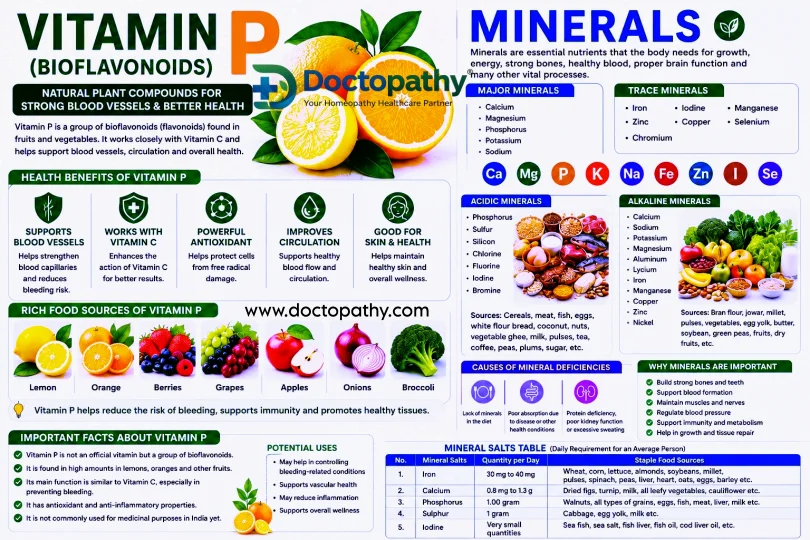
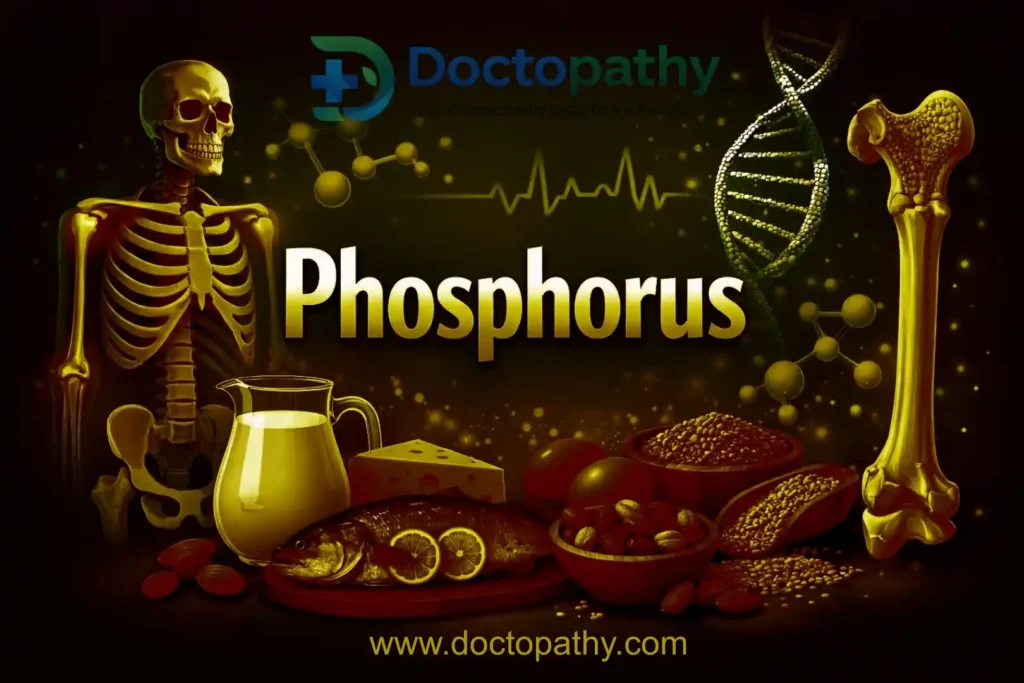
Phosphorus is an essential mineral required for the proper functioning of the human body. It is the second most abundant mineral in the body after calcium. Most of the phosphorus in the body is found in bones and teeth, where it works closely with calcium to maintain strength and structure.
Phosphorus also plays a vital role in energy production, cell repair and maintaining overall health.
Functions of Phosphorus in the Body
Phosphorus performs several important functions, including:
1. Supports Bone and Teeth Formation
Phosphorus works with calcium to build and maintain strong bones and teeth. It helps prevent bone weakness and supports proper skeletal development.
2. Helps in Energy Production
Phosphorus is essential for converting food into energy. It helps the body produce ATP (adenosine triphosphate), which provides energy to cells.
3. Promotes Healing of Bone Fractures
Phosphorus accelerates the healing process of bone injuries and fractures and helps prevent calcium loss during recovery.
4. Supports Kidney Function
Phosphorus helps the kidneys filter waste and toxins from the body effectively.
5. Maintains Cellular Health
Phosphorus is important for the growth, repair and maintenance of cells and tissues.
6. Maintains Calcium Balance
Phosphorus helps regulate calcium levels in the body. Proper balance between calcium and phosphorus is necessary for bone strength.
Symptoms of Phosphorus Deficiency
Phosphorus deficiency is rare but can cause several health problems, such as:
- Weakness and fatigue
- Bone pain
- Weak bones
- Loss of appetite
- Joint stiffness
- Poor bone development
- Increased risk of fractures
Severe deficiency may lead to bone disorders.
Risks of Excess Phosphorus
Too much phosphorus can be harmful and may cause:
- Reduced calcium absorption
- Weak bones
- Kidney problems
- Calcium imbalance
High intake of processed foods, sugary foods and unhealthy fats can disrupt the calcium-phosphorus balance.
Never take phosphorus supplements without medical advice.
Best Food Sources of Phosphorus
Phosphorus is widely available in many foods, including:
Animal Sources
- Milk and dairy products
- Eggs
- Fish
- Chicken
- Meat
Plant Sources
- Whole grains
- Bread
- Beans and pulses
- Nuts
- Seeds
These foods help maintain adequate phosphorus levels in the body.
Recommended Daily Intake of Phosphorus
The recommended daily intake varies by age:
- Adults: 700 mg per day
- Teenagers: 1,250 mg per day
- Children: 460–1,250 mg per day
A balanced diet usually provides enough phosphorus.
Factors Affecting Phosphorus Absorption
Some factors can affect phosphorus utilization:
- Excess magnesium or iron may reduce phosphorus storage
- High sugar intake can disturb calcium-phosphorus balance
- Acidic conditions may reduce phosphorus availability to bones
Maintaining a balanced diet helps ensure proper absorption.
Conclusion
Phosphorus is essential for strong bones, teeth, energy production and overall health. It works closely with calcium to maintain bone strength and supports important body functions. Eating a balanced diet that includes dairy products, whole grains, nuts, seeds and protein-rich foods can help maintain healthy phosphorus levels.
Avoid supplements unless recommended by a healthcare professional.
Frequently Asked Questions (FAQs)
Phosphorus helps build strong bones and teeth and supports energy production.
Symptoms include weakness, bone pain, fatigue and loss of appetite.
Milk, eggs, fish, meat, whole grains, nuts, seeds, beans and pulses are rich sources.
Yes, phosphorus works with calcium to strengthen bones and teeth.
Yes, excess phosphorus can interfere with calcium absorption and weaken bones.
Medical Disclaimer
This article is for educational purposes only and should not be considered medical advice. Consult a qualified healthcare professional before making any dietary or supplement changes.