
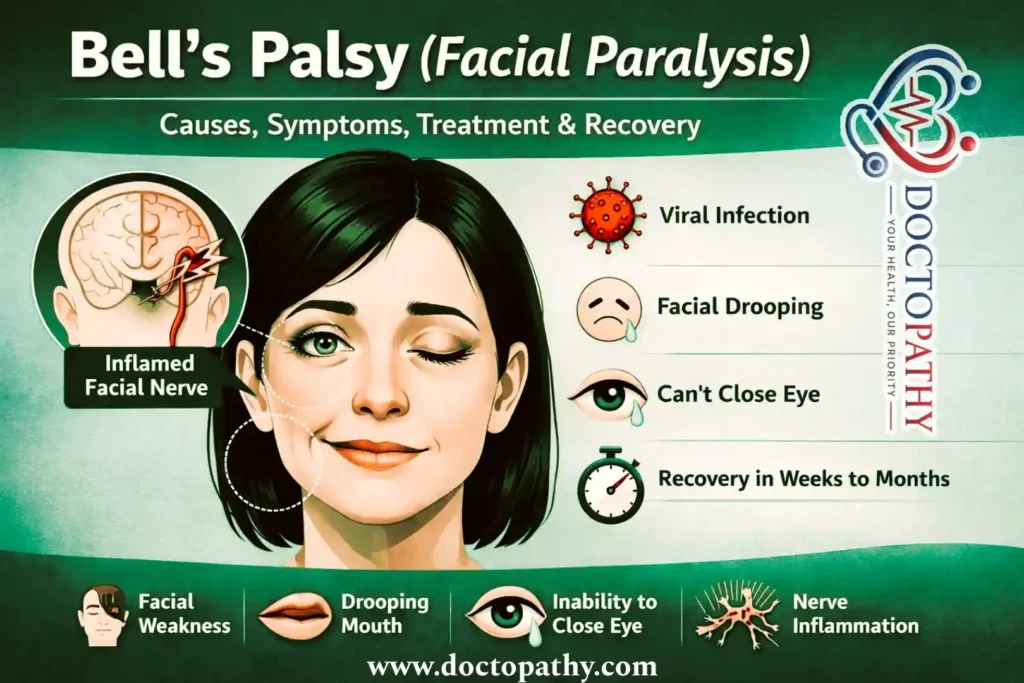
Bell’s palsy, also known as facial paralysis, is a condition that causes sudden weakness or paralysis of the muscles on one side of the face. This makes the affected side appear droopy and the person may have difficulty smiling, closing their eye or making normal facial expressions. Although the condition can be frightening, most people recover completely with proper care and treatment.
What is Bell’s Palsy?
Bell’s palsy is a neurological condition that affects the facial nerve (cranial nerve VII), which controls facial muscles. When this nerve becomes inflamed or swollen, it stops functioning properly, causing weakness or paralysis on one side of the face.
Bell’s palsy can affect people of any age, but it is most common in adults between 15 and 60 years. In most cases, it is temporary and symptoms improve within a few weeks.
Symptoms of Bell’s Palsy
Symptoms of Bell’s palsy usually appear suddenly and may worsen over 24 to 72 hours. Common symptoms include:
- Sudden weakness or paralysis on one side of the face
- Facial drooping on one side
- Difficulty smiling or making facial expressions
- Inability to close the eye on the affected side
- Drooling
- Pain around the jaw or behind the ear
- Increased sensitivity to sound in one ear
- Loss of taste
- Headache
- Dry eye or excessive tearing
- Changes in saliva production
In rare cases, Bell’s palsy can affect both sides of the face.
Causes of Bell’s Palsy
The exact cause of Bell’s palsy is not fully understood, but it is often linked to viral infections that cause inflammation of the facial nerve.
Common viruses associated with Bell’s palsy include:
- Herpes simplex virus (cold sores)
- Herpes zoster virus (chickenpox and shingles)
- Epstein–Barr virus (mononucleosis)
- Influenza virus (flu)
- Cytomegalovirus
- Mumps virus
- Rubella virus (German measles)
- Adenovirus (respiratory infections)
- Coxsackievirus (hand, foot and mouth disease)
These viruses can cause swelling in the facial nerve as it passes through a narrow bone canal, leading to nerve compression and facial paralysis.
Risk Factors
Certain factors may increase the risk of developing Bell’s palsy:
- Viral infections
- Pregnancy
- Diabetes
- Upper respiratory infections (cold or flu)
- Weakened immune system
- Family history of Bell’s palsy
How Bell’s Palsy is Diagnosed
There is no specific laboratory test to diagnose Bell’s palsy. Doctors diagnose it based on symptoms and physical examination.
The doctor may ask you to perform facial movements such as:
- Closing your eyes
- Raising your eyebrows
- Smiling
- Showing your teeth
- Frowning
Additional tests may be done to rule out other conditions, such as:
- MRI scan
- CT scan
- Blood tests
Treatment of Bell’s Palsy
Most people recover without treatment, but early treatment can improve recovery speed and reduce complications.
Common treatments include:
1. Medications
- Corticosteroids: Reduce nerve inflammation
- Antiviral medications: If caused by viral infection
- Pain relievers: Reduce pain and discomfort
2. Eye Care
Since patients may not be able to close their eye properly, eye protection is important:
- Artificial tears
- Eye ointment
- Eye patch
3. Physical Therapy
Facial exercises help maintain muscle strength and improve recovery.
Recovery Time
Bell’s palsy is usually temporary. Recovery varies from person to person:
- Symptoms improve within 2 to 3 weeks
- Full recovery may take 3 to 6 months
- Most patients recover completely
- Rarely, symptoms may persist long-term
Recurrence is rare but possible.
Complications
In rare cases, Bell’s palsy may cause:
- Permanent facial weakness
- Eye damage due to dryness
- Abnormal facial movements
- Loss of taste
Proper treatment and early care reduce these risks.
When to See a Doctor
Seek immediate medical attention if you notice:
- Sudden facial weakness
- Difficulty speaking
- Drooping face
- Trouble closing your eye
Early diagnosis is important to rule out serious conditions like stroke.
Prevention
There is no guaranteed way to prevent Bell’s palsy, but maintaining good health may help reduce risk:
- Strengthen your immune system
- Treat viral infections promptly
- Manage chronic conditions like diabetes
- Maintain healthy lifestyle habits
Conclusion
Bell’s palsy is a condition that causes sudden facial paralysis due to inflammation of the facial nerve. Although it can be alarming, most people recover fully within a few months. Early treatment, proper eye care and facial exercises can improve recovery and prevent complications.
If you experience sudden facial weakness, consult a doctor immediately for proper diagnosis and treatment.
Bell’s Palsy: Frequently Asked Questions (FAQs)
Bell’s palsy is a condition that causes sudden weakness or paralysis of the muscles on one side of the face. It occurs when the facial nerve becomes inflamed, often due to a viral infection. This leads to facial drooping, difficulty closing the eye and problems with facial expressions.
The exact cause of Bell’s palsy is unknown, but it is commonly linked to viral infections such as herpes simplex virus, influenza, chickenpox and Epstein–Barr virus. These infections can cause swelling of the facial nerve, which affects muscle control.
In most cases, Bell’s palsy is temporary. Symptoms usually begin to improve within 2 to 3 weeks and most people recover fully within 3 to 6 months. However, in rare cases, some people may have permanent facial weakness.
Treatment may include corticosteroids to reduce nerve inflammation, antiviral medications if caused by a virus, pain relievers, eye care (such as artificial tears) and facial exercises. Early treatment improves recovery chances.
Recurrence of Bell’s palsy is rare, but it can happen in some people. Maintaining good overall health and managing infections early may help reduce the risk.
Medical Disclaimer:
The information on this website is for educational purposes only and is not a substitute for professional medical advice, diagnosis or treatment. Always consult a qualified healthcare provider for any medical concerns. Do not ignore medical advice because of information on this website.