
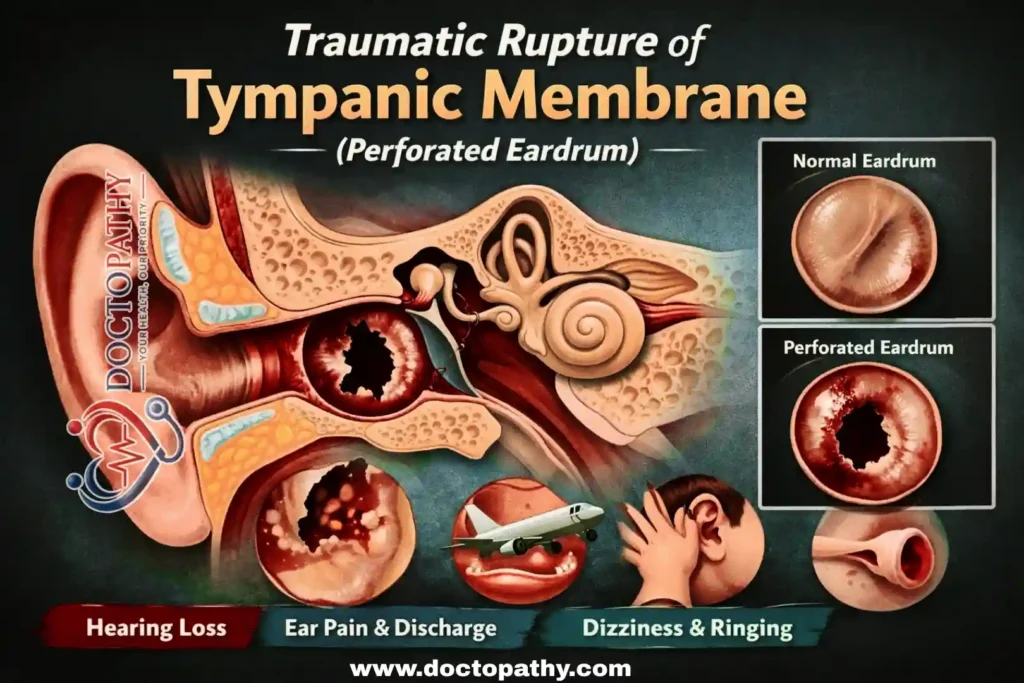
The human ear is divided into three main parts: the external ear, middle ear, and inner ear. Between the external ear and the middle ear lies a thin, delicate tissue known as the tympanic membrane, commonly called the eardrum. This membrane plays a vital role in hearing by vibrating when sound waves enter the ear and transmitting these vibrations to the middle and inner ear.
A traumatic rupture of the tympanic membrane, also known as a perforated eardrum, occurs when a hole or tear develops in this membrane. This damage disrupts sound transmission and may result in hearing loss. In severe cases, untreated perforation can lead to permanent hearing impairment.
Causes of Traumatic Rupture of the Tympanic Membrane
Several factors can cause eardrum perforation, including:
1. Ear Infections
Ear infections are the most common cause, especially in children. During infection, fluid builds up in the middle ear, creating pressure against the eardrum. This pressure can weaken and eventually rupture the membrane.
2. Pressure Changes (Barotrauma)
Sudden changes in air pressure between the outer and middle ear can cause the eardrum to rupture. This condition is known as barotrauma and can occur due to:
- Airplane travel
- Scuba diving
- Climbing high mountains
- Explosion shock waves
- Sudden impact
3. Ear Injury or Trauma
Direct injury to the ear can damage the eardrum. Common causes include:
- Slaps or blows to the ear
- Road accidents
- Falling on the ear
- Inserting objects such as cotton swabs, pins or sticks into the ear
4. Loud Noise Exposure (Acoustic Trauma)
Exposure to extremely loud sounds such as explosions, gunshots or loud machinery can rupture the eardrum.
Symptoms of a Perforated Eardrum
Symptoms may vary depending on the severity of the rupture. Common symptoms include:
- Sudden sharp ear pain
- Hearing loss (partial or complete)
- Pus or fluid discharge from the ear
- Ringing in the ear (Tinnitus)
- Spinning sensation (Vertigo)
- Nausea or vomiting
- Ear discomfort or pressure
Diagnosis
A doctor, usually an ENT specialist, diagnoses a perforated eardrum using:
- Otoscope examination
- Hearing tests (Audiometry)
- Tympanometry
Early diagnosis helps prevent complications.
Treatment Options
Treatment depends on the severity and cause of the rupture.
1. Natural Healing
Many small perforations heal on their own within a few weeks.
2. Medications
Doctors may prescribe:
- Antibiotics to prevent infection
- Pain relievers
3. Eardrum Patch
A medical patch may be applied to help close the hole.
4. Surgery (Tympanoplasty)
In severe cases, surgery is required to repair the eardrum.
Prevention Tips
You can reduce the risk of eardrum rupture by:
- Avoid inserting objects into the ear
- Treat ear infections early
- Use ear protection in loud environments
- Avoid sudden pressure changes when possible
- Follow proper precautions while flying or diving
When to See a Doctor
Consult a doctor immediately if you experience:
- Sudden hearing loss
- Severe ear pain
- Fluid or pus discharge
- Vertigo or balance problems
Early treatment can prevent permanent hearing damage.
Conclusion
Traumatic rupture of the tympanic membrane is a serious condition that can affect hearing if not treated properly. Understanding its causes, symptoms, and treatment options can help in early diagnosis and recovery. Protecting your ears and seeking medical attention promptly are essential for maintaining good ear health.
Frequently Asked Questions (FAQs)
A traumatic rupture of the tympanic membrane is a tear or hole in the eardrum caused by injury, infection, pressure changes or loud noise. It disrupts sound transmission and may lead to hearing loss and discomfort.
Yes, most small perforated eardrums heal naturally within 2 to 8 weeks without surgery. However, large or severe perforations may require medical treatment or surgical repair.
Common symptoms include:
• Sudden ear pain
• Hearing loss
• Fluid or pus discharge
• Ringing in the ear (tinnitus)
• Dizziness or vertigo
• Nausea in severe cases
In many cases, it is not life-threatening and heals naturally. However, if left untreated, it can cause chronic infections, permanent hearing loss or complications, so medical evaluation is important.
Doctors diagnose it using:
• Otoscope examination
• Hearing tests (audiometry)
• Tympanometry
• These tests help determine the severity and treatment plan.
Common causes include:
• Ear infections
• Loud noises (acoustic trauma)
• Sudden pressure changes (barotrauma)
• Injury or inserting objects into the ear
• Accidents or blows to the ear
Hearing may be reduced temporarily. In most cases, hearing returns to normal after healing. Permanent hearing loss is rare but possible in severe cases.
You should avoid:
• Inserting anything into the ear
• Swimming or getting water in the ear
• Flying without medical advice
• Exposure to loud noises
You should see a doctor immediately if you experience:
• Sudden hearing loss
• Severe ear pain
• Ear discharge
• Persistent dizziness
Yes, extremely loud noises such as explosions, gunshots or loud machinery can cause acoustic trauma, which may rupture the eardrum.
Medical Disclaimer:
The information on this website is for educational purposes only and is not a substitute for professional medical advice, diagnosis or treatment. Always consult a qualified healthcare provider for any medical concerns.