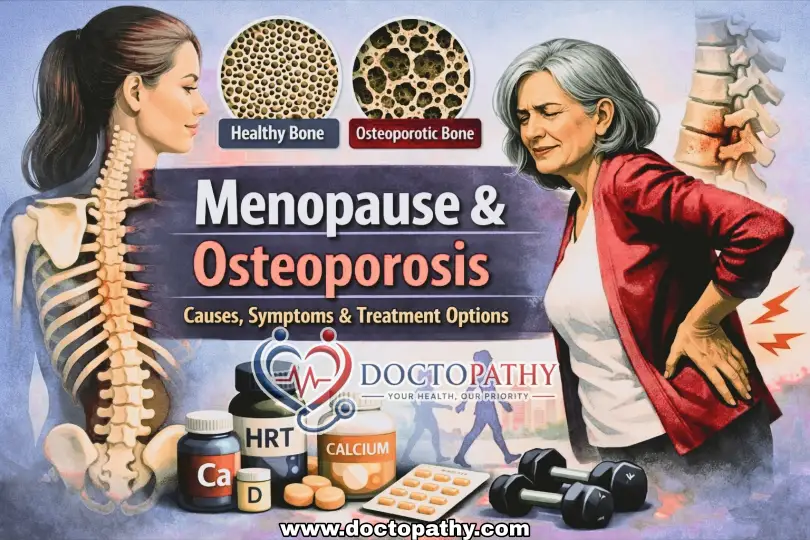
Menopause is a natural phase in a woman’s life, but the hormonal changes that occur during this period can significantly affect bone health. One of the most common and serious conditions associated with menopause is osteoporosis, a disease characterized by weakening of the bones and an increased risk of fractures. Understanding the link between menopause and osteoporosis is essential for early prevention and effective management.
What Is Osteoporosis?
Osteoporosis is a condition in which bone mineral density (BMD) decreases, causing bones to become fragile and porous. As bones lose density, they compress more easily and are more likely to fracture, even with minor falls or stress.
- Normal bone consists of protein, collagen and calcium.
- Low bone density weakens the internal structure of bones.
- Osteopenia is the early stage of bone loss.
- If untreated, osteopenia progresses to osteoporosis.
Osteoporosis most commonly affects the hips, spine, ribs and wrists, leading to serious complications and reduced quality of life.
Why Menopause Increases the Risk of Osteoporosis
After menopause, the body produces significantly less oestrogen, a hormone that plays a vital role in maintaining bone strength. Oestrogen deficiency accelerates bone resorption, leading to rapid bone loss—especially in the first few years after menopause.
Symptoms of Osteoporosis
Osteoporosis is often called a “silent disease” because bone loss occurs without early symptoms. However, as the condition progresses, the following symptoms may appear:
1. Back Pain
- Severe back pain is commonly caused by fractures of the vertebrae.
- Compression fractures irritate spinal nerves, resulting in persistent pain.
2. Bone Fractures
- Bones become weak and brittle.
- Fractures may occur with minimal trauma, especially in the hip, wrist or spine.
3. Stooped Posture and Loss of Height
- Repeated spinal fractures can cause the upper back to curve forward.
- This leads to a stooped posture and noticeable loss of height.
Treatment Protocol for Menopause-Related Osteoporosis
1. Hormone Replacement Therapy (HRT)
- Most effective when started within 2 years of menopause onset.
- Hormones used include:
- Oestrogen
- Progestogen
- Testosterone (in selected cases)
Guidelines:
- Oestrogen-only therapy for women without a uterus.
- Combined oestrogen-progestogen therapy if the uterus is present.
- Always begin with a low dose of oestrogen.
- Avoid progestogen if ovarian activity continues.
2. Calcium Intake
Adequate calcium intake is essential for bone strength:
- Premenopausal women: 800 mg/day
- Postmenopausal women: 1500 mg/day
3. Vitamin D and Calcitriol
- Calcitriol (a vitamin D metabolite) is useful when HRT fails or is contraindicated.
- Particularly effective in corticosteroid-induced osteoporosis.
- Avoid calcium supplements during calcitriol therapy.
4. Bisphosphonates and Other Medications
Used when HRT is unsuitable or ineffective:
- Alendronate:
- 10 mg orally daily OR
- 70 mg once weekly
- (Take precautions to prevent oesophagitis)
- Other options include:
- Etidronate
- Risedronate
- Raloxifene (Selective Oestrogen Receptor Modulator) – 60 mg daily
5. Exercise
Weight-bearing exercises help slow bone loss:
- Brisk walking (30 minutes, 4 times per week)
- Jogging
- Tennis
Although exercise contributes modestly, it plays a crucial supportive role.
6. Lifestyle Modifications
- Stop smoking
- Limit alcohol intake
- Reduce caffeine consumption
These changes significantly reduce bone loss risk.
Sexual Health and Menopause
- Oestrogen deficiency leads to vaginal dryness and loss of elasticity.
- HRT can partially restore vaginal comfort.
- HRT may not fully restore libido, but it improves sexual comfort.
- Loss of libido may be treated short-term with testosterone therapy under medical supervision.
Practice Tips for Clinicians and Patients
- Perform careful pretreatment assessment.
- Encourage lifestyle-based self-management in mild cases.
- Clearly explain benefits and risks of therapy.
- Obtain informed consent before starting HRT.
- Individualize HRT treatment.
- Regular follow-up is essential.
- Allow at least 6 months for HRT to stabilize bone health.
Conclusion
Osteoporosis is a serious but preventable condition commonly associated with menopause. Early diagnosis, lifestyle changes, adequate nutrition, and appropriate medical therapy—especially timely HRT—can significantly reduce fracture risk and improve quality of life. Proactive management during the menopausal transition is the key to maintaining long-term bone health.
FAQs
Menopause reduces oestrogen levels, a hormone essential for maintaining bone density. Low oestrogen accelerates bone loss, increasing the risk of osteoporosis and fractures.
Early osteoporosis often has no symptoms. As it progresses, signs may include back pain, frequent fractures, loss of height and a stooped posture.
Yes. Adequate calcium and vitamin D intake, regular weight-bearing exercise, a healthy lifestyle and timely hormone replacement therapy can help prevent bone loss.
HRT is highly effective when started early after menopause, as it replaces oestrogen and helps slow bone loss. It should be used under medical supervision due to possible risks.
Weight-bearing exercises such as brisk walking, jogging, stair climbing and tennis are most effective in strengthening bones and reducing fracture risk.
Medical Disclaimer:
This content is for informational purposes only and does not replace professional medical advice, diagnosis or treatment. Always consult a qualified healthcare provider for personalized care.